
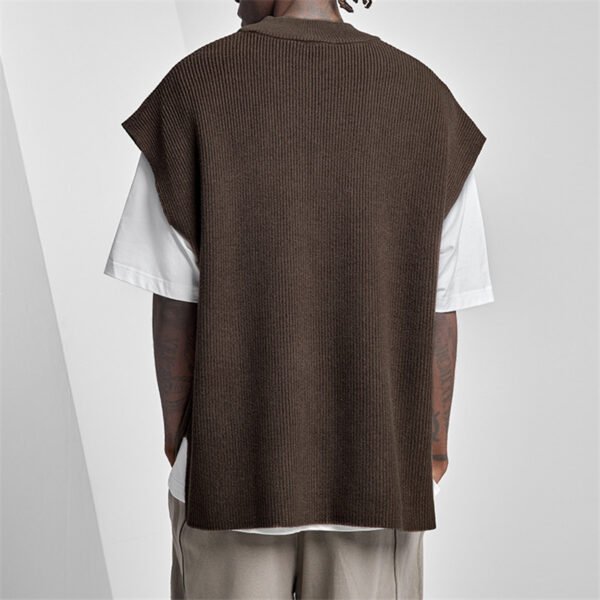
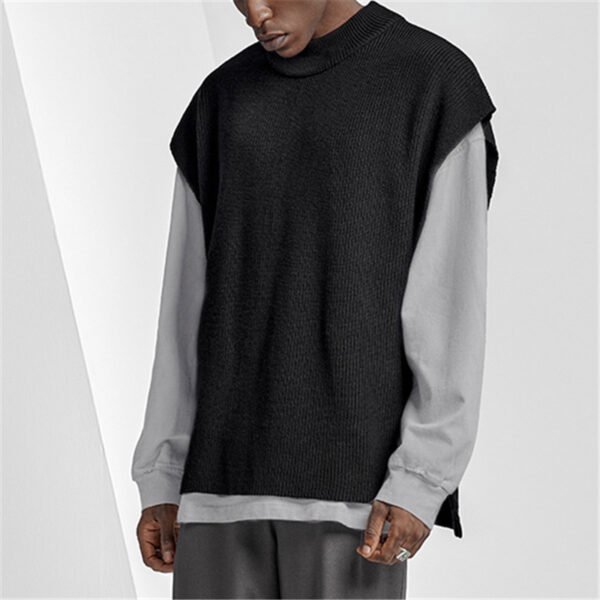

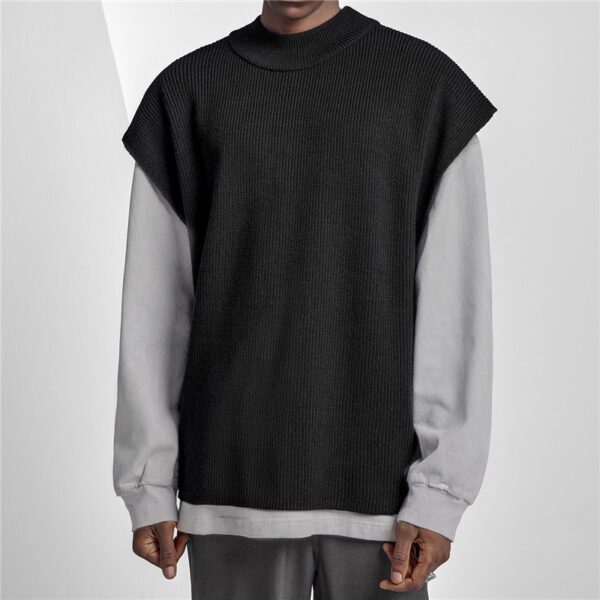

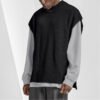

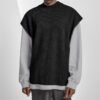

This custom men's sweater vest is developed around fabric width and consumption planning, because its long relaxed body and directional rib structure make panel yield part of the design decision. The supplied rear image supports a broad layered silhouette that requires measurement discipline before sampling begins.
Why Width Becomes a Design Variable
The image shows a generous back panel with minimal visual interruption, so usable knit width affects whether the body can be cut efficiently. A narrower usable width may increase panel joins, waste, or grading pressure, changing both appearance and consumption.
The vertical rib direction also limits how panels can be rotated during planning. Because the collar, shoulders, and arm openings are shaped components, the development team must map their placement against fabric width before approving the finished measurement set.
Reading the Supplied Silhouette
The vest falls below the hip and extends visibly wider than a close-fitting knit layer. That proportion creates a deliberate layering function, but it also means body length and width consume more continuous fabric than a compact sweater shell.
The rear view shows sleeveless openings extending beneath broad shoulder areas, with a white T-shirt underneath as a practical styling reference. Development should therefore assess armhole depth, shoulder coverage, and hem balance together rather than as isolated dimensions.
Consumption Planning Before Sampling
A first technical review should translate the visual proportion into graded body panels, collar components, and finishing allowances. Width planning can then identify whether size grading creates predictable yield changes or pushes larger sizes into less efficient cutting arrangements.
The relevant trade-off is straightforward: maximizing width efficiency may constrain the silhouette, while protecting the broad relaxed shape can increase consumption. VeeWen should present both outcomes through a measurement-led sample review before the buyer locks the block.
Managing Rib Direction and Recovery
Vertical rib columns are visible across the back, making directional consistency essential to the product's identity. Any panel rotation, uneven relaxation, or mismatched knitting direction could interrupt the surface rhythm even when the nominal measurements remain correct.
The buyer should review the sample after handling and fitting, focusing on collar return, shoulder stability, armhole opening, and hem relaxation. These observations help separate acceptable knit behavior from width-related distortion that should be corrected in the pattern or production plan.
VeeWen Development Checkpoint
VeeWen's workflow should begin with a measurement block built from the shown long layering proportion, followed by a width-and-consumption review for the body, collar, and shaped openings. This keeps material planning connected to the actual silhouette instead of treating yield as a later costing exercise.
At the approval stage, the buyer should receive the agreed measurement chart, rib direction reference, color reference, and consumption assumption for confirmation. Any change to body length, shoulder width, or collar height should trigger a renewed width review before bulk authorization.
Bulk Approval Logic
The production decision should balance visual continuity against material efficiency. A design that technically fits the available width may still be unsuitable if rib alignment, grading behavior, or layering proportions drift from the approved sample.
Approve bulk only when the size range preserves the elongated vest profile and the planned consumption is understood as a controlled assumption. The final checkpoint is buyer sign-off on measurements, appearance, and acceptable variance, with composition and performance still separately confirmed.
Buyer Questions
What fabric information is confirmed for this vest?
The images confirm a rib-knit appearance and directional texture, but fiber composition, GSM, finished width, recovery, and performance require technical confirmation before approval.
Why does the vest need width planning?
Its broad uninterrupted back and directional ribs restrict rotation options, so usable width influences panel placement, waste, grading behavior, and finished silhouette consistency.
Can the silhouette be adjusted during development?
Yes, body length, shoulder width, collar height, and armhole dimensions can be reviewed through sampling, provided each change is checked against consumption assumptions.
What is the minimum order quantity?
The commercial minimum is MOQ: 100 pieces per style, subject to final specifications, approved sample details, and confirmed production documentation.
Approve the Width-and-Silhouette Brief
Send the target size chart, color direction, and intended fiber preference so VeeWen can review width usage, develop the vest sample, and prepare the next approval checkpoint.


Reviews
There are no reviews yet.