


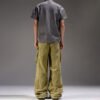
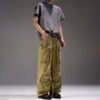

Built around a visibly pocketed, articulated cargo silhouette, this development record focuses on how finished fabric weight changes drape, stacking, pocket stability, and wash appearance. The supplied image shows a dark utility trouser with a buckle waistband, side cargo compartments, and gathered hems, making weight control the central approval question.
Why Finished Weight Controls the Silhouette
Pre-process fabric weight can mislead this style because washing, softening, abrasion, and drying alter the cloth's final body. A sample that begins heavy may finish softer, while a lighter base may lose the controlled folds needed for the stacked lower-leg appearance.
The image shows broad legs gathering into compact ankle areas, so finished GSM affects whether folds look intentional or collapse flat. It also influences how the waistband, buckle strap, and pocket layers sit together without making the trouser appear either limp or excessively rigid.
Pocket Layers Need a Weight Decision
Cargo pockets introduce floating panels, folded edges, and attachment points that behave differently as finished fabric weight changes. If the cloth is too light, pocket mouths may curl and contents can distort the leg; if too heavy, the side profile becomes bulky and restrictive.
The supplied image visibly places cargo compartments along both outer legs, with additional front shaping and seam definition. VeeWen's development review should therefore evaluate pocket opening, flap recovery, and loaded appearance using the washed fabric, rather than approving construction from greige fabric alone.
Wash and Distress Must Be Read After Weight Loss
The source wording calls for a washed, ripped cargo direction, but the supplied main image primarily confirms a dark utility appearance. Wash chemistry and abrasion can reduce body, brighten raised areas, and change how tears or distressed panels frame the trouser's folds.
For approval, separate the visual target from unverified treatment assumptions. The buyer should select a controlled wash route, then compare finished GSM, shade depth, distress placement, and leg stacking under consistent lighting before authorizing the production reference.
Waistband Hardware Concentrates Force
The upper front visibly includes a buckle and strap arrangement over a structured waistband. These components concentrate pulling force during dressing and adjustment, so finished fabric weight must support reinforcement without creating a stiff ridge that interrupts the relaxed utility profile.
During VeeWen's product-development workflow, the waistband sample should be assessed after the same laundering route planned for the shell. Review buckle anchoring, belt-loop alignment, closure comfort, and local seam bulk together, because changing weight later can invalidate earlier hardware placement decisions.
VeeWen Development Checkpoint
VeeWen can translate this argument into a focused development sequence: freeze the pocket map and hem shape, select pre-process fabric candidates, launder panels, and record finished GSM beside photographs of the complete garment. This creates a measurable bridge between intended handfeel and visible silhouette.
The buyer's review should happen at the finished-garment stage, with attention to stacked folds, pocket stability, waist hardware, and movement. Once the acceptable weight window is approved, the specification can govern grading, trim placement, and repeat sample evaluation for the style.
Approval Criteria for the Production Reference
The key decision is not simply whether the fabric feels substantial on a table. It is whether the washed garment preserves the image's layered utility character while keeping the leg wearable, the pockets balanced, and the waistband secure during normal movement.
Approve the style when finished GSM, shade, wash appearance, pocket behavior, buckle placement, and hem gathering are documented together. If any one element is adjusted, request a revised finished sample, because weight changes can alter several connected visual and functional outcomes.
Buyer Questions
What fabric weight should this cargo style use?
No exact GSM is verified from the supplied evidence. Request pre-process options, laundered swatches, and finished-garment measurements before selecting the acceptable weight window.
Does the image confirm olive green fabric?
No. The supplied main image appears dark charcoal or black. Olive green is retained as source reference only and requires buyer-approved lab-dip confirmation.
Can the buckle waistband be customized?
Yes, buckle type, strap width, placement, reinforcement, and closure details can enter development, subject to sample review and confirmed production specifications.
What is the minimum order quantity?
The commercial minimum is MOQ: 100 pieces per style. Final quantities, color allocation, and approved specifications should be confirmed before production planning.
Approve the Finished-GSM Direction
Send your target measurements, wash intent, and trim preferences to VeeWen for a focused cargo-pants development review built around the finished garment's actual silhouette.


Reviews
There are no reviews yet.