
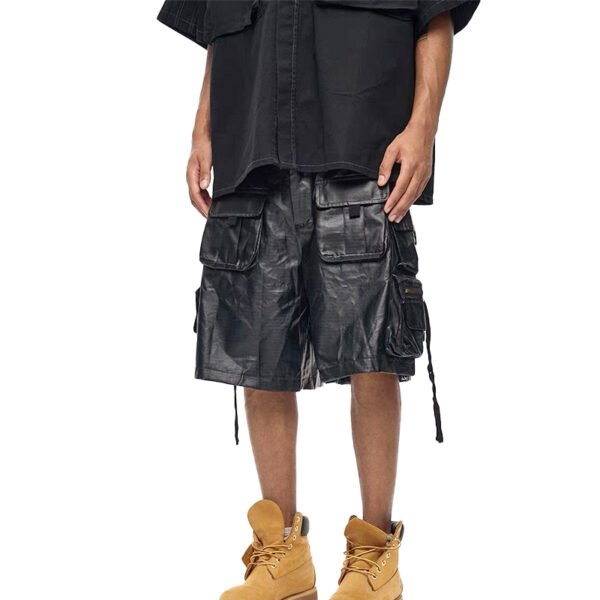



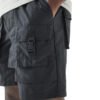
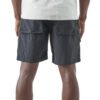
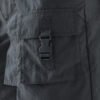
This custom multi-pocket cargo short is developed around patch placement and stitch containment. The supplied image shows layered thigh pockets, flap compartments, side utility details, and hanging cords on a black structured shell, making pocket balance, edge control, and secure attachment central to buyer approval.
Patch Placement Controls Utility and Visual Balance
The assigned manufacturing axis makes pocket mapping the primary technical decision. Each patch changes the leg's visual weight and movement, so pocket width, height, spacing, and flap direction must be controlled against a fixed centerline and finished hem reference.
The image shows substantial cargo pockets distributed across both thighs, with additional side compartments. That density creates practical storage potential, but it also increases the risk of visual crowding, seam overlap, and uneven leg drape if placements are not mapped carefully.
Stitch Containment Protects Applied Edges
Applied pockets need stitch paths that stay inside the intended seam allowance while fully securing corners, flaps, and stress points. Containment means controlling starts, stops, backtacks, and edge distance so loose threads or wandering seams do not weaken the utility appearance.
On a dark garment, uneven stitching can be difficult to notice in a quick review but becomes visible around raised flaps and pocket mouths. VeeWen should inspect each attachment zone from the exterior and interior before approving the construction sequence.
The Image Supports a Structured Utility Direction
The main image presents a black short with a firm, slightly coated-looking surface and numerous layered compartments. This supports a technical utility direction, but the image alone cannot verify waterproofing, quick-dry behavior, shell composition, or coating performance.
The knee-length proportion leaves visible space below the pocket system, while the relaxed leg supports movement. Buyers should confirm the intended rise, hem width, pocket capacity, and seated comfort because these functional outcomes are not established by the visual reference.
Cords and Flaps Add Secondary Risk Points
Long cords hang below both hems in the supplied image, making their anchor strength, finished length, and movement control important. Cord ends should be reviewed for secure finishing and practical handling, especially where they may catch, drag, or disturb the silhouette.
Pocket flaps and tabs create repeated hardware-free closure decisions, including overlap, turnback, edge distance, and opening direction. A development sample should verify that each compartment opens cleanly without distorting the leg panel or pulling against neighboring stitch lines.
How VeeWen Should Structure the Development Review
VeeWen's product-development workflow should convert the image into a numbered pocket map, construction sheet, and stitch-containment checklist. Pattern and sample teams can then review each pocket as a separate attachment while preserving the complete short's balance and movement.
The buyer checkpoint should compare the sample on a mannequin and a moving wearer, checking pocket access, flap behavior, cord control, and leg symmetry. Any correction should identify the exact pocket number, seam path, measurement, or anchor requiring revision before grading.
Trade-Offs and Buyer Approval
More pockets increase utility and create a strong visual identity, but they add weight, bulk, sewing operations, and opportunities for seam interference. A simpler pocket arrangement may improve comfort and repeatability, while a denser arrangement offers more pronounced streetwear utility character.
Approve the style when pocket access, placement balance, stitch containment, and cord behavior meet the intended use. Before bulk release, confirm shell composition, coating requirements, water-resistance standard, care labeling, hardware decisions, size tolerances, and final construction details from written specifications.
Buyer Questions
Are waterproof and quick-dry properties confirmed?
No. Those claims appear in the source wording but are not verified by the supplied image, so testing requirements and performance specifications must be confirmed separately.
How should the pocket layout be approved?
Approve a numbered pocket map with finished measurements, centerline references, flap direction, opening access, seam allowances, and spacing checked on the complete garment.
What does stitch containment mean here?
It means keeping attachment seams, backtacks, thread ends, and corner reinforcement controlled within the intended pocket boundaries for secure, repeatable construction.
What is the commercial minimum?
The exact commercial minimum is MOQ: 100 pieces per style, subject to approved specifications, pocket details, colorways, sizing, and production documentation.
Approve the Pocket Map and Containment Sample
Send VeeWen the pocket layout, shell reference, cord requirements, intended use, measurements, and performance expectations so the first sample can validate utility construction.


Reviews
There are no reviews yet.