


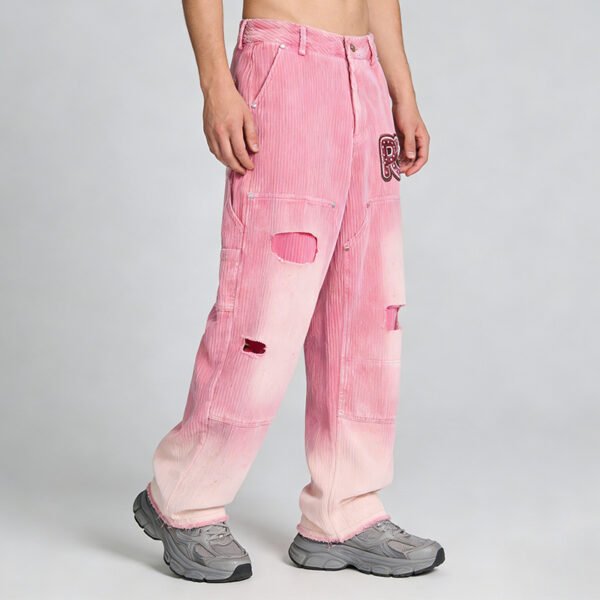
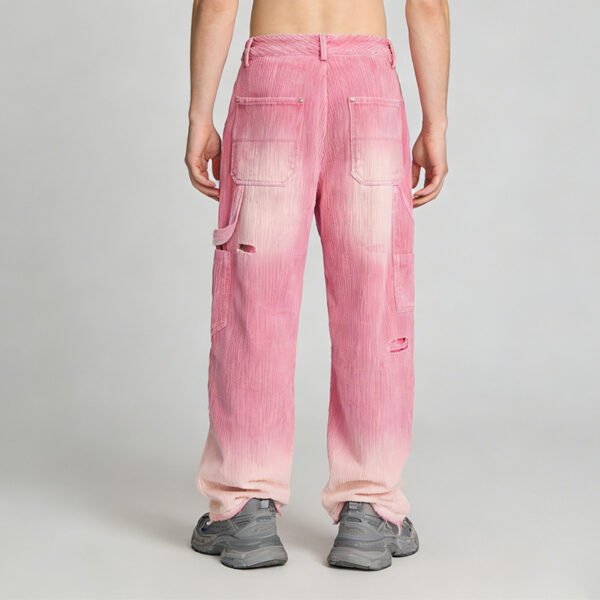
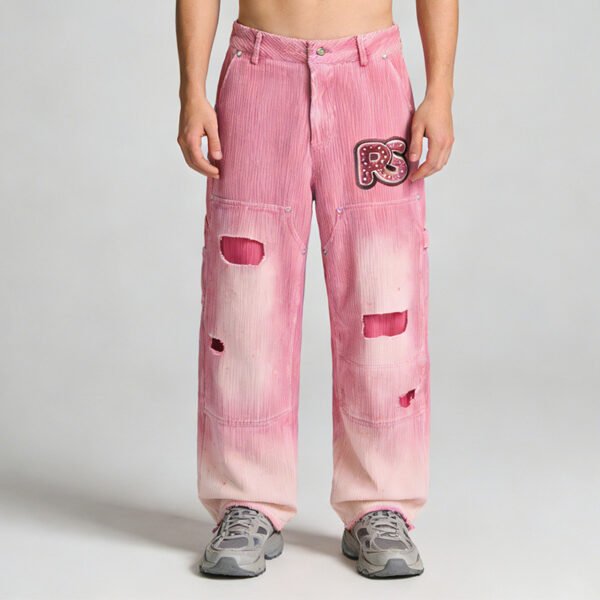


These oversized pants should be developed around controlled stress distribution. Their ripped openings, patchwork pockets, washed pink surface, and relaxed volume create a direct relationship between reinforcement placement and the garment's intended worn-in visual language.
Why Bartacks Matter on Distressed Pants
Rips remove material from areas that already experience bending, pulling, and abrasion. Bartacks can redirect localized force into stable seam allowances, but their position must be deliberate so reinforcement supports the garment without making each distressed opening appear mechanically framed.
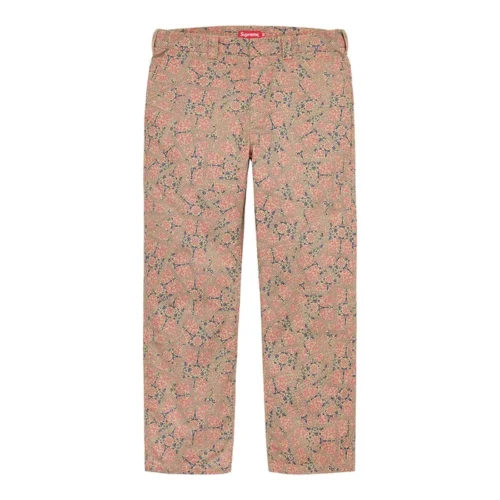
The supplied image presents several exposed openings across a roomy leg, including damage near the knee and lower leg. That placement makes stress distribution a design issue as well as a durability issue, because reinforcement that sits too visibly can change the intended irregular surface.
Pocket Edges Need Local Reinforcement
Patch pockets and pocket openings create concentrated pull points when contents are inserted, removed, or carried during movement. The development sample should identify pocket corners, opening ends, and attachment edges that need bartacks, then compare reinforcement size with the oversized styling.
The image shows utility-oriented pocket details layered into the pink trouser surface. Those pockets should be reviewed for attachment direction and seam allowance stability, particularly where patchwork, spray effects, and distressing overlap and could obscure a bartack or weaken its visual placement.
Patchwork Changes the Load Path
Patchwork panels interrupt the base fabric's continuous load path, shifting tension toward joins and corners. A useful pattern review should mark every panel intersection and decide whether reinforcement belongs inside the seam, at a corner, or beside the visible patchwork boundary.
The supplied visual evidence shows contrasting panel and pocket areas rather than a plain uninterrupted leg. That complexity means bartack placement should follow construction geometry, not a repeated distance rule, while still maintaining a consistent language across the approved size range.
Oversized Volume Affects Stress Distribution
An oversized silhouette changes how fabric moves because the leg carries additional volume between the body and the garment. Reinforcement should preserve that movement rather than pinning flexible zones too tightly, especially around the crotch, knees, pocket bags, and lower-leg openings.
The model image shows a wide, relaxed leg moving through a street setting, with fabric gathered naturally around the knee and hem. The buyer should approve bartack density alongside fit movement, since an overly rigid reinforcement plan can undermine the silhouette.
VeeWen Workflow Checkpoint
VeeWen's development workflow can convert the visual concept into a bartack map layered onto the pattern, distressing plan, pocket layout, and wash or spray references. This creates one coordinated approval document for construction and surface treatment decisions.
The sample review should inspect static front and back views, pocket loading, seated movement, and the edges of every planned rip. Any reinforcement that becomes too prominent should be repositioned or reduced only after the stress zone remains adequately controlled.
Approval Criteria for Bulk Readiness
Bulk readiness depends on agreed bartack locations, consistent stitch density, stable pocket corners, controlled rip dimensions, and repeatable patchwork alignment. These criteria should be checked together because changing distress placement can expose a previously hidden reinforcement or remove needed seam support.
The buyer's final decision should confirm that the pants still look intentionally worn while the high-load areas receive practical protection. Approve the sealed sample and distressing map only when fit movement, surface finish, and bartack visibility agree.
Buyer Questions
Where should bartacks be reviewed first?
Review pocket corners, rip endpoints, patchwork intersections, crotch stress areas, knee zones, and hems before confirming the complete reinforcement map.
Does the image confirm fabric performance?
No. The image shows surface appearance and construction features, but abrasion resistance, fiber composition, GSM, and recovery require separate confirmation.
Can the distressing pattern be customized?
Yes, the rip layout, patchwork geometry, spray effect, and pocket arrangement can be developed against an approved visual and technical reference.
What is the commercial minimum?
The exact commercial minimum is MOQ: 100 pieces per style, subject to finalized measurements, treatments, reinforcement, and production documentation.
Approve the Stress Distribution Map
Share the preferred fit, distress layout, and pocket references with VeeWen for a focused review of bartack placement, movement, patchwork joins, and bulk approval tolerances.


Reviews
There are no reviews yet.