
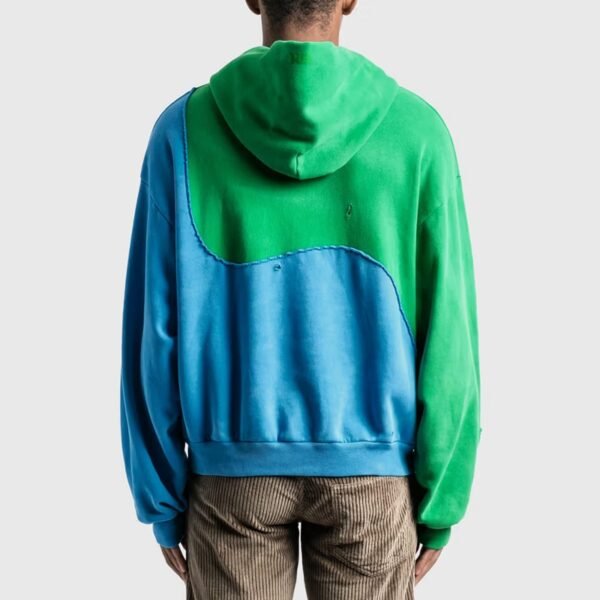


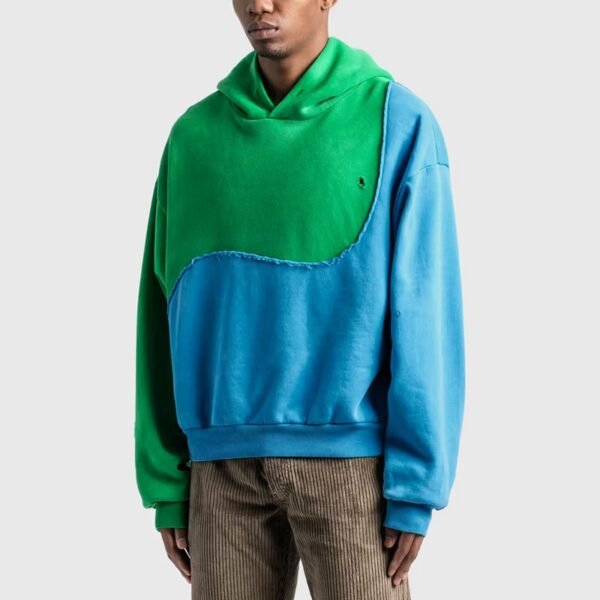



This custom pullover hoodie is developed around a sweeping two-color patchwork layout, where fabric width directly influences panel continuity, marker efficiency, and finished visual balance. VeeWen can translate the supplied rear-view evidence into an approval sequence covering width assumptions, consumption, cutting, and seam-edge execution.
Panel Geometry Starts With Usable Width
The rear image shows a curved boundary moving across the upper back and lower body, rather than a simple horizontal split. That geometry creates differently shaped panels, so usable fabric width must be assessed against each pattern piece before confirming placement, yield, or repeatability.
A wide roll may support the lower blue back panel efficiently, while narrower usable width can force additional joins, rotation, or marker changes. Those choices affect seam position and visual rhythm. VeeWen should lock the panel map beside the fabric-width record before approving final consumption.
Consumption Planning Protects The Color Balance
This hoodie uses green across the hood and one sleeve, while blue occupies the opposite sleeve and large lower-back area. Because the colors do not consume identical pattern areas, each colorway needs its own material allocation and marker review instead of relying on one averaged estimate.
Consumption planning should separate shell fabric by color, then add allowances for rib, cutting loss, and any distressed-edge trials. The commercial target remains MOQ: 100 pieces per style. Final consumption is To Confirm until graded patterns and approved widths establish reliable quantities.
Loose Fit Changes Marker Efficiency
The visible silhouette is intentionally roomy, with a broad back, dropped shoulder impression, and relaxed sleeves. Large pieces can improve nesting in one direction but reduce flexibility when curved patchwork boundaries require controlled grain placement. Fit approval therefore connects directly to marker efficiency and panel accuracy.
VeeWen's development review should compare the intended loose measurements with the actual marker plan, checking whether a small proportion change improves yield without weakening the visual concept. The checkpoint is not simply garment size; it is the relationship between volume, grain, width, and panel continuity.
Distressed Edges Need Repeatable Allowances
The supplied image shows dark, irregular-looking edges along the sweeping color boundary and a small visible mark near the back panel. These observations support a distressed visual direction, but they do not verify a specific abrasion, fraying, wash, or finishing method for production.
Each edge treatment can change cut dimensions, seam stability, and usable panel area. VeeWen should test the selected process on the actual color combination, documenting allowance changes before bulk markers are released. Buyers should approve the intended irregularity range, because uncontrolled variation can alter the graphic balance.
Color Placement Is A Cutting Control
When one color travels through the hood and sleeve while another dominates the back and opposite sleeve, cutting identification becomes part of design control. Notches, panel labels, and shade grouping help prevent mirrored pieces or color substitutions during bundling and sewing.
VeeWen's product-development workflow can connect the approved artwork or panel diagram to pattern annotations and cutting tickets. The buyer checkpoint is a complete, labeled component map showing every color assignment, grain direction, and seam relationship before production cutting begins.
Approve Width Before Bulk Commitment
The most important approval is a production-intent sample cut from the proposed widths, using the intended panel map and edge treatment. This reveals whether the curved division remains balanced after seam allowances and whether the loose fit still supports the planned marker arrangement.
After sample review, buyers should confirm graded measurements, color-specific consumption, and acceptable distressed variation. VeeWen can then carry the approved information into sourcing, pattern grading, marker preparation, and bulk coordination, while any unresolved material composition remains explicitly To Confirm.
Buyer Questions
What should be confirmed first for this hoodie?
Confirm usable fabric width, panel geometry, grain direction, and color allocation first, because these variables govern consumption, marker yield, and visual continuity.
Is the distressed appearance a verified wash specification?
No. The image supports a distressed-looking edge direction only; the abrasion, wash, fraying, and durability method require buyer approval and production testing.
Can the loose fit be adjusted during development?
Yes. Measurements and proportions can be reviewed against marker efficiency, provided changes preserve the approved panel relationships and intended relaxed silhouette.
What is the minimum order quantity?
The commercial minimum is MOQ: 100 pieces per style. Final quantities, color allocation, and material requirements should follow approved development documentation.
Approve The Width And Panel Map
Send the intended fabric references, width assumptions, graded measurements, and finish direction for review. VeeWen will organize the next approval checkpoint around consumption, marker efficiency, and panel continuity.



Reviews
There are no reviews yet.