
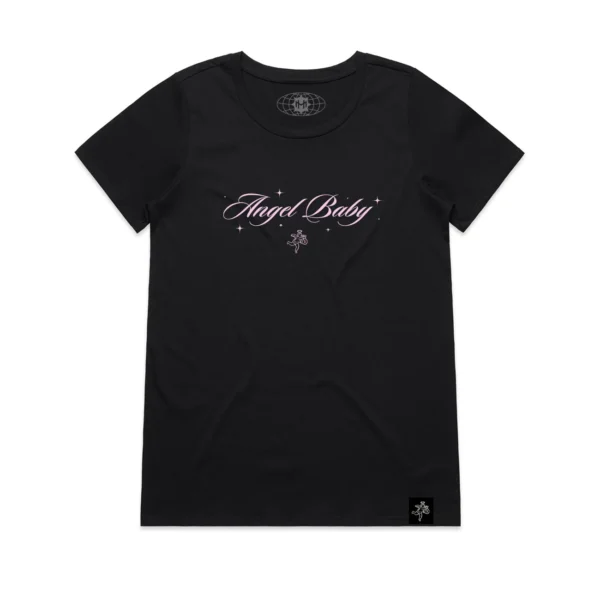


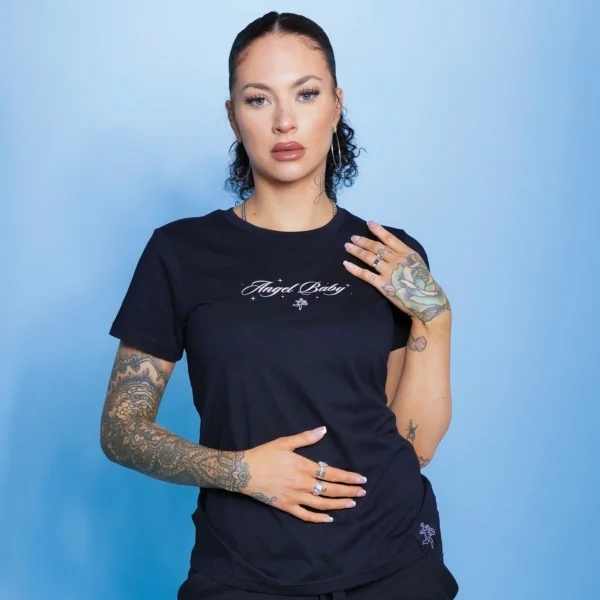



This custom graphic baby tee is developed around the difference between fabric weight before processing and finished GSM after printing, washing, and stabilization. The supplied image shows a compact black silhouette with a rib neckline and concentrated graphics, making hand feel and dimensional control commercially important.
Why Finished GSM Changes the Approval
Finished GSM is not automatically the same as the fabric's incoming weight. Printing, washing, drying, compacting, and dimensional relaxation can change mass per area and perceived density, so the buyer needs both values recorded rather than one substituted for the other.
The supplied tee appears lightweight and close to the body, with a black surface that makes drape and opacity visually significant. A finished-GSM target should therefore be reviewed alongside hand feel, coverage, shrinkage, and the way the front graphic sits after processing.
Reading the Supplied Tee Evidence
The image shows short sleeves, a ribbed crew neckline, a compact body, and a centered pink front graphic. These features create a narrow balance: fabric must remain flexible enough for the silhouette while supporting a stable print surface and a neckline that does not overpower the garment.
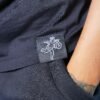
The lower front also contains a small contrasting graphic element, creating a second placement checkpoint. Buyers should verify how both print areas respond to laundering and pressing, because a change in finished weight may affect stretch recovery, surface smoothness, and visual scale.
Pre-Process Weight Versus Finished Weight
Incoming fabric weight helps the mill and factory select the starting material, but it does not describe the final garment alone. Processing can remove moisture, alter width, compact loops, or change dimensions, meaning finished GSM must be measured after the agreed treatment sequence.
For development, record fabric width, pre-process GSM, print coverage, wash treatment, finished GSM, and shrinkage observations as linked fields. This creates a traceable comparison when a substitute lot or different dyeing route is proposed during production planning.
Print Coverage and Hand Feel
The centered chest artwork occupies a focused area rather than covering the full tee, so print coverage may create a localized stiffness difference. The approval sample should test whether the graphic remains smooth and flexible without making the lightweight body feel uneven.
A heavier starting fabric may improve opacity and structure, but it can change the intended baby-tee drape. A lighter base may feel more delicate while increasing risks around show-through, distortion, and print durability, so the buyer must prioritize the desired final hand.
VeeWen Development Workflow
VeeWen's development workflow should capture the image-led silhouette first, then establish a pre-process fabric record and a finished-GSM checkpoint after printing and treatment. This connects material selection directly to the fit sample instead of treating GSM as an isolated mill detail.
The complete sample should be measured after stabilization, including body length, chest width, sleeve length, neckline opening, and print placement. Those results can then be compared with the finished GSM record before the technical pack is released for bulk production.
Buyer Approval and Production Release
The commercial approval question is whether the finished garment delivers the intended compact shape, softness, opacity, and graphic behavior at the agreed final weight. Approving only the fabric before processing leaves a gap between the material promise and the delivered tee.
Before release, sign off the finished GSM range, process sequence, shrinkage allowance, print dimensions, rib behavior, and measurement tolerances. If any treatment changes, request a new finished-garment review because the original GSM approval may no longer describe the product.
Buyer Questions
Why do I need both pre-process and finished GSM?
Pre-process GSM identifies the starting fabric, while finished GSM records the garment after approved treatments that can change density, dimensions, moisture, and hand feel.
Can this silhouette be developed in youth sizes?
Yes, the close silhouette can be graded for an approved size range, but neckline proportions, ease, print scale, and safety requirements need separate review.
Does the image verify cotton content?
No. The image shows jersey appearance only; fiber composition, fabric construction, GSM, and treatment details require source or laboratory confirmation.
What is the minimum order quantity?
MOQ: 100 pieces per style. Final quantities, colorways, artwork versions, and size breakdown should be confirmed before commercial quotation and production planning.
Approve the Finished-GSM Standard
Send your target hand feel, size range, artwork files, and treatment plan to VeeWen. We will connect pre-process fabric records with finished-GSM and fit approvals before production release.

Reviews
There are no reviews yet.