
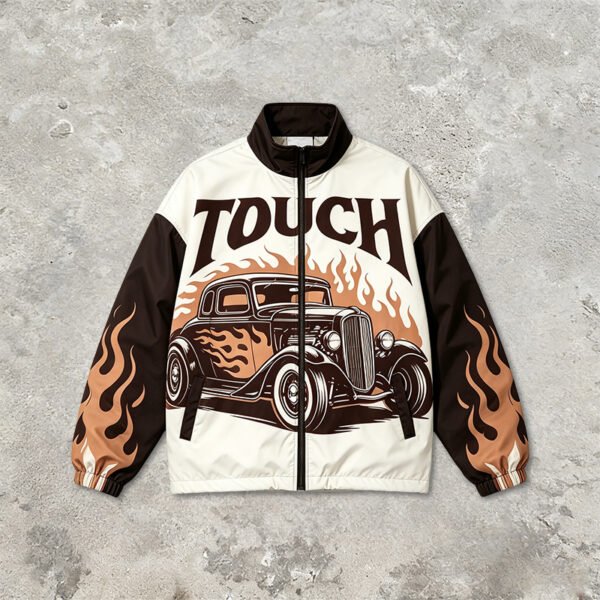






This bomber is developed around a practical tension: oversized graphics create immediate streetwear identity, while sleeves, seams, cuffs, and hem absorb repeated friction. VeeWen can translate the visual layout into a panel-by-panel development brief that protects the intended surface impact during wear.
Surface Coverage Changes the Risk Map
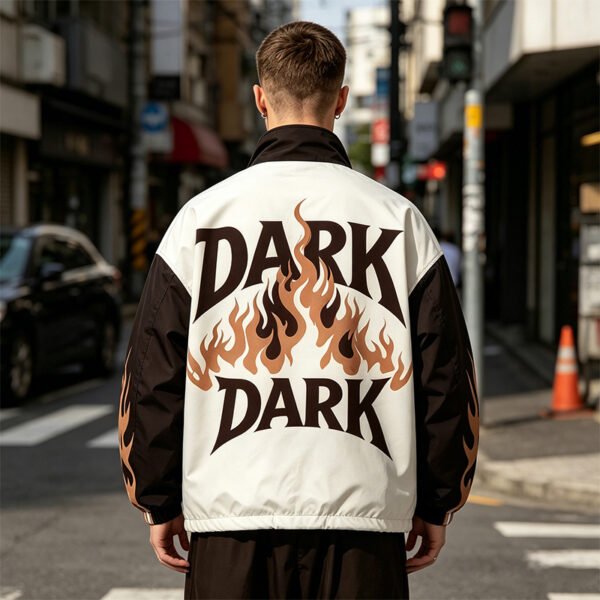
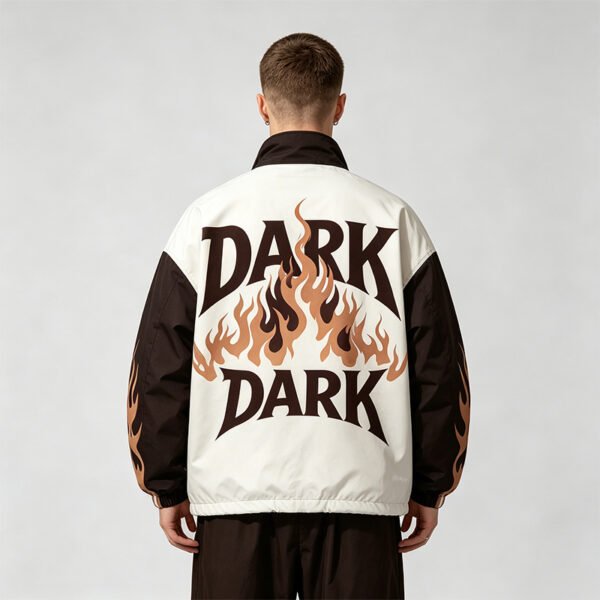
The rear view shows decoration occupying most of the light body panel, with the central motif crossing a broad, highly visible area. That coverage amplifies design recognition, but it also places finishing performance under scrutiny wherever the jacket bends, folds, or contacts seating.
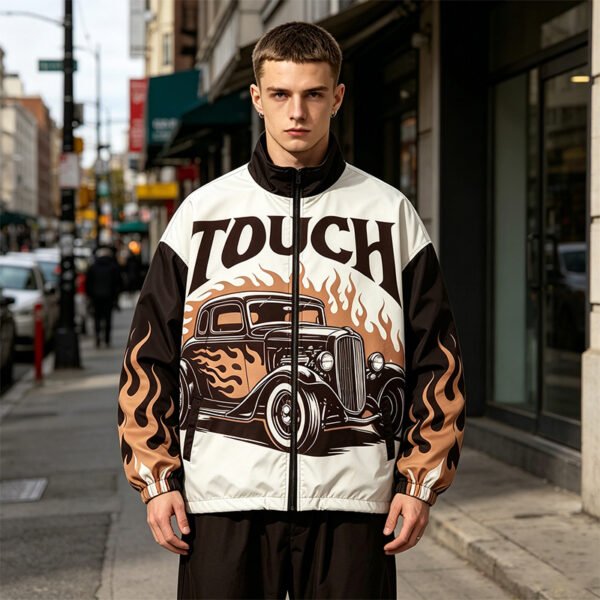
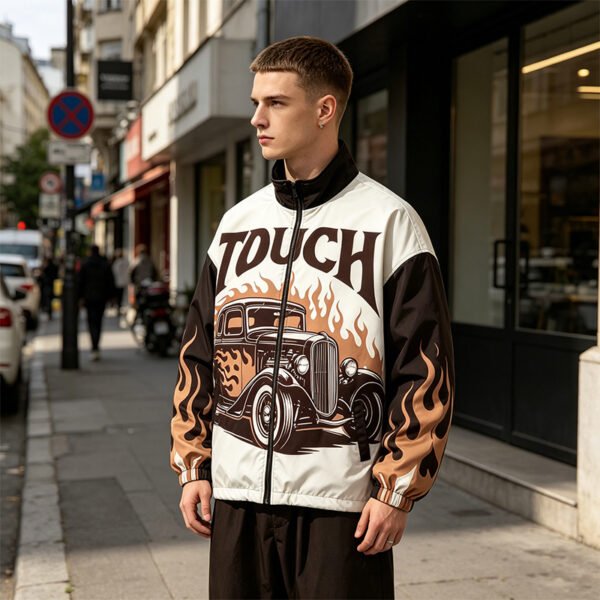
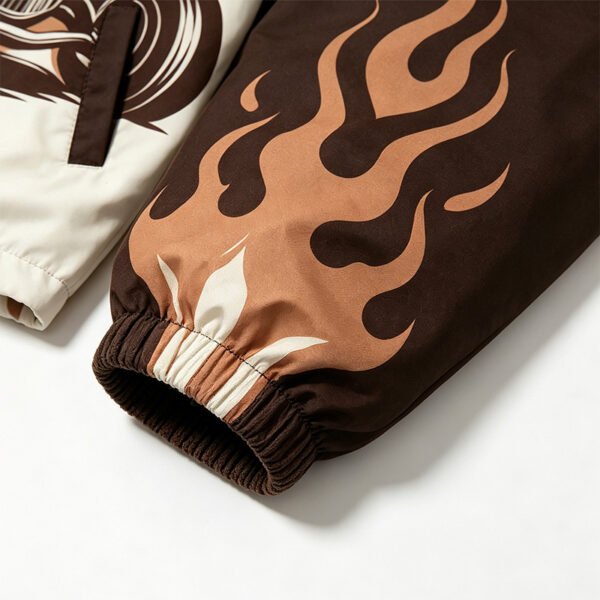
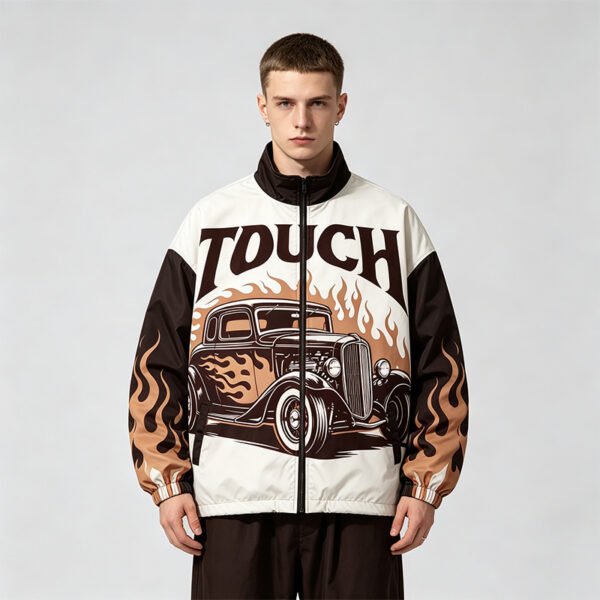
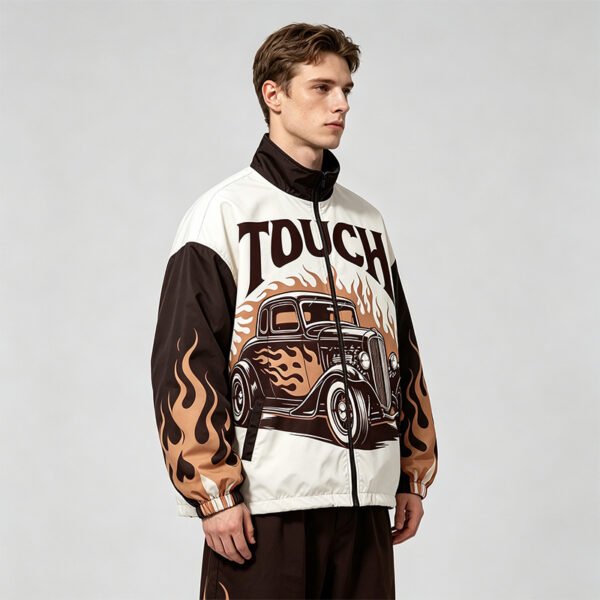
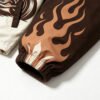
The sleeves introduce a second risk pattern because their darker panels carry separate flame elements near moving and rubbing areas. Artwork approval should therefore identify sleeve orientation, seam clearance, cuff distance, and whether the graphic crosses curvature during wear or production handling.
Panel Contrast Requires Registration Control
The visual contrast between the off-white torso and black sleeves makes panel alignment part of the product statement. Small shifts at shoulder joins or side seams could make the graphic system appear uneven, even when each individual print is technically accurate.
VeeWen development should lock the panel pattern before finalizing artwork dimensions. The back graphic, sleeve motifs, collar area, and lower edge need shared reference points, allowing the sample room to distinguish intentional asymmetry from cutting, sewing, or placement variation.
Abrasion Resistance Starts with Substrate Choice
A printed surface cannot be assessed independently from the shell beneath it. Fiber type, weave, coating, lining interaction, and fabric weight can change hand feel, flexing, ink acceptance, and resistance to rubbing, yet none of those specifications are verified by the supplied image.
The useful checkpoint is a material-led sample review. Request candidate shell swatches and decorated panels, then inspect bending, seam handling, cuff contact, and repeated rub exposure against the buyer's target wear environment before selecting the final finish route.
Finish Route Should Follow Contact Zones
The image suggests a smooth graphic treatment across broad panels, but the exact process is not established. A development team may evaluate direct printing, transfer, applique, or combinations according to opacity, edge definition, flexibility, and the abrasion demands of each location.
For VeeWen's workflow, artwork should be separated into body and sleeve files with placement tolerances recorded. The technical pack can then connect each zone to substrate, process, curing or pressing requirements, and inspection points without assuming one finish suits every panel.
Fit Movement Affects Graphic Longevity
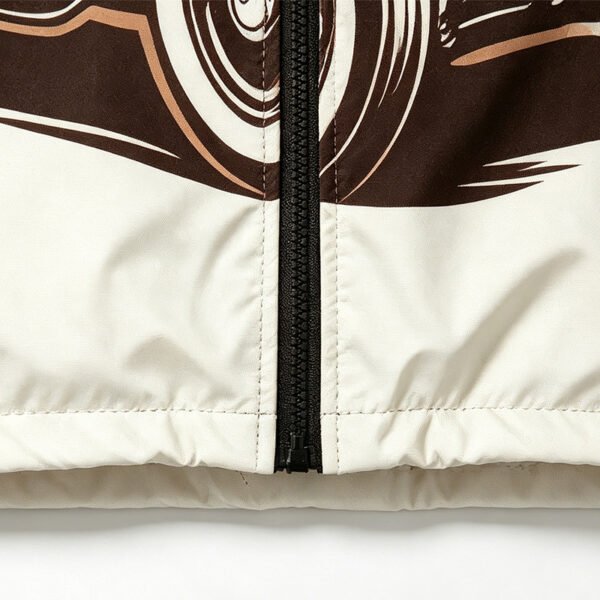
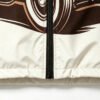
The rear silhouette appears relaxed, with room through the body and sleeves and a gathered lower edge. That shape supports layered streetwear styling, yet movement concentrates folds around the armhole, elbow, cuff, and hem, where decoration may experience repeated flexing.
Sample approval should evaluate the jacket on a moving fit model or articulated form, not only flat. Buyers should review the back graphic after arm rotation, seated posture, and hem compression, confirming that the visual hierarchy remains balanced when the garment is worn.
Approval Should Link Appearance to Wear Intent
The commercial decision is not simply whether the graphic looks bold in a studio image. It is whether the selected shell and finish preserve that boldness through the buyer's expected handling, transport, styling, and everyday use, especially at decorated sleeves and lower edges.
VeeWen can use the approval meeting to reconcile artwork, construction, material references, and inspection priorities in one record. Confirm the acceptable degree of surface change, identify non-negotiable placement points, and release production only after those trade-offs are documented.
Buyer Questions
What should be confirmed before sampling this jacket?
Confirm shell composition, lining, fabric weight, panel pattern, decoration process, artwork dimensions, seam clearances, and the buyer's abrasion expectations for intended wear.
Why separate the body and sleeve artwork files?
Separate files clarify orientation, placement tolerances, seam clearance, and inspection references, reducing the chance that curved sleeve placement is judged against flat body standards.
Can the printed coverage be reduced for a different collection?
Yes, coverage can be revised during development, but every reduction should preserve panel balance, sleeve coordination, and the intended relationship between surface impact and abrasion exposure.
What is the production minimum for this style?
The commercial minimum is MOQ: 100 pieces per style, with final quantity planning coordinated against approved artwork, colorways, size ratios, and material decisions.
Approve the Surface and Wear Brief
Send the target artwork, shell preference, fit measurements, and intended wear context to VeeWen. We will structure the development review around panel placement, finish selection, abrasion zones, and approval checkpoints.


Reviews
There are no reviews yet.