
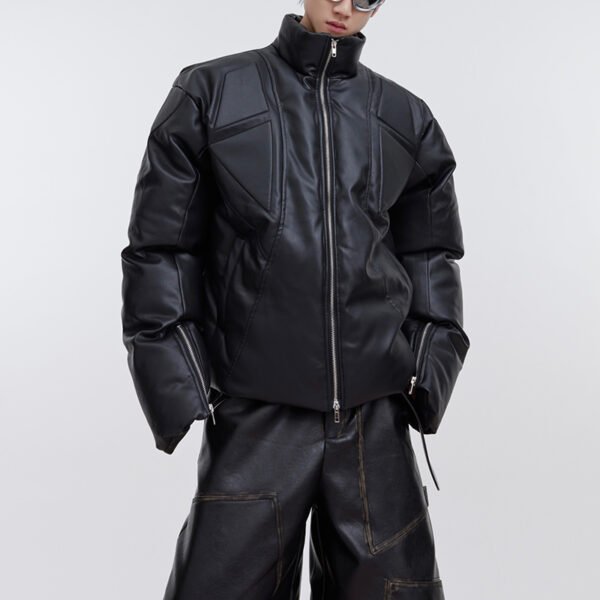
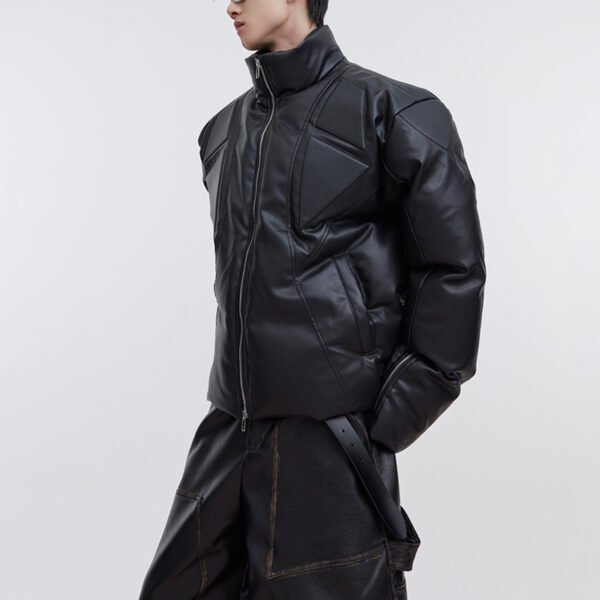
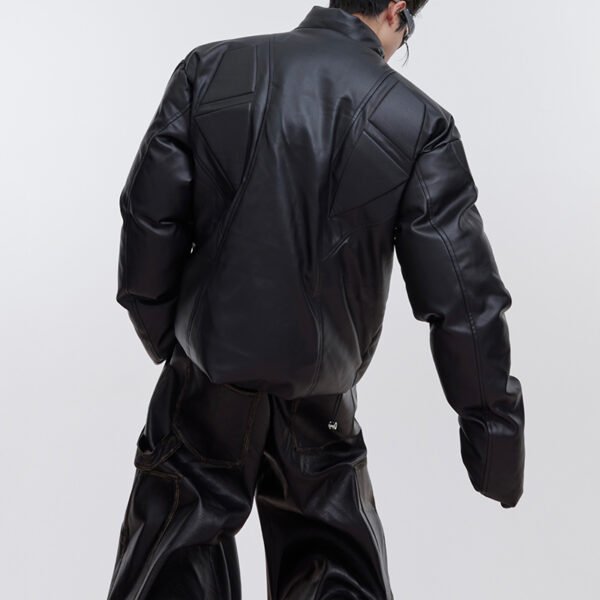
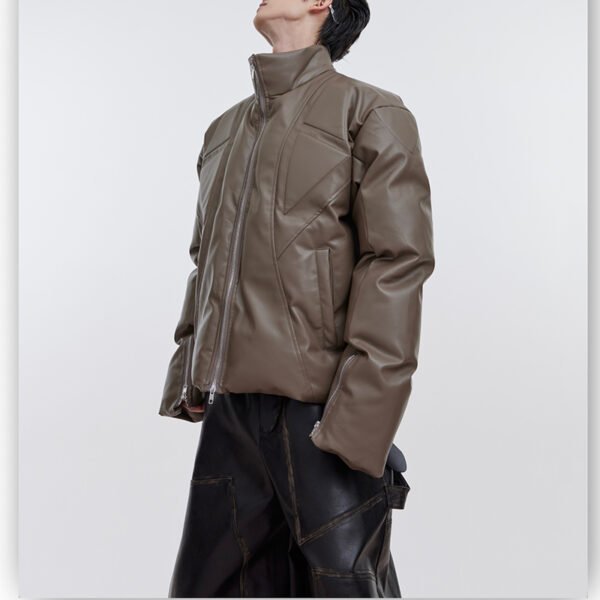


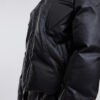

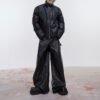


This puffer jacket is a proportion study disguised as a statement outer layer. Its black padded volume, high collar, panelled surface, and short hem create a strong upper block, while the visible lower garment determines whether the complete silhouette feels intentional. Development must approve the outfit relationship, not the jacket alone.
The Jacket Hem Sets the Outfit's Vertical Start
The short lower edge establishes where the outer layer ends and the lower garment begins. If the jacket hem sits too low, it hides the rise and compresses the body; if too high, it can exaggerate bulk above the waist and weaken daily wearability.
The supplied image shows a compact jacket body over a visibly constructed lower garment. That relationship makes hem opening a primary approval point, because the jacket's visual balance depends on how much rise, inseam, and leg opening remain legible.
Rise, Inseam, and Hem Opening Work Together
Rise determines the visual anchor beneath the cropped jacket, while inseam length controls the downward continuation of the silhouette. The lower opening then affects whether the outfit finishes narrowly, straight, or with a more expansive streetwear stance.
Although the source product is a jacket, the image provides direct evidence of these lower-body proportions. VeeWen should therefore treat the paired look as a proportion reference, confirming whether the jacket is sold independently or developed alongside coordinated bottoms.
Panel Lines Control Perceived Bulk
The image presents several tonal black panels across the chest, shoulders, sleeves, and lower body. These divisions break the padded volume into directional zones, helping a broad jacket appear engineered rather than shapeless while keeping the surface visually restrained.
Panel placement also interacts with hem width. A narrow opening can concentrate volume above the waist, whereas a wider opening distributes the lower edge more evenly. Pattern review should compare panel geometry, padding expansion, and finished hem measurement on the same sample.
PU Surface and Padding Create a Specific Trade-Off
A smooth PU outer surface emphasizes clean panel edges and reflects light across the black body. Padding adds loft and warmth-related volume, but the combination can make seam transitions look heavier and restrict the way the hem settles over the lower garment.
The buyer should define the intended visual priority before approving materials. A sharper architectural surface may require controlled padding thickness and stable seam allowances, while a softer puffer effect may accept more movement at the lower edge.
VeeWen Development Checkpoint
VeeWen can build the development review around a complete proportion board: jacket center-back length, hem opening, collar height, sleeve volume, and the lower garment's rise, inseam, and opening. This keeps the assigned axis measurable across the whole styling system.
At fitting approval, the buyer should inspect the jacket zipped and open, then compare it with the intended lower silhouette. Record the approved vertical relationship before grading, because size changes can alter hem coverage and the apparent balance of the outfit.
Approval Criteria for the Complete Silhouette
The correct silhouette is not simply the largest or shortest option. It is the proportion where collar, shoulder volume, jacket hem, lower rise, inseam, and opening create a deliberate line from neck to ankle without making movement or layering visually confusing.
Approve bulk production when the buyer can confirm the hem position on the body, the lower garment's exposure, and the panel balance from front and side views. Any unresolved proportion issue should return to pattern adjustment before the MOQ: 100 pieces per style order.
Buyer Questions
Are the jacket proportions fixed?
No. Body length, hem opening, collar height, sleeve volume, and panel placement should be set through the buyer's approved pattern and fitting comments.
Why review the lower garment?
The visible rise, inseam, and hem opening determine how the cropped jacket reads as a complete silhouette, even when bottoms are developed separately.
Is the PU leather specification verified?
PU leather appears in the supplied source wording. Surface handfeel, backing, thickness, coating behavior, lining, and fill remain To Confirm.
What is the minimum order?
The commercial minimum is MOQ: 100 pieces per style. Color quantities, size ratios, packaging, and final production details require buyer confirmation.
Approve the Proportion System
Share the target measurements, lower-garment reference, and material direction for this puffer. VeeWen will center the sample review on hem placement, panel balance, padded volume, and the MOQ: 100 pieces per style.

Reviews
There are no reviews yet.