


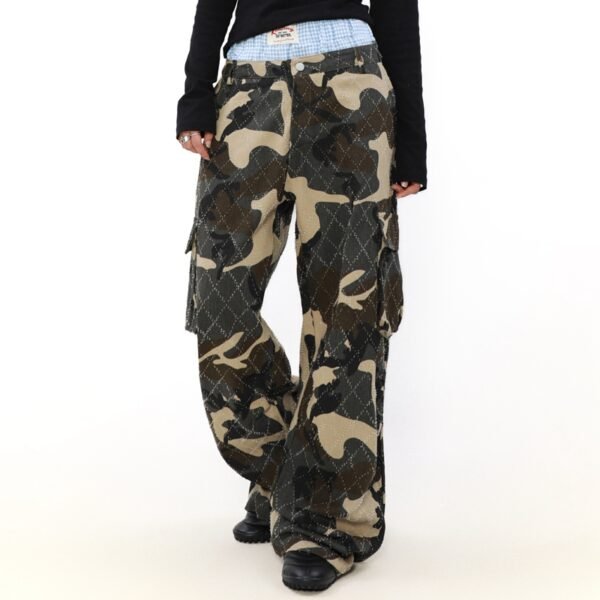
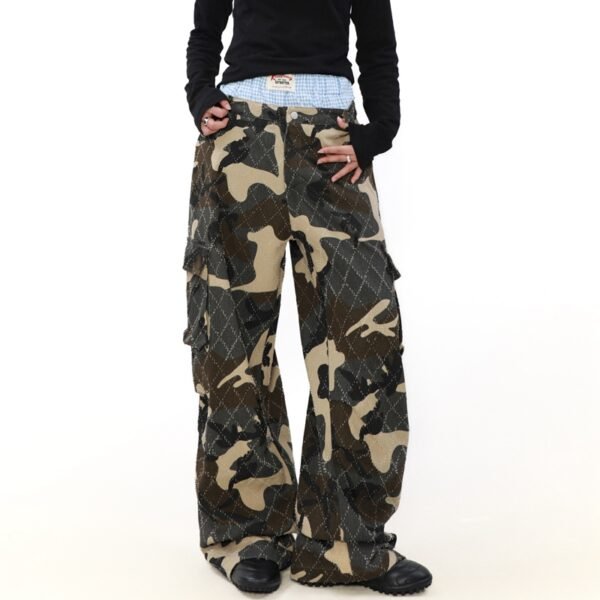
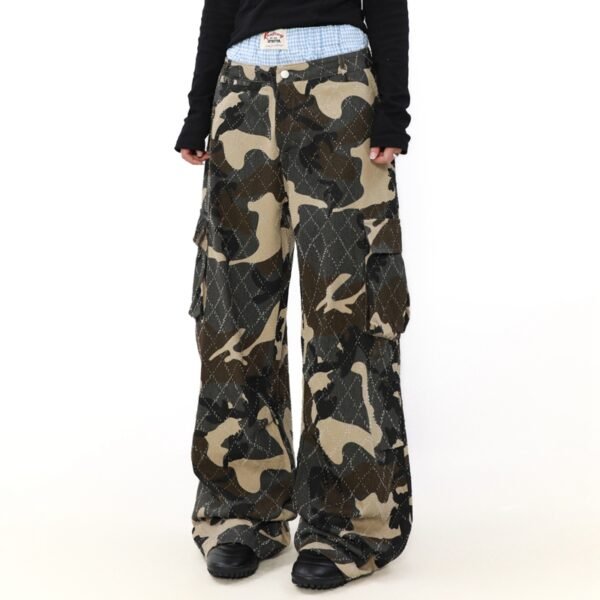
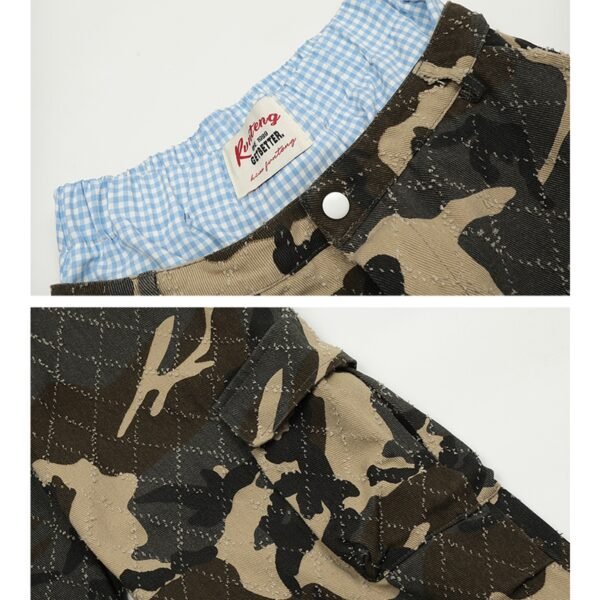
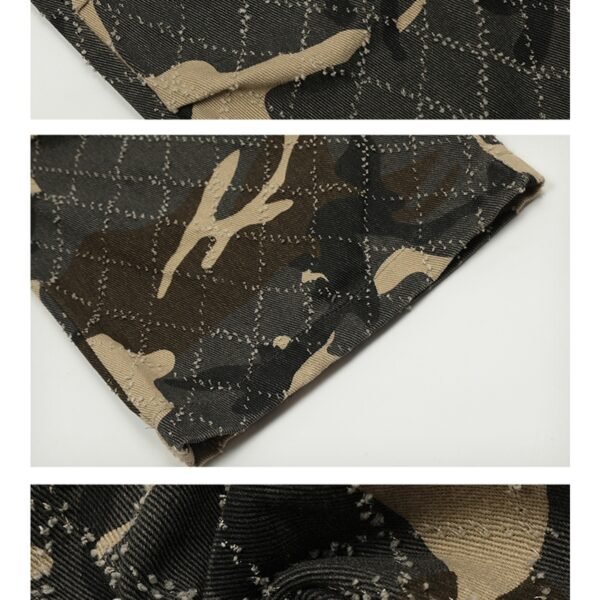
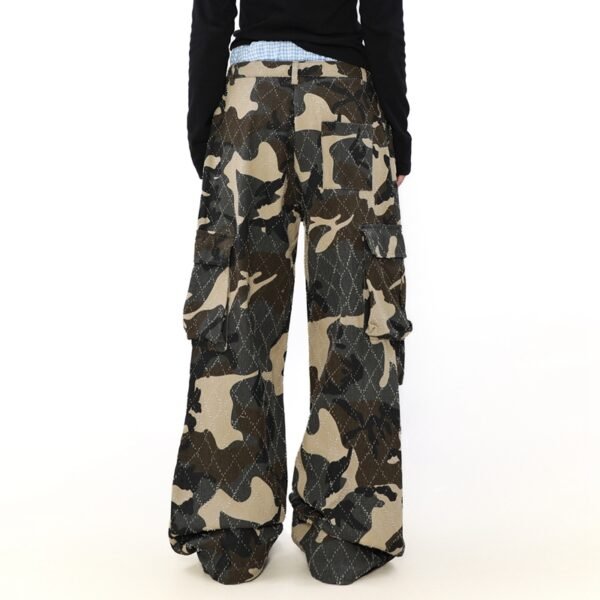
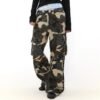

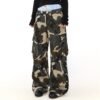
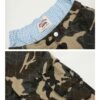
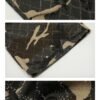
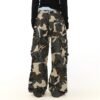
These custom camouflage trousers depend on alignment more than print selection. The wide leg, quilted diamond lines, cargo pockets, checked waistband layer, and mixed camouflage shapes create a technical map where stretch direction must support both movement and visual continuity.
Stretch Direction Sets the Silhouette
Wide-leg trousers need controlled movement through the seat, thigh, knee, and hem. If stretch runs across the wrong grain, the leg can twist or collapse unevenly. This design therefore begins by identifying the fabric's usable stretch direction before finalizing the pattern.
Quilting can further restrict movement by stabilizing selected areas. Diamond lines shown across the camouflage create a structured surface, but they may reduce local give. A sample review should compare stride comfort, sitting ease, pocket loading, and hem recovery against the intended wide-leg outline.
Pattern Placement Is Visible Engineering
The camouflage is not a single uninterrupted field. Brown, olive, black, and sand shapes cross the front panels, side pockets, and lower legs, while quilting adds another directional grid. Each pattern piece needs a placement map so seams do not create accidental visual breaks.
The checked waistband layer is equally important. It appears above the main camouflage body and establishes the false two-piece effect. Its exposure must remain consistent across sizes, while the waistband seam, pocket openings, and camouflage scale stay aligned with the trouser's center balance.
Cargo Pockets Change Movement
The side cargo pockets add utility volume and interrupt the camouflage flow. Their placement affects how the outer leg hangs, especially when the pocket is loaded. Pocket bag depth, flap position, and reinforcement should be developed with the fabric's stretch direction, not added after silhouette approval.
A wide leg can absorb some pocket weight, but excessive extension may pull the side seam outward. The sample should test empty and lightly loaded pockets while checking front crease behavior. This reveals whether the utility feature supports the intended shape or distorts it.
VeeWen Development Checkpoint
VeeWen's product-development workflow should begin with a grain and print-placement worksheet for every major panel. Mark stretch direction, quilting orientation, camouflage focal points, checked waistband exposure, pocket boundaries, and seam allowances before cutting the first development sample.
The corrected sample then needs a movement review in the target size range. Check walking, sitting, pocket access, waistband stability, lower-leg stacking, and print continuity. Approve the pattern map only when comfort and visual placement remain consistent after quilting and assembly.
Grading Without Pattern Drift
Grading camouflage trousers can create obvious mismatches when the print is scaled or repositioned casually. Key shapes should be assigned panel-specific landmarks, especially near the fly, side pockets, knee, and hem. The same method protects the checked waistband from changing exposure between sizes.
Stretch direction also affects grading decisions. Added circumference should not force the grain to rotate around the thigh or seat. Review a size set for leg twist, pocket balance, waistband reveal, and quilting alignment before confirming the final graded marker and cutting instructions.
Approval for Production Release
The buyer's release decision should focus on whether the trousers move naturally while the layered construction remains believable. Confirm stretch direction, recovery, quilting stability, print placement, cargo pocket balance, waistband exposure, and hem behavior using an approved physical sample.
Once the specification is signed, VeeWen can coordinate the print map, quilting, cutting, sewing, and inspection sequence around the approved priorities. Proceed at MOQ: 100 pieces per style only after the pattern, material reference, and placement standards are accepted.
Buyer Questions
Which stretch information is needed first?
Confirm stretch direction, percentage, recovery, fabric width, quilting effect, and behavior through the seat, thigh, knee, waistband, and lower-leg panels.
How is camouflage continuity controlled?
Create a panel-by-panel placement map with landmarks at the fly, side seams, pockets, knee, hem, and waistband so grading preserves intentional visual balance.
Can the checked waistband layer be customized?
Yes, its exposure, color, fabric reference, seam position, and proportion can be adjusted, subject to sample review for stability and consistent size grading.
What is the minimum order?
The exact commercial minimum is MOQ: 100 pieces per style. Production follows approved fabric, quilting, pattern placement, size grading, and construction specifications.
Approve the Pattern Map
Share your stretch target, camouflage artwork, quilting direction, size range, and waistband reference with VeeWen for sample mapping before confirming MOQ: 100 pieces per style.



Reviews
There are no reviews yet.