


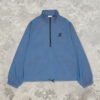






This custom half-zip anorak is developed around collar roll and stand height, using the supplied black-and-olive image as evidence of a structured neckline, layered front opening, and balanced outdoor-streetwear proportion for OEM review.
Collar Geometry Sets the Product Identity
The collar is not a decorative afterthought here; it controls how the hood, face, and upper chest read together. A taller stand can support wind coverage, but excessive height may crowd the wearer, especially when the hood is deployed or the placket is fully closed.
The supplied image shows a compact upright neckline with dark framing around the olive center panel. VeeWen should therefore establish stand height, roll line, and seam allowance together, then assess the collar both flat and worn before confirming the final pattern balance.
Half-Zip and Storm Placket Must Share Space
The visible center opening is short and layered beneath a snap-secured flap, creating a deliberate sequence of collar, snaps, and zipper. Extending the zipper may improve entry and ventilation, but it can weaken the concentrated upper-body composition shown in the reference image.
During development, the zipper tape, placket width, snap spacing, and collar break should be graded as one system. The approval sample needs a closed view, an opened view, and a hood-up view so buyers can judge function without losing the intended front-body rhythm.
Hood Clearance Protects the Neckline
A hood attached to a prominent stand changes the collar's roll and can pull the neckline backward. The image indicates a gathered hood sitting close to the head, so excessive fullness could collapse the stand, while insufficient ease could distort the shoulder seam during movement.
VeeWen's pattern review should map hood depth, neckline circumference, and cord exit positions against the chosen stand height. This checkpoint identifies whether the hood supports the anorak structure or competes with it, before contrast panel placement and finishing details are locked.
Contrast Panels Reinforce the Collar Decision
Olive fabric appears inside the collar area and continues down both sides of the body, giving the neckline a visual anchor. That continuity means even a small change in stand height can alter the apparent width of the torso and the strength of the color-blocking frame.
The development team should test collar height against panel width and shoulder placement rather than approving each component separately. A narrower panel may sharpen the upper body, while a wider panel can amplify utility styling but make the stand appear visually heavier.
Wear Testing Should Focus on Roll Recovery
The collar's performance depends on how it returns after opening, folding, and hood movement, not only on its appearance when freshly pressed. Nylon-blend behavior, interlining selection, and topstitch tension can each influence whether the roll stays clean or collapses.
For VeeWen's workflow, the buyer checkpoint is a controlled fitting review after repeated collar manipulation. Record the approved stand height, roll direction, placket overlap, and hood position on the sample comments so later size grading preserves the same neckline intent.
Approval Path for Production Readiness
Once the collar system is approved, the remaining decisions become easier to evaluate because the neckline establishes the garment's proportion. Buyers should compare the prototype against the supplied image for face clearance, snap visibility, zipper exposure, and the visual transition from collar into contrast panels.
VeeWen can carry the approved construction through pattern refinement, material confirmation, trim review, and pre-production sample comments. The commercial decision is to release the style only when the collar remains comfortable, visually upright, and consistent across required sizes and color placements.
Buyer Questions
What collar measurement should buyers approve first?
Approve the finished stand height, collar circumference, roll line, and hood clearance together, because changing one measurement can alter comfort, placket overlap, and the garment's visual balance.
Is the nylon blend composition verified?
The source title references a water-resistant nylon blend, but no percentages or fabric specification are supplied here. Confirm composition, weight, finish, and performance during material approval.
Can the front opening be made longer?
It can be evaluated, but a longer zipper changes the collar-to-body relationship. Review entry comfort, ventilation, placket coverage, and graphic or panel balance before approving that revision.
What is the stated minimum order?
The required commercial minimum is MOQ: 100 pieces per style. Final quantities, size ratios, color splits, and production conditions should be confirmed in the order documentation.
Approve the Collar Architecture
Send your measurement sheet, fabric direction, color references, and target market requirements so VeeWen can prepare a collar-focused development review for this half-zip anorak style.


Reviews
There are no reviews yet.