


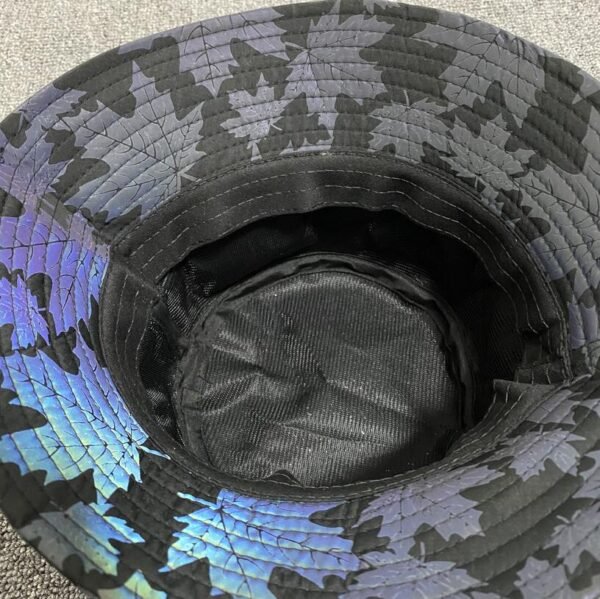





This cap is developed around reflective graphic discipline: the visual impact depends on clean transitions across curved panels, while the ink-film must feel intentional in hand. The supplied image shows a rainbow surface, dark stitching, and layered visor rows requiring coordinated sampling before approval.
The Visual Problem: Reflective Graphics Must Hold Their Boundaries
Reflective color can shift dramatically as light and viewing angle change, so graphic edges need consistent registration against panel seams. In the image, bright yellow, green, pink, and blue zones remain readable because dark stitching separates the crown sections and visor construction.
For development, the key question is not simply whether the surface reflects. It is whether color boundaries stay visually intentional after curved assembly, pressing, and handling. VeeWen should review artwork scale, seam allowances, and transfer placement together before approving the first complete cap.
Ink-Film Hand Feel Changes the Product Experience
A reflective layer can read as smooth, flexible, crisp, or heavily coated depending on its build and application. The supplied image proves the saturated appearance, but it does not verify softness, stretch recovery, breathability, or resistance to surface cracking during use.
That uncertainty creates a deliberate trade-off. A denser film may sharpen color and increase visual presence, while a lighter layer may improve comfort and flexibility. The approval sample should therefore compare tactile feel beside graphic clarity under normal indoor and directional lighting.
Curved Panels Make Registration a Technical Checkpoint
The cap image shows reflective coverage crossing multiple shaped panels rather than sitting on one flat graphic field. Curvature can amplify small placement errors, especially near the center seam, eyelets, crown edge, or visor join, where the viewer notices alignment immediately.
VeeWen's development workflow should lock the panel pattern and artwork map before cutting the approved material. A physical pre-production sample can then reveal whether the graphic follows the crown smoothly, whether seams interrupt the intended rhythm, and whether the visor remains balanced.
Visor Stitching Adds a Second Edge System
The visor contains several parallel stitch rows that create a strong linear counterpoint to the shifting reflective colors. Those rows are visible in the image and become part of the graphic composition, not merely a hidden reinforcement detail beneath the surface.
The buyer should decide whether visor stitching remains tonal, contrasting, or deliberately dark against the approved reflective treatment. Each choice changes perceived edge clarity. Sample review should inspect stitch spacing, thread tension, curve consistency, and the transition where visor and crown meet.
Lighting Review Should Follow the Intended Selling Context
Reflective products can appear different in daylight, retail interiors, photography, and direct flash. The supplied photograph uses a dark background that emphasizes luminous color, so relying on one image alone could overstate how consistently the effect reads in ordinary conditions.
VeeWen's workflow should include a shared lighting review using the same sample, artwork, and camera references. This does not create a performance claim; it gives the buyer a practical basis for judging whether edge sharpness and hand feel support the planned presentation.
Approval Gate: Balance Impact Against Wearability
The strongest version is not automatically the brightest one. Excessive surface build can make a cap feel rigid or distracting, while insufficient coverage can weaken the graphic edge and reduce the intended reflective character. The right balance depends on the buyer's positioning and wear expectations.
Before production approval, confirm the material reference, reflective application method, artwork registration, stitch treatment, closure details, and handling expectations in writing. VeeWen can then carry the approved decisions into the product worksheet, keeping the commercial minimum at MOQ: 100 pieces per style.
Buyer Questions
Is the cap material composition verified?
No. The image supports surface appearance and construction cues only; fiber content, coating structure, lining, and substrate composition remain To Confirm during development.
What should the first sample prove?
It should prove graphic registration across curved panels, reflective edge clarity, visor stitching alignment, closure fit, and whether the ink-film hand feel suits intended wear.
Can the reflective colors be changed?
Color direction can be developed from buyer artwork and approved swatches, but final reflectivity, tonal transitions, and surface response require physical sample confirmation under agreed lighting.
What is the minimum order?
The exact commercial minimum is MOQ: 100 pieces per style. Final quantities, packaging, labels, and production requirements should follow the approved technical worksheet.
Approve the Reflective Cap Direction
Send the artwork, target hand-feel reference, preferred closure, and intended lighting context. VeeWen can prepare the development checkpoint around graphic registration, surface response, and MOQ: 100 pieces per style.


Reviews
There are no reviews yet.