

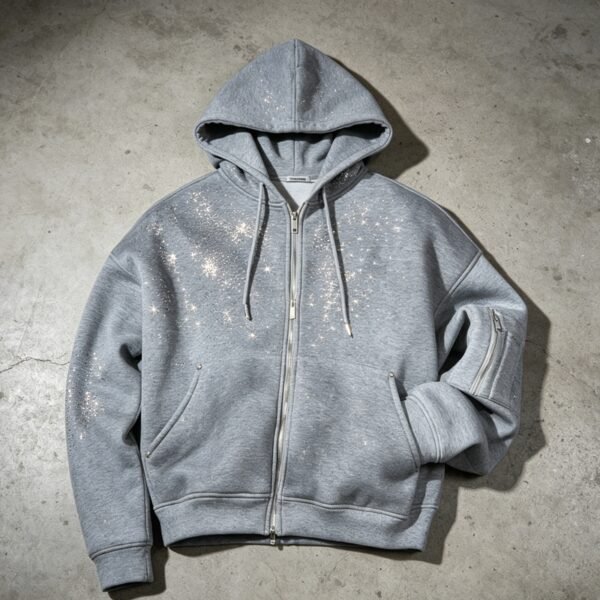






This custom rhinestone zip hoodie is developed around a practical weight question: the fabric specification must describe the finished garment, not only the greige or pre-process cloth. Rhinestone coverage, zipper hardware, pockets, and edge treatments all change how buyers experience the final product.
Why Finished GSM Matters Here
A pre-process fabric weight describes the base knit before cutting, embellishment, laundering, and hardware attachment. This hoodie visibly carries extensive rhinestones, a metal zipper, and pocket hardware, so the finished garment can feel materially heavier than the fabric roll suggests.
That distinction affects wearability, shipping assumptions, and size-set consistency. Two hoodies made from the same nominal fabric can handle differently when sparkle coverage changes. VeeWen should therefore record base GSM separately from finished GSM and use the approved sample as the commercial reference.
Reading the Supplied Construction
The image shows a heather-gray zip hoodie with sparkle concentrated over the front and extending across the sleeves. A drawstring hood, ribbed-looking cuffs, lower rib area, and sleeve zip pocket create several localized weight and stiffness points around the body.
Those components create a specific balance problem: the torso must remain flexible while embellished zones resist bending. The buyer should inspect zipper alignment, hood recovery, cuff comfort, and whether the front decoration pulls the garment forward when worn open or partially zipped.
Embellishment Changes the Weight Map
Rhinestones do not distribute weight evenly. A dense chest field concentrates load near the zipper and upper torso, while sleeve coverage changes arm swing and seam behavior. Placement approval should therefore include a measured decoration map, not simply a general instruction to add sparkle.
The trade-off is visual impact versus softness and mobility. Reducing coverage may improve drape but weaken the intended statement; increasing it may create a richer surface while raising finished weight. The correct decision depends on the target silhouette and wearing environment.
Base Fabric and Process Risk
A cotton-blend reference appears in the source wording, but no percentages or verified GSM are supplied. The development record should keep those fields open until the selected knit, pretreatment, embellishment method, and laundering route are confirmed against the intended hand feel.
VeeWen can compare candidate fabrics using the same decoration placement and finishing sequence. That controlled comparison separates fabric weight from process weight, helping the buyer identify whether stiffness comes from the base knit, adhesive, stone density, washing, or combined construction.
VeeWen Development Checkpoint
VeeWen's workflow should begin with a technical pack that separates base-fabric GSM, decoration coverage, hardware list, and finished-GSM acceptance range. The first prototype then needs weighing before and after the planned wash or finishing process, with measurements logged by size.
The approval sample should be reviewed on-body and laid flat. Buyers can confirm whether the hood sits correctly, the zipper remains balanced, the sleeve pocket stays functional, and sparkle placement matches the visual reference. Only then should the size set and bulk specification be released.
Commercial Approval Decision
The buyer's key approval is not a single fabric number. It is a finished product envelope covering weight, drape, decoration density, closure behavior, and comfort. The approved sample should define the tolerance for each factor so later production changes remain visible and actionable.
MOQ: 100 pieces per style applies to the commercial program. Before placing that order, confirm the final composition, base and finished GSM, embellishment map, care route, measurement tolerances, and packaging assumptions in the signed technical documentation.
Buyer Questions
Why should the buyer approve finished GSM instead of fabric GSM alone?
Rhinestones, zipper hardware, washing, and other construction details add mass or stiffness. Finished GSM better represents the garment actually delivered and worn.
Does the source confirm the hoodie's cotton-blend percentages?
No. The source wording references a cotton blend, but exact fiber percentages are not supplied and must remain To Confirm during development.
What should the first sample demonstrate?
It should demonstrate the approved sparkle map, balanced zipper, comfortable hood and cuffs, functional pocket, target drape, and recorded finished weight after planned processing.
What is the commercial minimum for this style?
The exact commercial minimum is MOQ: 100 pieces per style, subject to final technical approval and agreed production documentation.
Approve the Finished-Weight Development Brief
Send the target silhouette, decoration map, and preferred hand feel to VeeWen for a measurable sample review covering base GSM, finished GSM, hardware balance, and wear comfort.




Reviews
There are no reviews yet.