
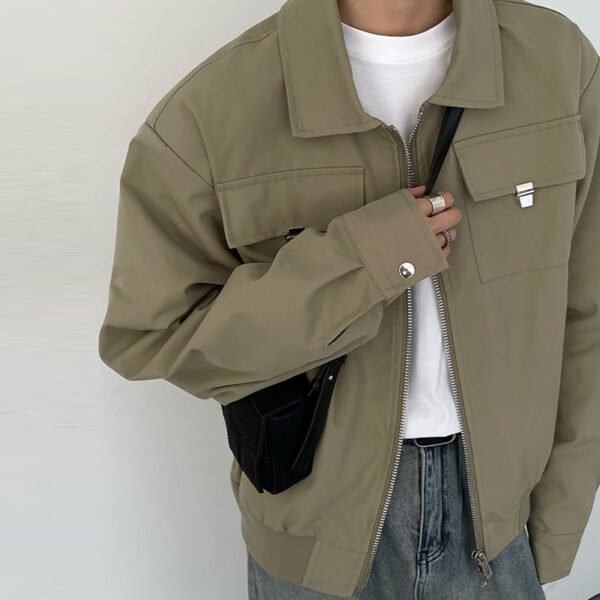
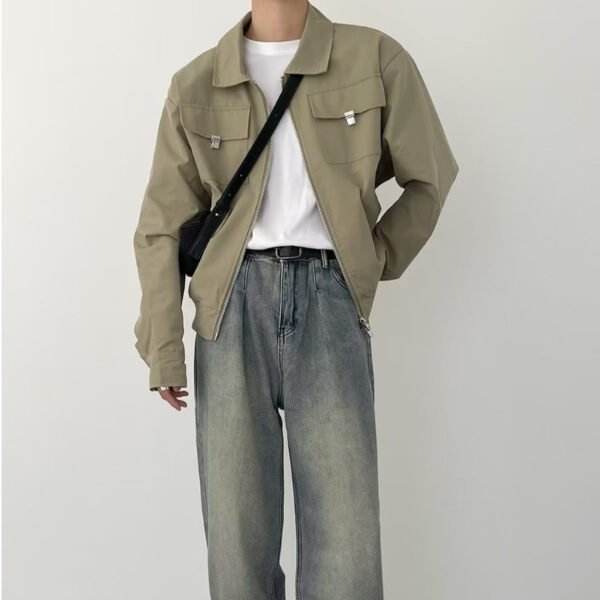
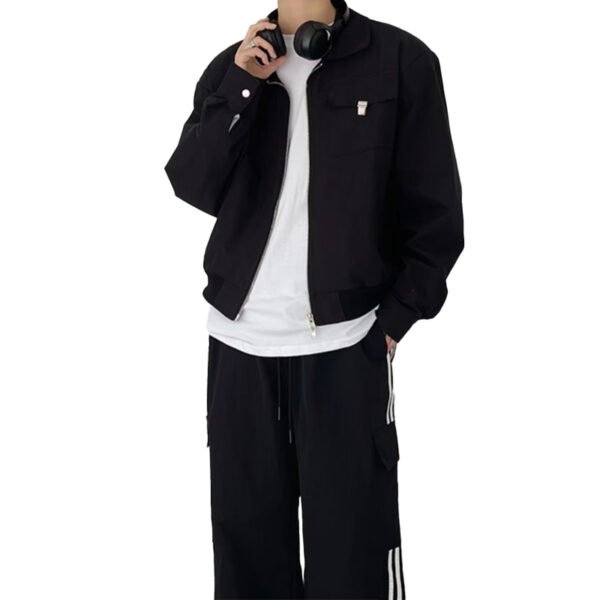
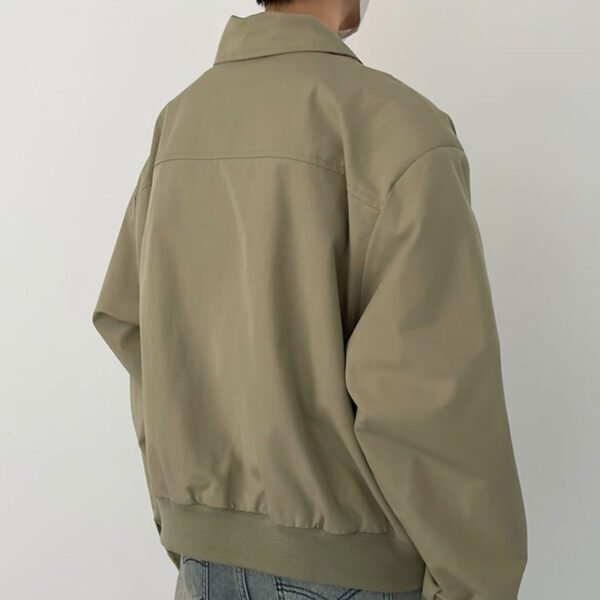
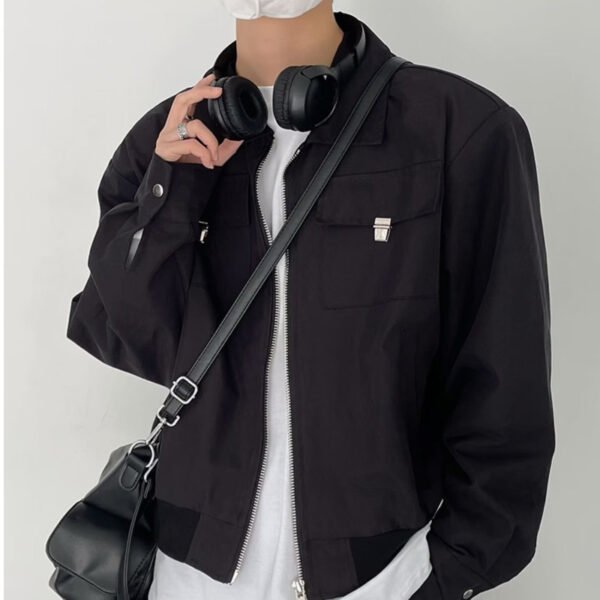


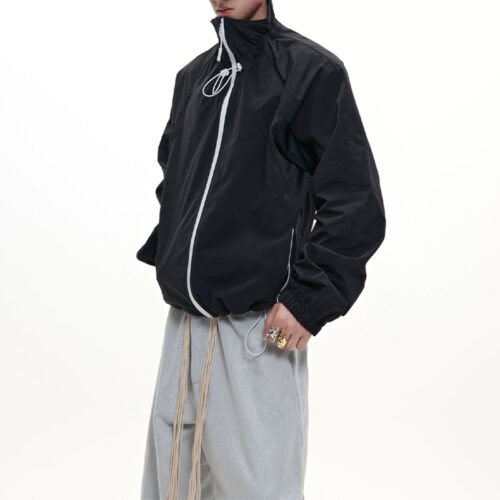
This jacket is best developed as a controlled utility shell, where patch placement and stitch containment determine both visual balance and sewing reliability. The supplied image shows symmetrical chest pockets, defined flap edges, and a clear center zipper, creating a practical approval framework for sampling and grading.
Front Patch Architecture
The jacket's strongest visual feature is its paired chest-pocket architecture. Each patch occupies a defined rectangular field, while the center zipper creates a deliberate vertical break. This arrangement gives buyers measurable placement references for body width, pocket spacing, and finished symmetry.
Because patch pockets sit directly on the visible front, small placement changes can alter the garment's perceived attitude. VeeWen should lock pocket coordinates from the center front, shoulder line, and armhole before grading, then confirm the relationship on a fitted sample.
Containing Stitch Lines
Visible perimeter stitching gives each pocket a contained edge rather than allowing the patch to disappear into the jacket surface. The stitch path should remain parallel to pocket borders, with consistent corner turns and enough clearance from flap hardware.
This containment approach also helps production review. A buyer can inspect whether the stitch line follows the approved rectangle, whether corners remain clean after pressing, and whether the pocket opening stays unobstructed. The final stitch density and seam allowance remain To Confirm.
Hardware and Clearance
The silver-tone center zipper and pocket fasteners create concentrated hardware points across the front. Their spacing should be checked against patch edges so zipper tape, snaps, and topstitching do not visually compete or physically interfere during operation.
Hardware placement carries a trade-off between utility character and sewing tolerance. Tighter spacing creates a sharper appearance but leaves less room for needle access and reinforcement. VeeWen's development review should approve hardware locations alongside stitch routes, not afterward.
Grading the Utility Map
A pocket map that looks balanced in one size can drift across a full size range if dimensions are graded independently. The chest patches, flap proportions, zipper position, and lower hem panel therefore need linked grading rules rather than simple proportional enlargement.
The image supports a restrained, standard-relaxed silhouette, but it does not verify measurements. Buyers should provide target size specs or approve VeeWen's proposed base measurements, then review graded placement on at least one smaller and one larger sample.
Workflow Checkpoint
VeeWen's product-development workflow should translate the image into a front construction map: center-front reference, pocket rectangles, flap angles, zipper channel, hardware points, and stitch-clearance notes. This exact map becomes the shared control document for patternmaking and sample review.
The approval checkpoint is visual and technical at once. Buyers should compare the first sample against the approved map under flat and worn views, checking symmetry, edge containment, hardware access, and pressing behavior before releasing the style for size-set development.
Trade-Offs and Approval
Contained patches improve order and make inspection straightforward, but they add visible stitch mileage and demand accurate handling around corners, flaps, and hardware. A softer shell may improve comfort while making pocket edges less crisp; a firmer shell may sharpen definition while changing drape.
The buyer decision is to prioritize the intended balance between clean utility geometry and relaxed wearability. Confirm shell behavior, pocket dimensions, stitch appearance, and hardware spacing through sampling, then approve the construction map before placing the required minimum order.
Buyer Questions
What should be approved first for this jacket?
Approve the front pocket map, center-zip relationship, flap dimensions, hardware positions, and stitch-clearance notes before reviewing fabric or final trim selections.
Is the jacket composition confirmed?
No. The supplied evidence shows a woven-looking shell, but composition, weight, lining, and performance characteristics remain To Confirm through development.
How should pocket placement be checked across sizes?
Use center front, shoulder, and armhole references, then review graded samples in smaller and larger sizes to confirm consistent visual balance.
What is VeeWen's minimum order?
The exact commercial minimum is MOQ: 100 pieces per style, subject to final approval of specifications, materials, construction, and production details.
Approve the Utility Construction Map
Send your target measurements, shell references, and trim preferences to VeeWen for a focused development review covering pocket coordinates, stitch containment, hardware clearance, and graded-size approval.


Reviews
There are no reviews yet.