

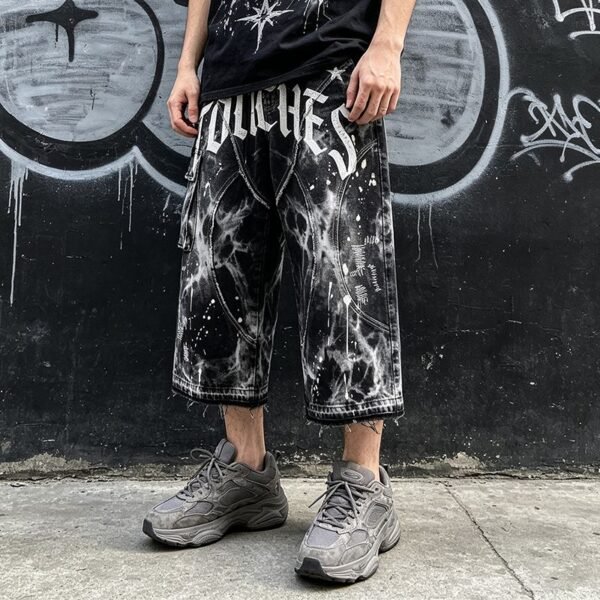
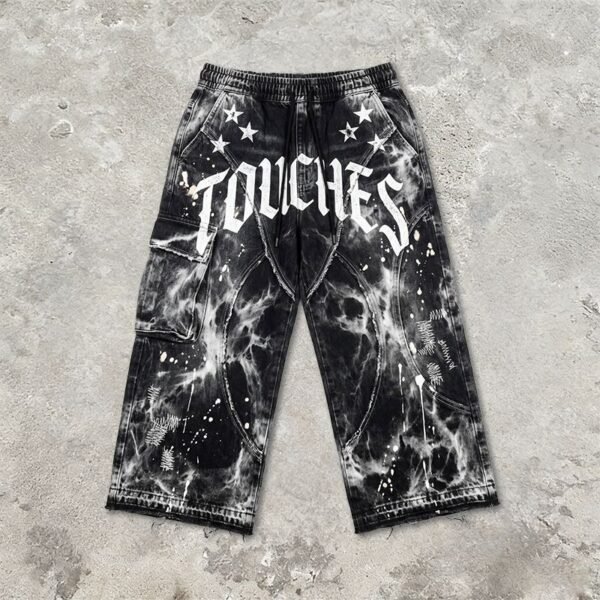
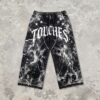
This pant is developed as a coordination problem between movement and visual placement. The supplied image shows a relaxed cropped utility shape, elasticized waist, angled panels, and high-contrast graphics. Its success depends on directing fabric behavior through the pattern while keeping artwork readable across seams, pockets, and grading.
Stretch Direction Starts With the Wearer's Motion
The image shows a roomy lower silhouette that must accommodate walking, sitting, and bending without pulling the graphic panels out of alignment. Stretch direction therefore belongs in the pattern discussion, because comfort depends on where recovery supports movement rather than simply adding elasticity everywhere.
VeeWen should test the selected fabric in warp and weft before final cutting, recording extension and recovery behavior by panel. Buyers should approve the direction that preserves rise comfort and leg mobility while keeping the cropped shape stable after repeated movement and laundering.
Panel Mapping Protects Graphic Readability
Large white lettering spans the upper leg while stars and distressed marks sit near seams, creating a deliberately interrupted visual field. The artwork is not independent from construction: every panel break, pocket opening, and seam angle can alter spacing, scale, or recognition.
The development file should therefore treat artwork as a graded pattern overlay. VeeWen can mark placement landmarks on each panel, identify intentional seam crossings, and verify that the main graphic remains balanced when the wearer stands, walks, and turns through the garment's intended range.
Utility Details Change the Pattern Balance
Angled panel lines and side utility pockets add structure to an otherwise relaxed cropped form. They also create local thickness, weight, and visual interruptions that can influence stretch comfort. The buyer should evaluate pocket position with the artwork, rather than approving either feature in isolation.
VeeWen's pattern review should confirm pocket opening stability, panel transitions, and access while the wearer moves. If a pocket interrupts an important graphic zone, the team can adjust the artwork boundary or reposition the detail before grading fixes the decision across all sizes.
Waist Comfort Must Respect the Graphic Block
The waistband appears gathered and elasticized, giving the pant a casual entry point while concentrating movement at the top edge. That movement can shift the relationship between the waistband, upper graphic, and front rise, especially when the garment is worn lower or higher.
The approval sample should examine waistband recovery, rise comfort, and graphic height together. VeeWen should document the intended wear position and elastic behavior, allowing buyers to decide whether the relaxed utility effect survives natural adjustment without distorting the primary artwork.
VeeWen Workflow Coordinates Pattern and Artwork
This style enters VeeWen's workflow through a coordinated pattern-artwork process: silhouette block, stretch-direction trials, panel mapping, pocket engineering, print or surface-placement review, and movement-based sample assessment. The sequence keeps material behavior visible before graphic files are treated as final production assets.
The practical approval package should include a full pattern with artwork landmarks, stretch-direction notes, pocket positions, and photographed movement checks. Buyers can then review one integrated system, while VeeWen has a clear basis for correcting comfort or placement without creating a new visual problem.
Approve the System Across Sizes
The strongest version balances graphic impact with easy movement, using the cropped leg and utility details to frame rather than fight the artwork. The main risk is that stretch, grading, or seam placement causes lettering to skew and distressed motifs to drift unpredictably.
Before production approval, buyers should inspect the complete size set on-body and compare front, side, seated, and walking views. Confirm recovery, rise comfort, pocket function, and artwork landmarks, then authorize MOQ: 100 pieces per style against the approved pattern-artwork package.
Buyer Questions
Is the fabric confirmed to contain stretch?
No. The assigned development axis concerns stretch direction, but the supplied evidence does not verify fiber content, elastane percentage, or measured recovery.
Why must artwork and pattern be approved together?
Seams, pockets, grading, and fabric movement can shift graphic placement, so independent approvals may produce correct artwork that looks incorrect on the finished garment.
What movement checks matter most?
Review standing, walking, sitting, and bending positions, then compare stretch recovery, rise comfort, pocket stability, and graphic alignment across approved sizes.
What is the minimum order for this style?
VeeWen's exact commercial minimum is MOQ: 100 pieces per style, subject to final specifications, approved samples, and production planning.
Coordinate Your Graphic Cargo Pant Development
Share your artwork, target fabric direction, and preferred utility layout with VeeWen for an integrated pattern review that protects movement, placement, and MOQ: 100 pieces per style.


Reviews
There are no reviews yet.