

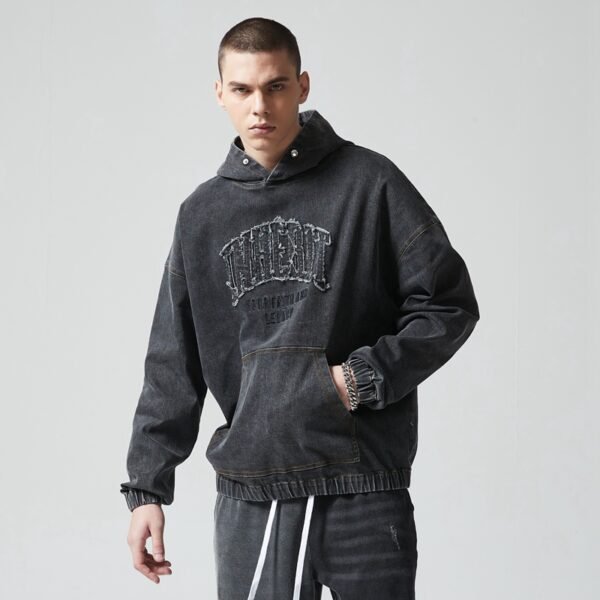
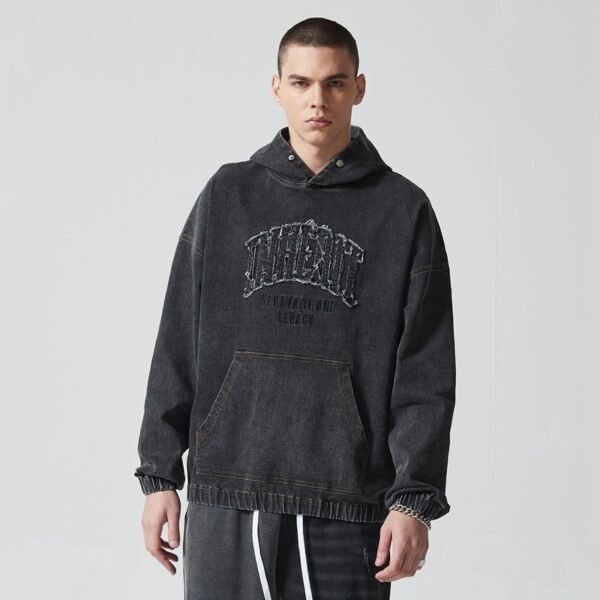
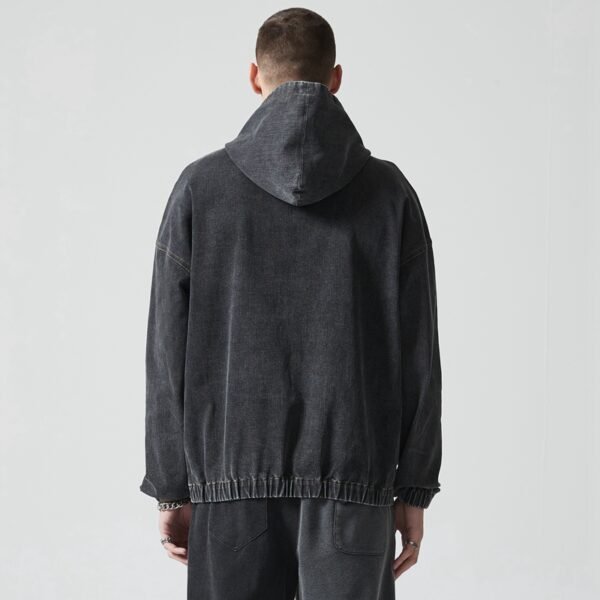
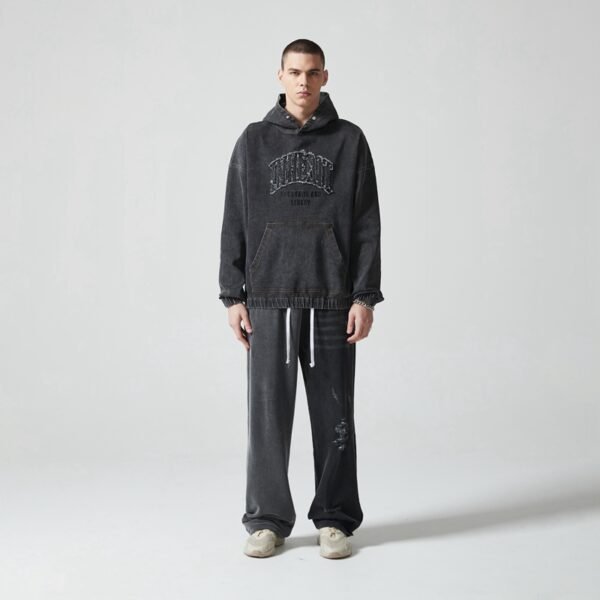



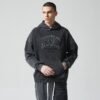
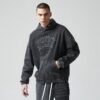
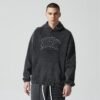

This pullover hoodie depends on controlled fabric behavior before cutting. Its oversized shape, stretchy denim-style surface, washed charcoal tone, and distressed chest treatment create a deliberate balance between relaxed drape and dimensional stability for repeat production.
Why Relaxation Comes First
Stretchy fabric can change length or width after rolling, handling, washing, or resting. Relaxing the material before marking allows the marker to reflect a more settled state, reducing avoidable mismatch between the approved oversized sample and production panels.
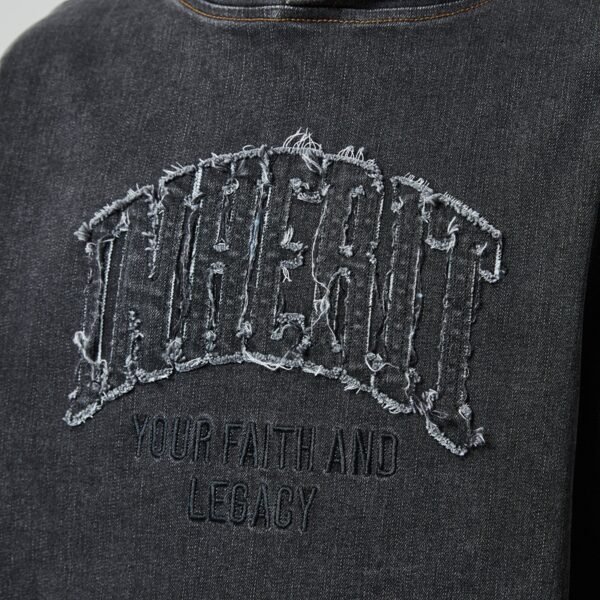
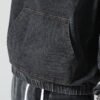
The close-up shows a textured washed surface rather than a visually uniform fleece appearance. That surface treatment makes grain, shading, and distortion more noticeable, so the development file should record relaxation conditions alongside fabric identity and approved color references.
Protecting the Oversized Silhouette
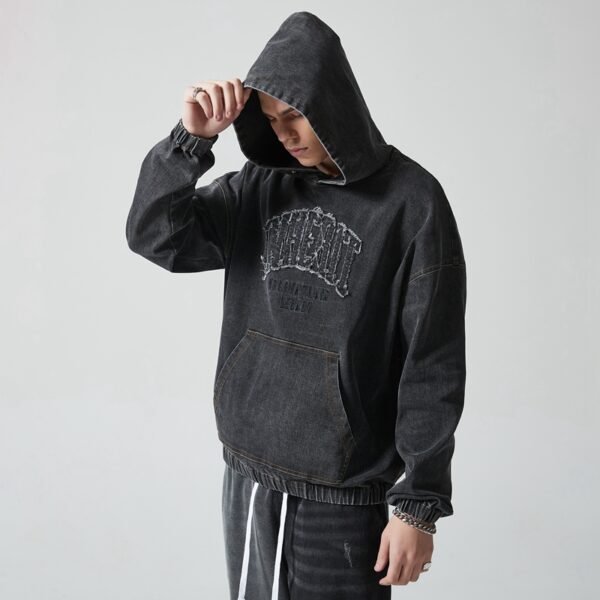
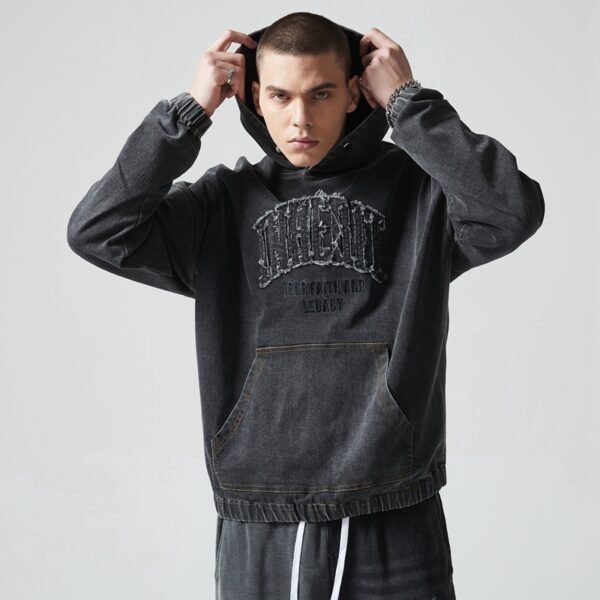
An oversized hoodie relies on proportion: shoulder width, body volume, sleeve length, and hood scale must work together. If stretched panels are cut before relaxation, accumulated dimensional change can shift those relationships and make the garment look narrower, shorter, or uneven.
VeeWen's product-development workflow should establish a relaxed-fabric marker, then compare key panel measurements against the pre-relaxation state. The approval checkpoint is not simply comfort; it is whether the full silhouette still matches the intended oversized balance after controlled handling.
Washed Surface, Controlled Variation
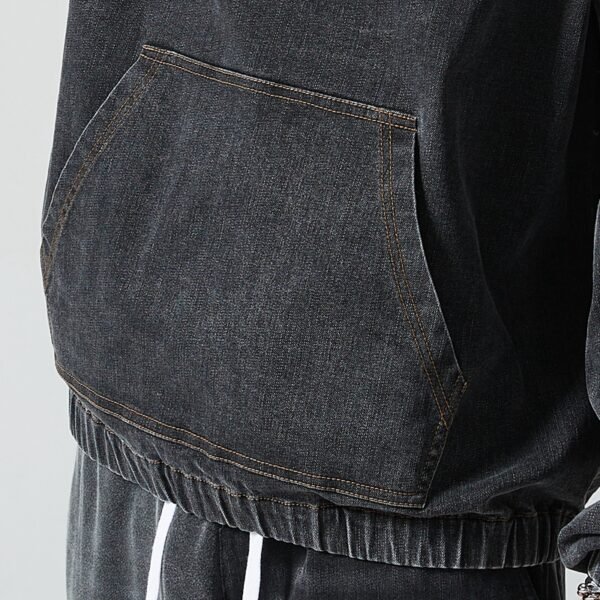
The charcoal body appears softly faded with vertical textile character, while the chest area carries darker tonal depth. This contrast suggests that surface appearance is part of the design language, making repeatability important without eliminating the authentic irregularity expected from a vintage finish.
Development should separate acceptable wash variation from unacceptable distortion. Define reference panels for overall tone, high-contact fading, and seam behavior, then inspect the relaxed cut pieces before sewing so the finished wash does not amplify placement or proportion errors.
Distressed Patch Engineering
The chest patch uses frayed borders, loose-looking threads, and irregular openings to create a worn textile effect. Those details can be visually strong, but excessive unraveling may weaken containment, obscure the underlying lettering, or vary substantially between pieces during finishing.
The patch approval should therefore specify its outer boundary, distress intensity, attachment method, and relationship to the tonal wording beneath it. VeeWen can use the approved close-up as a visual target while confirming stitch density and edge control through development sampling.
Stretch Recovery and Wear Balance
The source wording identifies the style as stretchy, but it does not verify fiber content, GSM, or recovery values. Those unknowns matter because stretch can improve movement while also influencing hood opening, cuff behavior, seam loading, and the long-term appearance of distressed surface details.
Before bulk approval, request source-supported fabric data and test the garment through representative movement and care handling. The buyer decision is whether recovery, hand feel, and relaxed dimensions support the target market without requiring unsupported performance claims.
Production Approval Checkpoint
For this style, the critical approval sequence is fabric identification, relaxation record, marker review, cut-panel inspection, wash reference, patch placement, and final measurement confirmation. Each step connects directly to the visible combination of oversized volume, washed texture, and distressed chest artwork.
VeeWen should freeze the approved references only after the buyer reviews a representative finished sample. Confirm the relaxed marker, graded measurements, wash tolerance, patch boundary, and lettering position before releasing the style at MOQ: 100 pieces per style.
Buyer Questions
Is the fabric confirmed as denim?
No. The source wording and image indicate a denim-style appearance, while exact fiber composition, weave, GSM, and construction remain To Confirm during development.
Why relax the fabric before cutting?
Resting allows stretch and tension to settle before marking, helping preserve panel dimensions and reducing avoidable changes to the oversized silhouette during production.
Can the distressed patch be customized?
Yes, the patch concept can be developed around approved artwork, placement, edge distress, stitch containment, and lettering relationships before production confirmation.
What is the minimum order?
The commercial minimum is MOQ: 100 pieces per style, with final specifications, approvals, and order terms confirmed before production release.
Approve the Relaxed-Fabric Development Route
Send your artwork, target measurements, and fabric references to begin a controlled hoodie development review. VeeWen will align relaxation, marker, wash, patch, and approval checkpoints for MOQ: 100 pieces per style.


Reviews
There are no reviews yet.