



This short development brief turns a relaxed washed silhouette into a measurable recovery problem: preserve an easy streetwear hand and distressed edge while preventing the waistband from losing tension or the hem from spreading unpredictably during wear.
Visible Construction Evidence
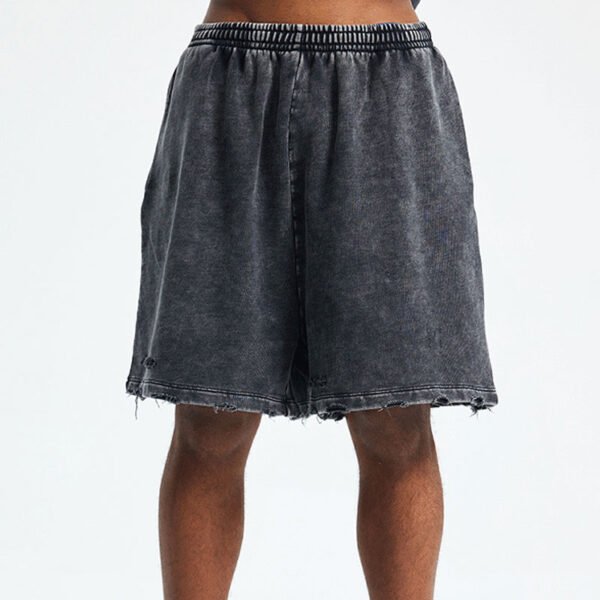
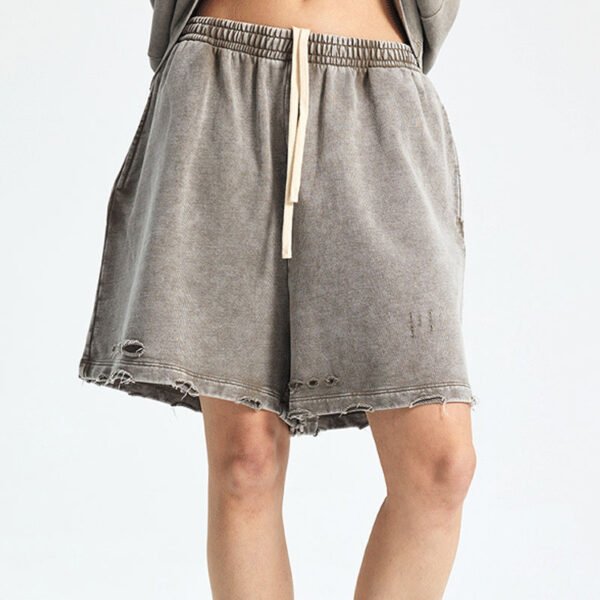
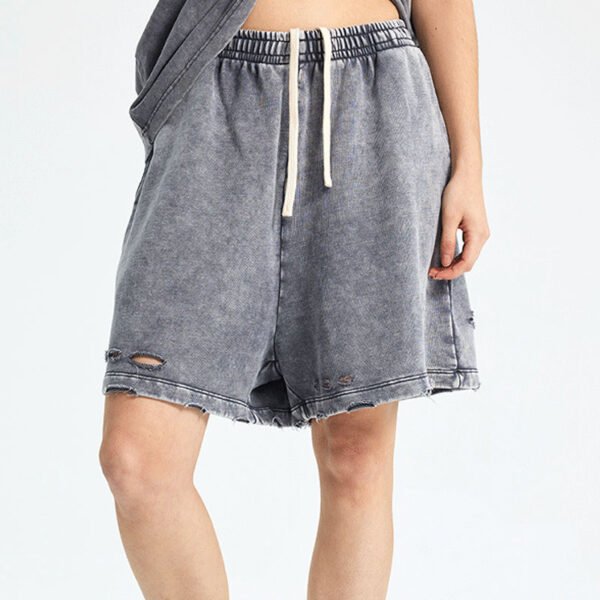
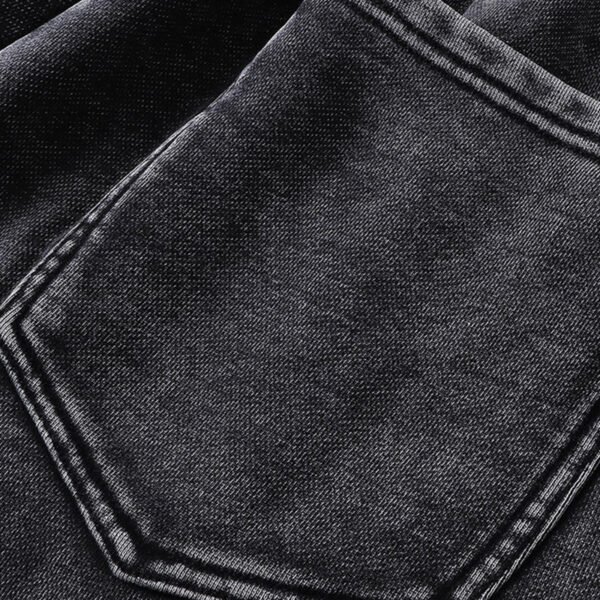
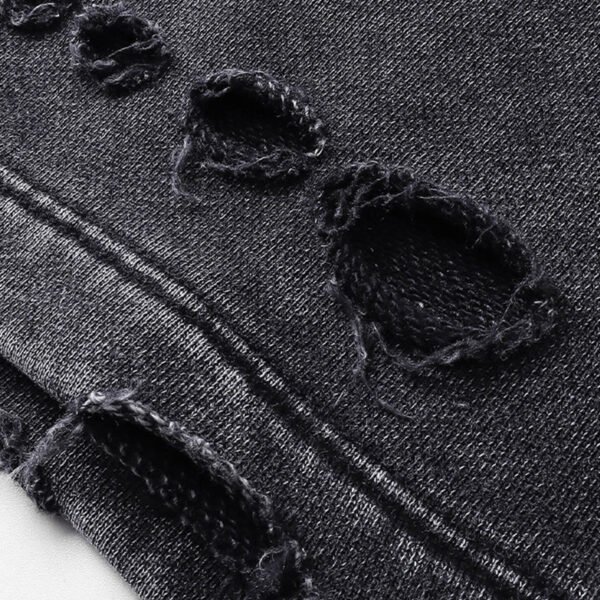
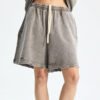
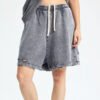
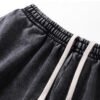
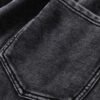
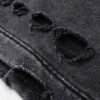
The supplied image presents a dark washed short with an elasticated waistband, a centered front rise, and broad straight legs. The lower edge is cut raw and visibly frayed, establishing a deliberate tension between casual looseness and controlled garment boundaries.
The waistband gathers into repeated horizontal ridges rather than lying flat, while the hem shows uneven thread release across both legs. Those details make recovery measurable: the waist must return after extension, and the raw edge must retain its intended outline.
Recovery Mechanism
For this design, recovery is created primarily through elastic behavior at the waist and edge stabilization at the hem. Elastic width, insertion tension, seam allowance, and stitch density will influence whether the relaxed shape returns cleanly after sitting, movement, and laundering.
A raw hem behaves differently from a finished cuff because released yarns can continue opening under abrasion. VeeWen should therefore develop the recovery sample around controlled edge exposure, selected stitch security, and wash observation, while preserving the irregular appearance visible in the reference.
Wear Trade-Offs
Higher waistband tension can improve rebound but may undermine the loose, easy fit shown in the image. Conversely, a softer elastic setup can feel more comfortable while allowing rolling, stretching, or uneven gathering. The target should be stable recovery without making the short feel restrictive.
More aggressive fraying can strengthen the vintage impression, yet it also increases variation between pieces and may shorten the visual life of the hem. Buyers should decide whether the collection prioritizes a dramatic first impression or a tighter tolerance for repeatable retail presentation.
VeeWen Development Workflow
VeeWen can translate this axis into a focused sample sequence: first lock the leg opening and waist dimensions, then compare recovery constructions using the same washed body and hem exposure. This isolates recovery decisions instead of allowing silhouette, wash, and edge variables to obscure one another.
During review, each sample should be assessed immediately after extension and again after the agreed laundering simulation. Record waist rebound, gathering uniformity, fray spread, and leg balance, then approve one construction package before grading the style across sizes.
Wash and Edge Control
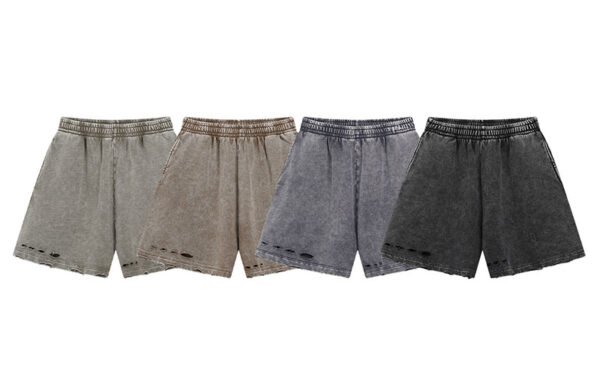
The charcoal surface contains lighter and darker areas that make the distressed edge visually prominent. Wash development should protect that relationship, because excessive abrasion may flatten tonal depth or make the hem look damaged rather than intentionally unfinished.
A controlled wash recipe should be evaluated alongside the recovery construction, not afterward. The buyer should identify acceptable variation in grey tone, whiskering, and thread release, giving production a practical visual boundary for bulk approval.
Buyer Approval Checkpoint
Before approval, request a measured sample review covering waistband extension, return behavior, hem width, fray length, and appearance after laundering. The critical question is whether the relaxed silhouette remains recognizable without losing the designed raw-edge character.
Once those limits are agreed, confirm the size chart, trim direction, wash standard, and tolerance language for production. VeeWen can then carry the approved recovery construction into a private-label style package under the exact commercial minimum of MOQ: 100 pieces per style.
Buyer Questions
Is the waistband ribbed or elasticated?
The image visibly shows gathered elastic behavior, but the exact elastic, rib construction, width, and recovery specification remain To Confirm during development.
Can the raw hem remain uneven?
Yes, the uneven edge can guide development, but VeeWen should establish controlled fray limits so the intended appearance remains consistent across approved production pieces.
What should the first sample prove?
The first sample should prove waist rebound, leg balance, hem containment, wash appearance, and whether the relaxed hand survives laundering without excessive edge opening.
What is the commercial minimum?
The exact commercial minimum is MOQ: 100 pieces per style, subject to approved specifications, size grading, materials, trims, and final production documentation.
Approve the Recovery Direction
Send the target measurements, wash references, and preferred distressing tolerance to begin a focused sample review for waistband rebound, hem stability, and repeatable private-label execution.


Reviews
There are no reviews yet.