


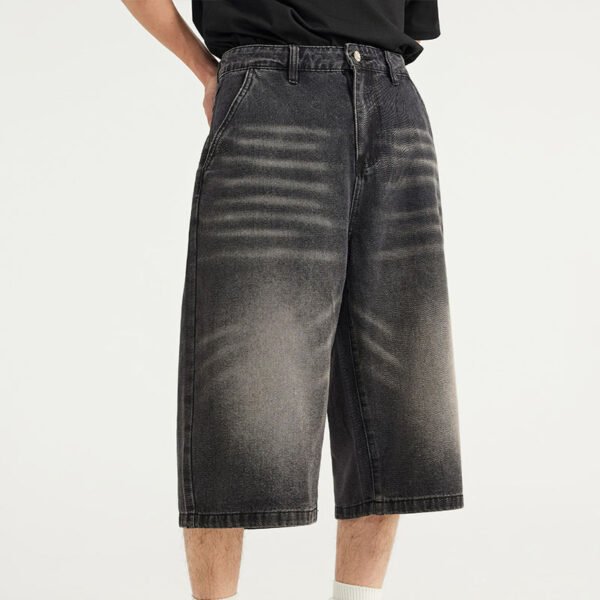




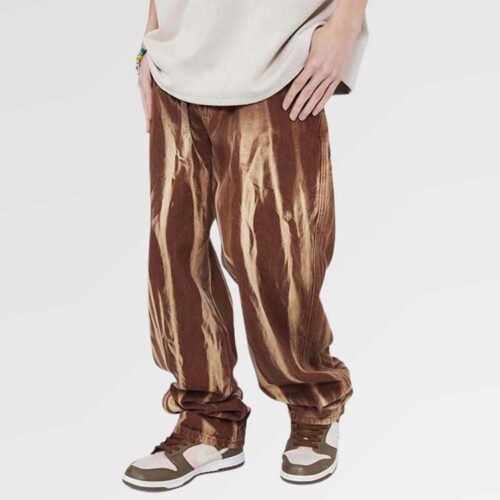
This custom wide-leg capri jean is developed around topstitch gauge and visible consistency. Its broad cropped proportion and vintage wash make seam spacing part of the product identity, so VeeWen's development review should lock stitch width, thread placement, and wash-stage appearance as one coordinated approval.
Why Gauge Matters on a Washed Denim Surface
Topstitch gauge controls the visual rhythm around waistbands, pockets, rises, and leg seams. On a washed denim surface, contrast between fabric highs and lows can amplify small spacing differences, making an otherwise minor sewing variation appear intentional or inconsistent.
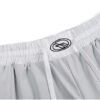
The supplied detail image provides a useful inspection cue because its light surface and gathered horizontal structure expose alignment clearly. Although the image is a close detail rather than a complete jean view, it supports a disciplined review of stitch spacing and label placement.
Wide-Leg Proportion Raises the Approval Stakes
A wide-leg capri silhouette presents more visible fabric between structural lines than a narrow jean. That openness means the relationship between outseam, inseam, hem, pocket edge, and topstitch gauge must remain balanced, or the cropped proportion can look visually unsettled.
The source wording establishes the wide-leg and capri direction, while the image evidence shows how a light, softly gathered construction can reveal uneven channels. VeeWen should therefore assess gauge against the approved pattern, not as an isolated machine setting.
Thread Placement and Construction Read
Topstitch gauge should be defined as a measurable relationship between needle lines, seam edge, and panel boundary. The development record should distinguish single-line and multi-line applications, because changing line count without recalibrating spacing can alter the garment's perceived scale.
The centered label in the supplied image also demonstrates why local details deserve the same alignment discipline as major seams. Label position, waistband channels, and drawcord exit points should be reviewed together for a controlled front-facing composition.
Wash Development Can Reveal or Soften Variation
Washing can change how topstitching reads by shifting surface contrast, compressing fabric, or emphasizing abrasion around seams. A gauge that appears balanced before washing may look wider, narrower, or less continuous afterward, particularly on pale vintage treatments.
For this reason, VeeWen's sample review should compare pre-wash and post-wash references using the same measurement points. The buyer should approve acceptable visual tolerance after finishing, because the commercial appearance is judged on the completed garment.
VeeWen Workflow for Gauge Control
VeeWen can translate the selected jean concept into a development sheet covering approved pattern lines, stitch gauge, thread direction, label coordinates, and wash checkpoints. This connects sewing control directly to the visual decisions established during design review.
At prototype stage, the buyer should inspect representative front, back, waistband, pocket, and hem areas rather than relying on one close-up. Once gauge and wash appearance are approved together, the same references can guide size-set and production checks.
Buyer Approval Checkpoint
The key approval is a washed sample whose topstitch gauge remains visually consistent across the garment's most exposed lines. Review should focus on spacing from edges, parallelism through curved areas, and whether the cropped hem preserves the intended wide-leg balance.
Approve the product only after confirming the final denim reference, stitch specification, wash shade, label placement, and measurement tolerance. If any one of these changes, reassess the complete visual system before issuing production instructions.
Buyer Questions
What should the buyer approve first?
Approve the stitch gauge, thread appearance, and washed surface together, because isolated approval can hide changes created by finishing or altered seam contrast.
Does the image verify denim composition?
No. The image supports visual observations only; fiber content, fabric weight, stretch behavior, and denim construction require a separate source reference or development sample.
Why review gauge after washing?
Washing can compress fabric and change contrast around seams, so post-finish inspection confirms whether approved spacing still produces the intended visual rhythm.
What is the commercial minimum?
The exact commercial minimum is MOQ: 100 pieces per style, with final specifications and production details confirmed during development approval.
Approve the Gauge Direction
Send the target measurements, denim reference, wash direction, and branding files to begin a focused sample review for stitch consistency, proportion balance, and final finishing approval.



Reviews
There are no reviews yet.