



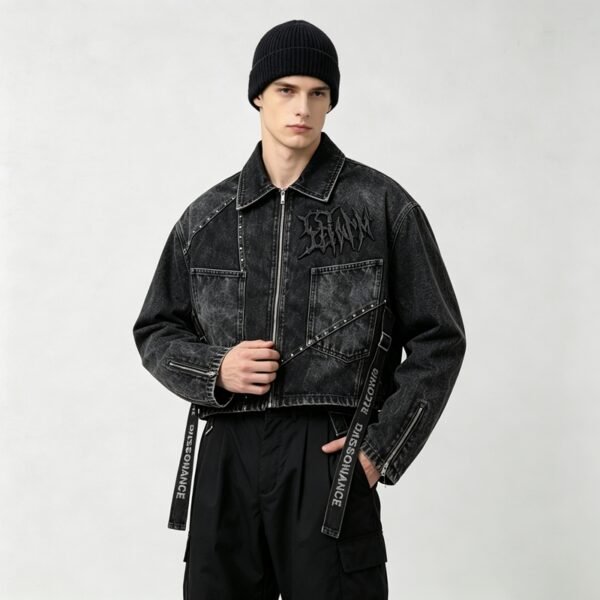
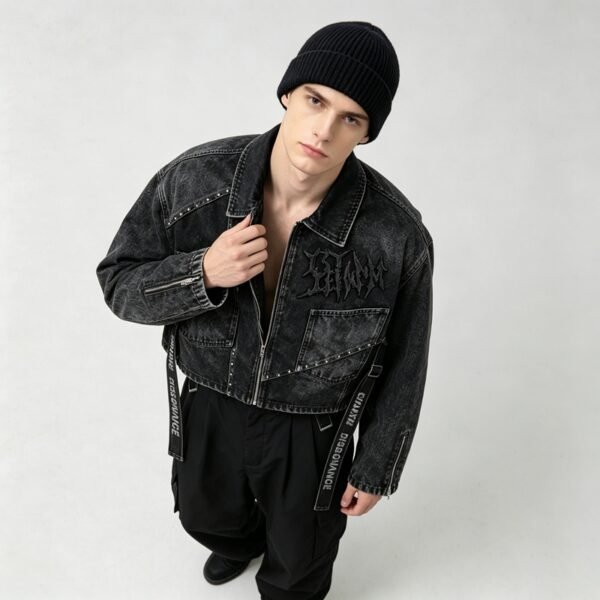

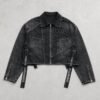



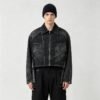



A cropped canvas jacket can look intentionally engineered when its hardware and decoration are supported by disciplined seam planning. This development record focuses on reducing bulk where badge, strap, embroidery, and body construction converge, preserving a sharper streetwear profile.
Where Seam Bulk Accumulates
High-layer intersections concentrate seam allowance, hardware mounts, strap anchors, and embroidery transitions in one localized zone. On a cropped jacket, that zone can become rigid, visually heavy, and uncomfortable unless the pattern separates layers before assembly and controls stitch access.
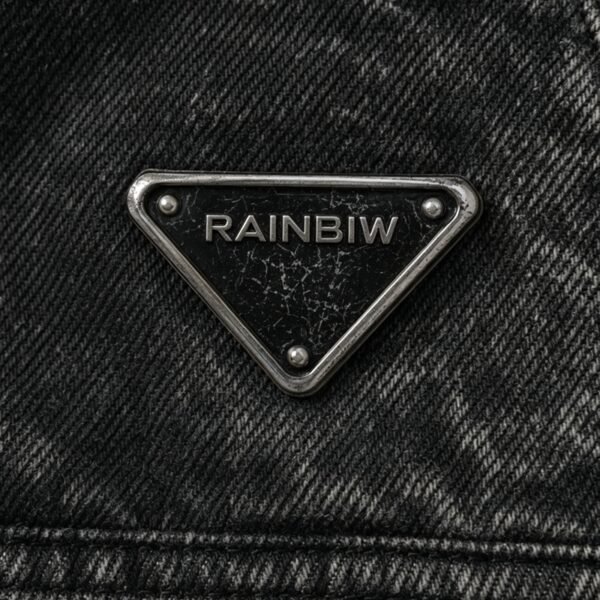
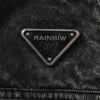
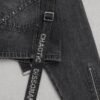
The supplied close-up shows dense black twill texture, a horizontal seam, and a triangular metal badge secured by three visible points. That evidence supports controlled seam stacking around hardware, while strap and embroidery placements remain to confirm in full views.
Pattern Strategy for Hardware Junctions
The pattern should reserve a stable base for the badge while diverting nearby seam lines away from its fasteners. A shaped facing, localized reinforcement, or staggered allowance can distribute pressure, but the final solution depends on confirmed canvas thickness and hardware backs.
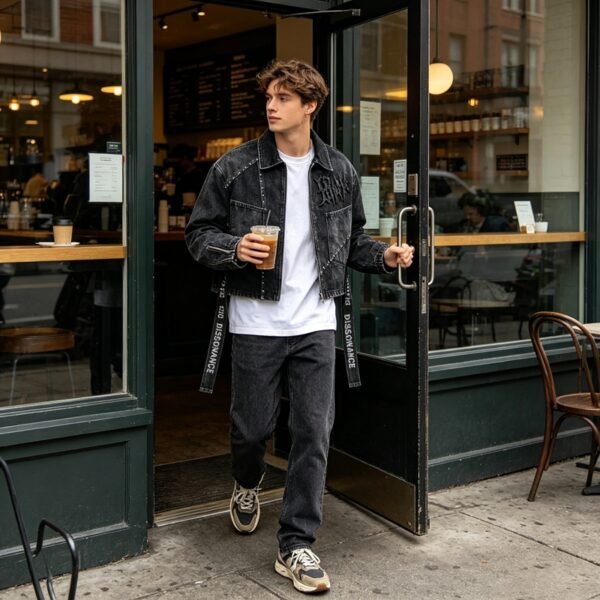
Adjustable text straps add movement and repeated loading at their anchor points. Their attachment should be tested against the cropped body's seam geometry, ensuring adjustment does not pull the badge area out of alignment or create a raised ridge beneath an outer layer.
Washed Surface and Construction Control
A washed black surface emphasizes texture, edge contrast, and any uneven ridge created underneath. Development should therefore sequence washing against seam construction, because shrinkage, abrasion, and softening can change how a previously flat intersection reads after finishing.
The image visibly presents a directional twill texture and a worn-looking metal badge face. These details suggest a tactile, distressed direction, but they do not verify a wash formula, colorfastness result, or post-wash dimensional tolerance, which require separate approval.
Balancing Decoration with Wearability
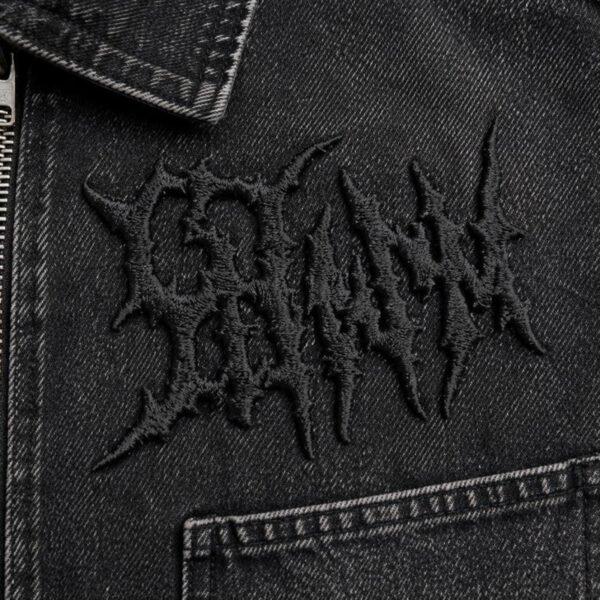
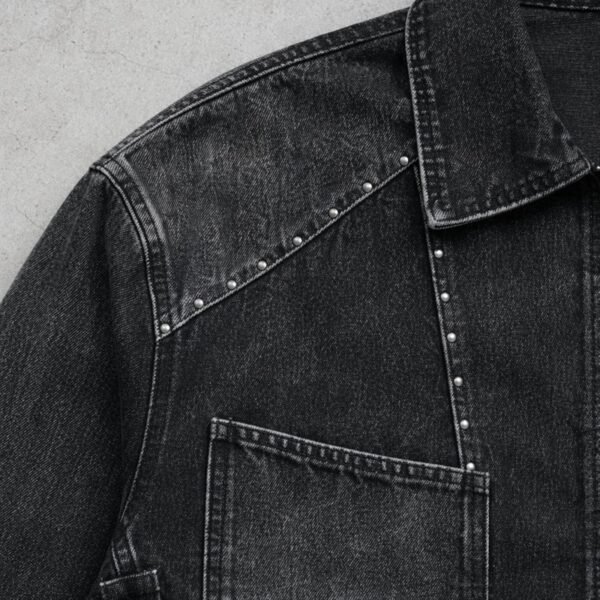
Embroidery, rivets, and straps each add visual density, but they should not all terminate at the same seam crossing. Spacing the decorative loads creates a cleaner front panel and reduces the chance that multiple needle penetrations weaken one concentrated area.
The buyer should review the inside construction as carefully as the exterior. A smooth backing, protected hardware, and controlled seam turn can improve comfort, yet lining, tape, and backing choices remain development variables rather than verified specifications.
VeeWen Development Checkpoint
VeeWen's workflow should begin by translating the supplied close-up and source wording into an intersection map: badge center, strap anchors, embroidery zones, seam paths, and wash-sensitive edges. The first approval is therefore a layered construction sketch tied to the buyer's measurement sheet.
After that map is approved, VeeWen can develop a construction sample that isolates the highest-bulk junction, then review exterior appearance and interior comfort together. The buyer should record acceptable ridge height, hardware security, strap movement, and wash appearance before size grading.
Approval and Production Readiness
Production readiness depends on converting the visual direction into measurable controls. Confirm seam allowance limits, hardware specifications, stitch density, strap position, embroidery registration, wash handling, and the acceptable appearance of the badge area after finishing.
For commercial release, the buyer should approve the revised tech pack and representative sample before confirming quantities. MOQ: 100 pieces per style applies to the commercial program, while composition, testing, and exact production timing remain To Confirm.
Buyer Questions
What is the main manufacturing risk for this jacket?
The main risk is accumulated thickness where seams, strap anchors, embroidery, and badge fasteners overlap, potentially causing stiffness, ridging, or uneven exterior appearance.
What should the first sample prove?
The first sample should prove layer order, hardware stability, strap adjustment, seam comfort, badge alignment, and whether the washed surface remains visually balanced after finishing.
Is the canvas composition confirmed?
No. The source identifies canvas, but fiber composition, fabric weight, backing, shrinkage, and performance characteristics remain To Confirm through documentation or approved sampling.
What is the minimum commercial quantity?
The stated commercial minimum is MOQ: 100 pieces per style. Final quantity planning remains subject to approved specifications, color direction, hardware, and production documentation.
Approve the Seam Intersection Map
Send VeeWen your measurement sheet, decoration layout, and hardware direction for a focused construction review covering bulk control, strap loading, wash appearance, and approval-sample checkpoints.


Reviews
There are no reviews yet.