
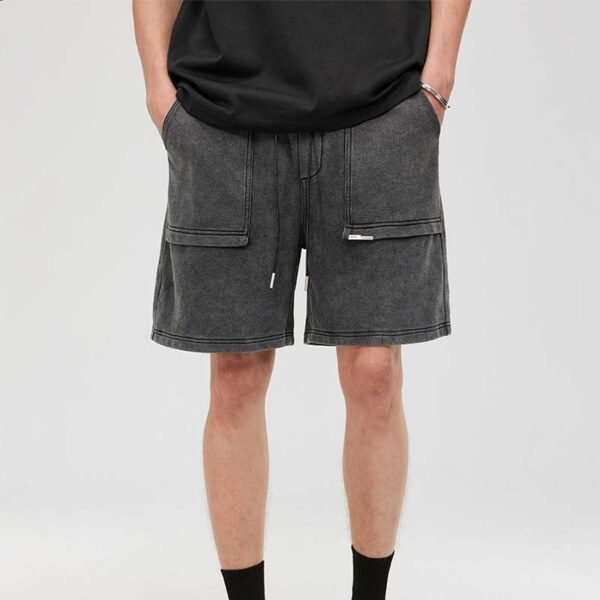
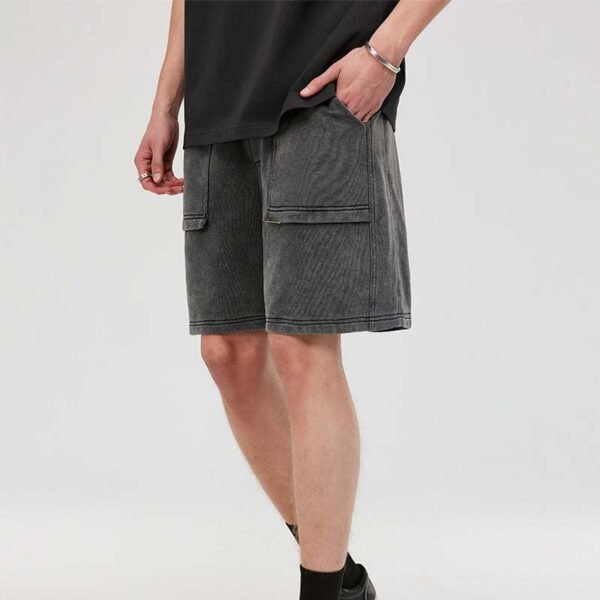
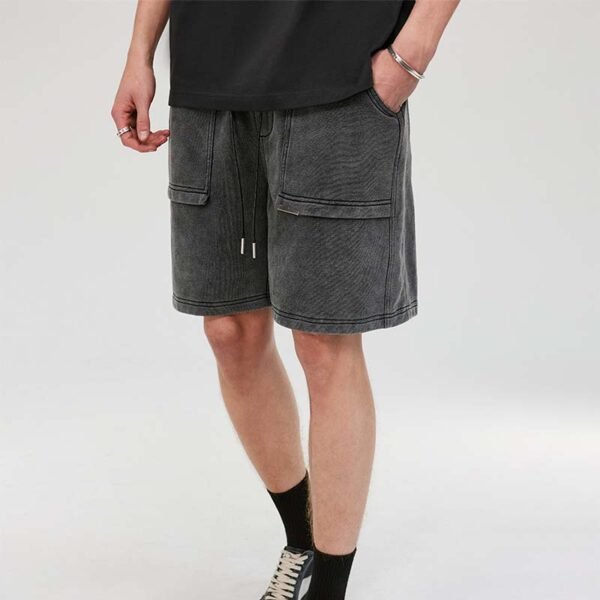
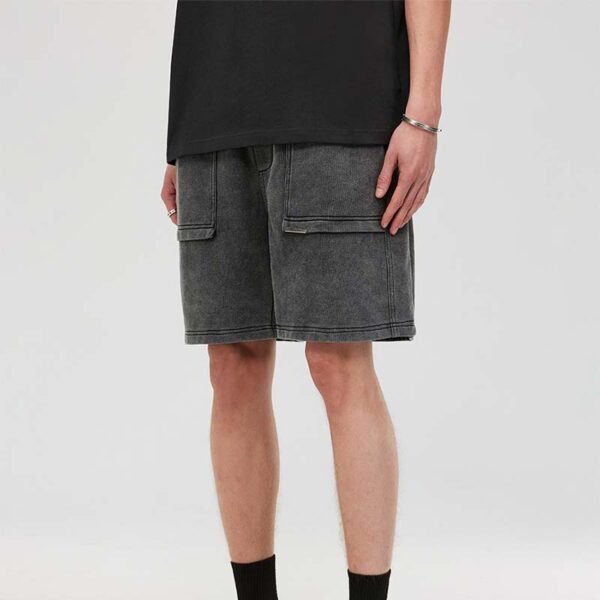




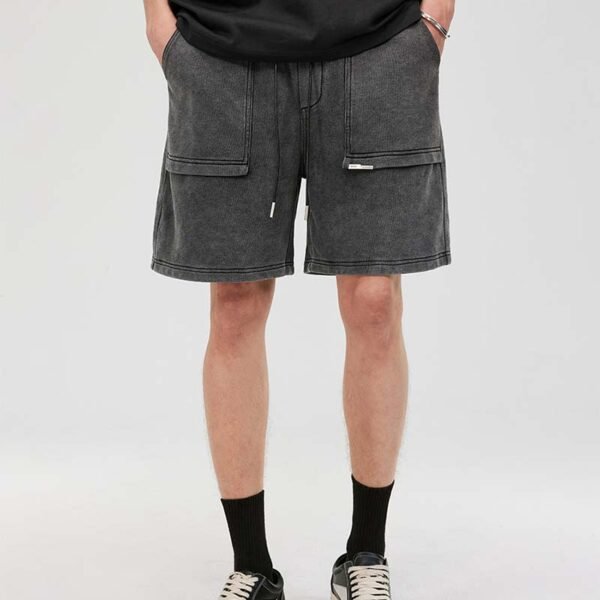
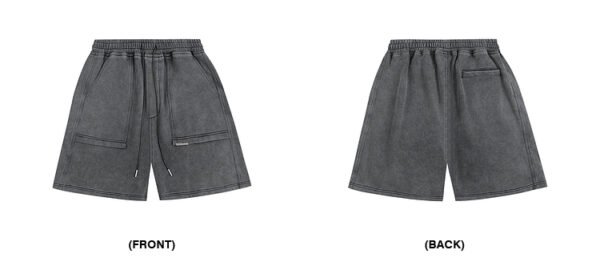


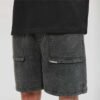


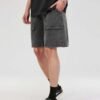
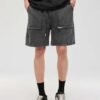
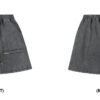
These custom washed cargo shorts are defined by front-body balance. The centered zipper, drawcord waist, large flap pockets, and dark wash create competing lines, so zipper length should be engineered as part of the pocket and topstitching system.
Why Zipper Length Controls Front Balance
A front zipper that runs too high can compete with the drawcord and make the waistband appear crowded. A zipper that is too short may reduce access and force wider opening behavior, shifting strain toward the fly, waistband, or center-front seam.
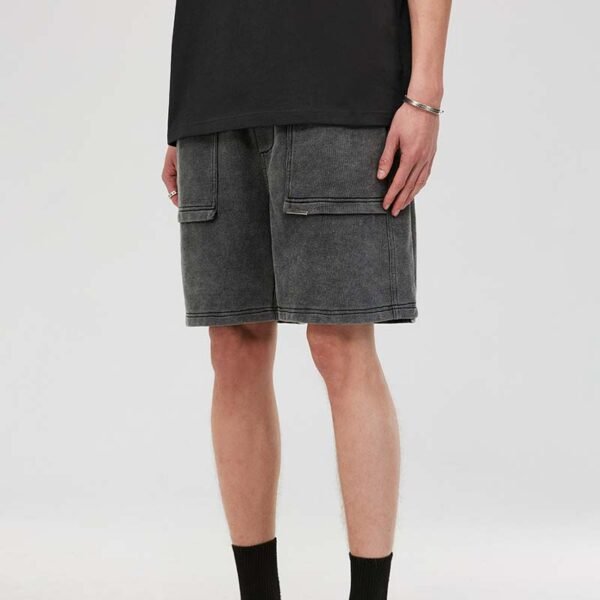
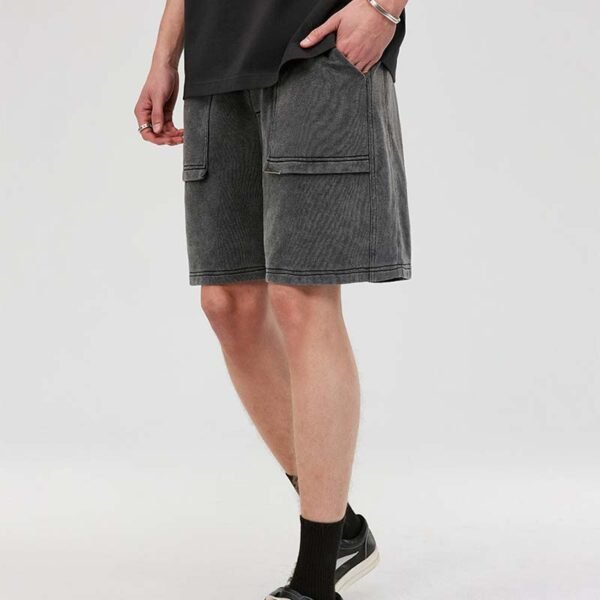
The supplied image shows broad cargo pockets beside a comparatively narrow center opening. That relationship suggests a measured zipper length: long enough for practical entry, but visually subordinate to the pocket architecture and the straight vertical line created by the fly.
Reading the Supplied Visual Evidence
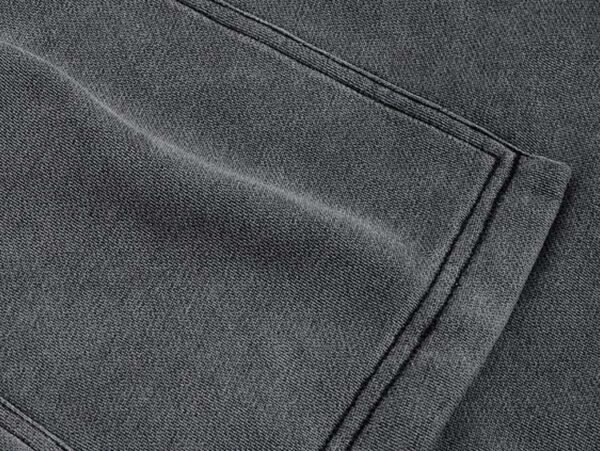
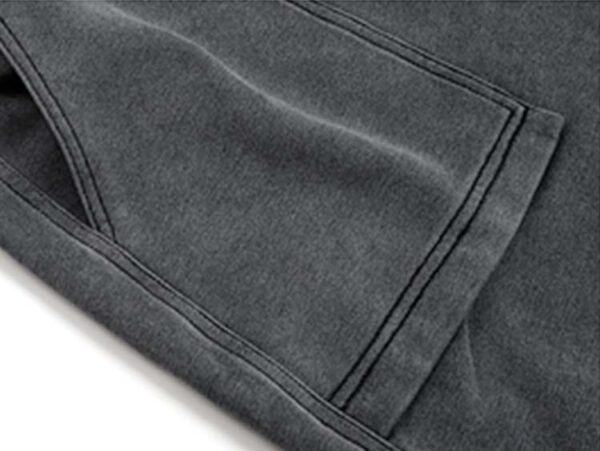
The shorts are presented in dark charcoal with a washed, slightly faded surface. Their front includes two large flap pockets, a centered opening, a drawcord, and clearly outlined seams, giving buyers several visible reference points for proportion approval.
The pocket flaps create horizontal bands across the upper thighs, while the zipper creates a vertical interruption between them. Any zipper extension should therefore be evaluated against flap spacing, pocket corners, drawcord exit points, and the visual weight of the lower leg openings.
Choosing the Opening Architecture
A conventional front fly can keep the center line familiar and visually restrained, while a longer exposed zipper changes the product's technical character. Concealed construction protects the dark tonal palette, whereas visible teeth introduce a deliberate hardware statement.
The right architecture depends on the intended buyer and styling use. For a utility-led short, access and durability may lead; for a cleaner streetwear silhouette, the zipper should recede into the front composition and allow the pocket flaps to remain dominant.
Coordinating Pockets and Topstitching
The large cargo pockets need consistent height, flap overlap, and corner shape before zipper length can be judged accurately. Their broad panels frame the center front, so even a small shift in spacing can make the opening appear too long or incorrectly centered.
Visible seam lines around the pockets and hem also establish a technical rhythm. Topstitch width, stitch density, and zipper alignment should be reviewed together, because mismatched line weights can exaggerate the opening and weaken the intended washed utility appearance.
VeeWen Development Workflow
VeeWen can convert the visual axis into a pattern brief covering rise, fly construction, zipper measurement, pocket coordinates, flap dimensions, and drawcord routing. The first sample review should prioritize front-body balance before finalizing wash intensity or branding applications.
Once the front architecture is approved, VeeWen's cut-and-sew workflow can coordinate hardware installation with pocket assembly and finishing. The buyer should inspect the completed sample after washing, since shrinkage, seam definition, and fading can change perceived zipper proportion.
Approval Checkpoint for Production
Review the shorts both standing and seated, with hands entering the pockets and the drawcord tied. Confirm that the zipper opens comfortably, the fly stays flat, pocket flaps do not interfere, and the center front remains proportionate to the legs.
Approve the style only when zipper length, pocket scale, seam treatment, and wash appearance form one repeatable specification. Record the chosen measurement from the finished sample, not solely from an unwashed pattern or isolated hardware reference.
Buyer Questions
How should zipper length be selected for these shorts?
Select it by balancing seated access and fly stability against pocket scale. The finished sample should confirm comfort, center alignment, drawcord clearance, and visual proportion.
Will a longer zipper improve pocket access?
It may improve entry, but excessive length can crowd the waistband and overpower the pocket layout. Review access benefits against front-body balance before approval.
Should the zipper be exposed or concealed?
Either can work. Concealed construction preserves the tonal utility look, while exposed hardware adds emphasis; the decision should follow the intended styling direction.
What is the minimum order quantity?
The commercial minimum is MOQ: 100 pieces per style. Final production remains subject to confirmed specifications, approved samples, and agreed ordering details.
Balance the Front Before Approval
Share your target rise, pocket measurements, hardware preference, and wash reference with VeeWen. We can structure the prototype review around zipper access, front proportion, seam rhythm, and finished surface behavior.


Reviews
There are no reviews yet.