


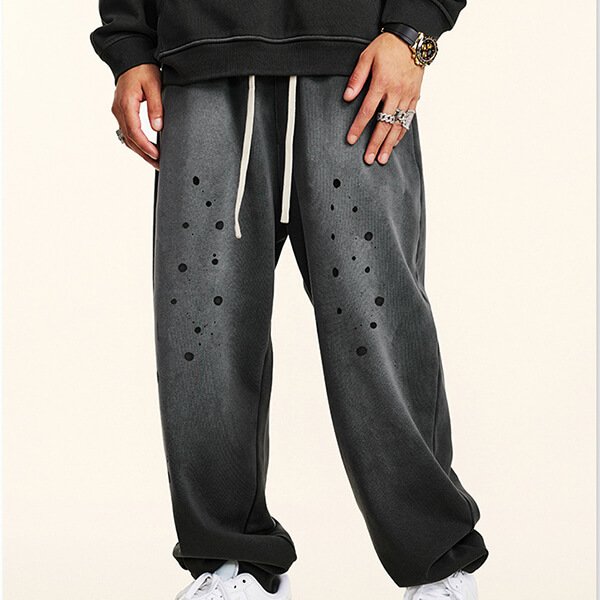


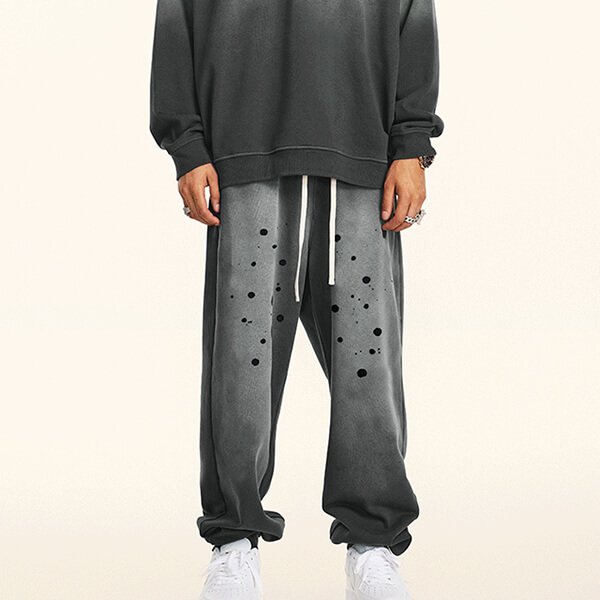
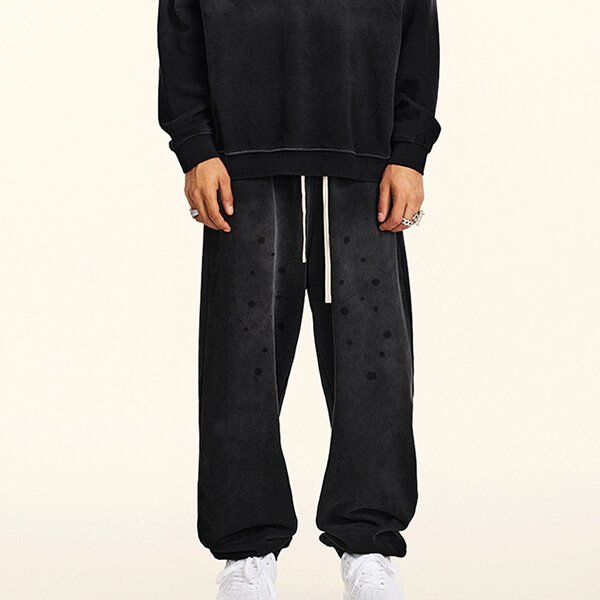








These joggers depend on process order: the base wash establishes the charcoal gradient first, then surface decoration can be judged against the finished tonal field. The tapered silhouette, gathered cuffs, and bright drawcords make irregularity visible, so development should approve sequence and placement together.
Wash First, Decoration Second
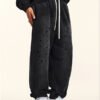
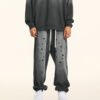
The image reads as a layered tonal effect rather than a flat black trouser. A lighter charcoal field breaks through the body, while darker rounded marks sit across both legs. That relationship makes wash depth the foundation for every later decoration decision.
If marks are applied before aggressive washing, their edges, contrast, and position may soften unpredictably. A controlled base-wash sample should therefore establish the intended gradient before decoration is introduced, allowing the team to separate recipe variation from application variation.
Why the Taper Raises the Risk
The relaxed upper leg narrows toward the ankle, and the gathered cuffs create folds that interrupt the surface. A mark that feels balanced on a flat pattern can appear crowded after assembly, especially where the leg collapses above the cuff.
Development should map decoration against the finished garment, not only against artwork panels. Review points should include front thigh density, knee transition, lower-leg spacing, and cuff compression, because each area changes how the gradient is visually perceived.
Drawcord Contrast Needs Protection
The white drawcords are a strong counterpoint to the charcoal body and immediately expose staining, dye transfer, or uneven finishing. Their clean appearance in the supplied image makes accessory handling part of the wash approval, rather than a minor trim detail.
The sample plan should isolate cord treatment, eyelet security, and waistband exposure during washing. The trade-off is straightforward: stronger wash character may increase contrast, but it also raises the need for masking, removal, or controlled reinsertion of bright components.
Mechanism of a Repeatable Surface
A repeatable result comes from dividing the visual effect into measurable zones: overall shade, gradient direction, mark scale, mark density, and edge softness. These controls give the production team a common language when a naturally irregular finish still needs commercial consistency.
The buyer should expect some variation because washing changes each garment differently. The approval target is not identical randomness; it is a defined tolerance around tonal movement and decoration placement that keeps the assortment coherent without flattening its character.
VeeWen Development Checkpoint
VeeWen can structure this style through a sequence-specific development review: confirm the base fabric, create a wash strike-off, assess the assembled silhouette, and only then lock decoration placement. This workflow directly addresses the interaction between recipe strength and visible surface marks.
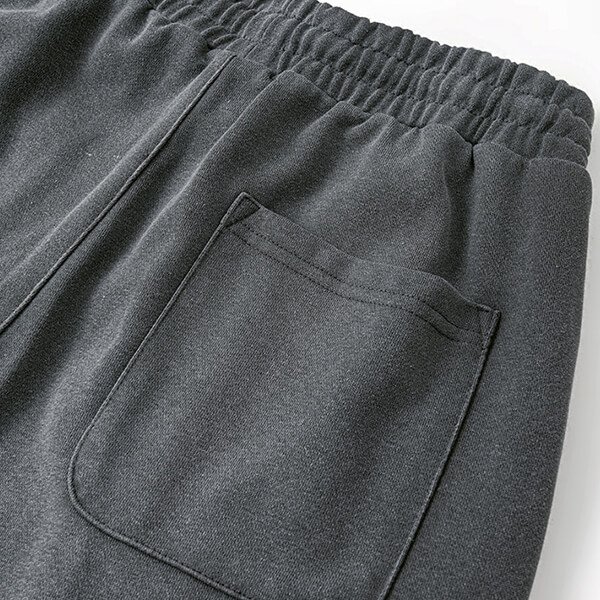
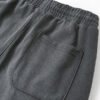
At the approval checkpoint, the buyer should compare front and back panels, cuff areas, and drawcord condition under consistent lighting. Any change to wash chemicals, drying method, or decoration timing should trigger a renewed sample review before bulk documentation is released.
Trade-Offs Before Bulk Approval
A stronger gradient can deliver more visual depth but may reduce shade uniformity between garments. More prominent marks can improve recognition but may compete with the drawcords and make small placement shifts obvious. The best balance depends on the intended collection tolerance.
Approve this style when the wash reads clearly at viewing distance, marks remain subordinate but visible, and the tapered silhouette does not create accidental clustering. Record acceptable variation with visual references, because verbal descriptions alone cannot preserve this finish accurately.
Buyer Questions
Should decoration be applied before washing?
Not by default. The visible gradient should be established first, then decoration tested afterward so the team can evaluate contrast, edge behavior, and placement on the finished tonal base.
Is the fabric composition confirmed?
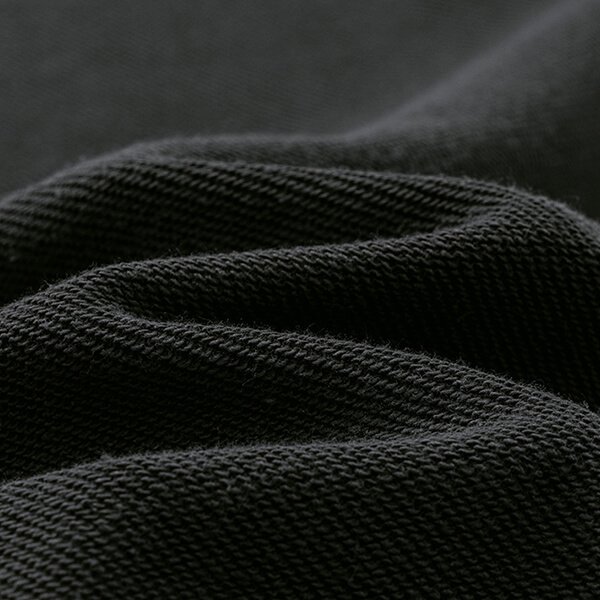
No. The supplied evidence does not verify fiber percentages or weight, so VeeWen should confirm fabric construction, shrinkage, and hand feel during sampling.
How should the finish be approved?
Use an assembled-garment strike-off under consistent lighting, checking gradient direction, mark density, cuff areas, drawcord cleanliness, and acceptable garment-to-garment variation.
What is the minimum order?
The commercial minimum is MOQ: 100 pieces per style. Final quantities remain subject to approved specifications, grading, colorways, and production documentation.
Approve the Wash Sequence
Send your target shade, decoration references, size range, and tolerance expectations so VeeWen can prepare a sequence-led development review for this washed jogger style.



Reviews
There are no reviews yet.