











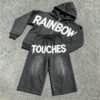
This matching hoodie and shorts set is best developed as a coordinated artwork system. Its washed black base, raised off-white lettering, center zipper, pouch pocket, waistband, and loose shorts create multiple registration boundaries that must be resolved before sampling.
Registration Begins With the Set Architecture
Coordinated panel registration matters because a matching set is read as one graphic system, even when the hoodie and shorts use pattern pieces. The visible lettering is separated between upper body and waistband, so artwork placement must be approved against seams, pocket openings, and hem lines.
For development, the artwork file should be divided by garment panel, with registration marks and seam allowances defined before cutting. This controls how a repeat, stripe, or tonal wash sits across the center front, sleeve, pocket, and short leg, while accepting added alignment complexity.
The Hoodie Front Needs Clear Zones
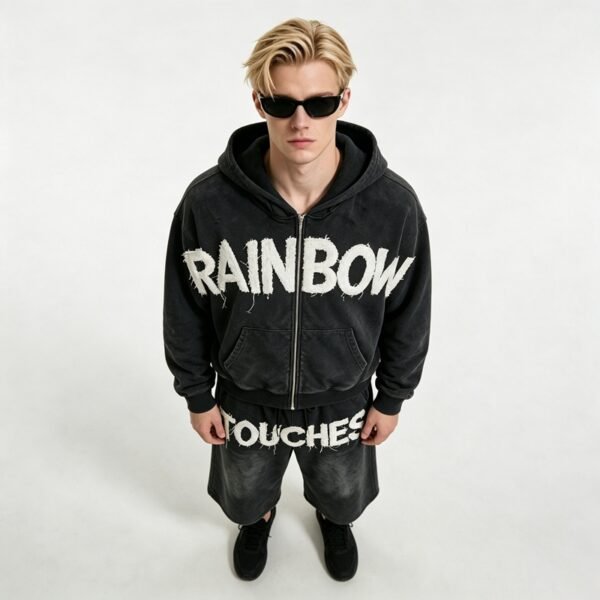
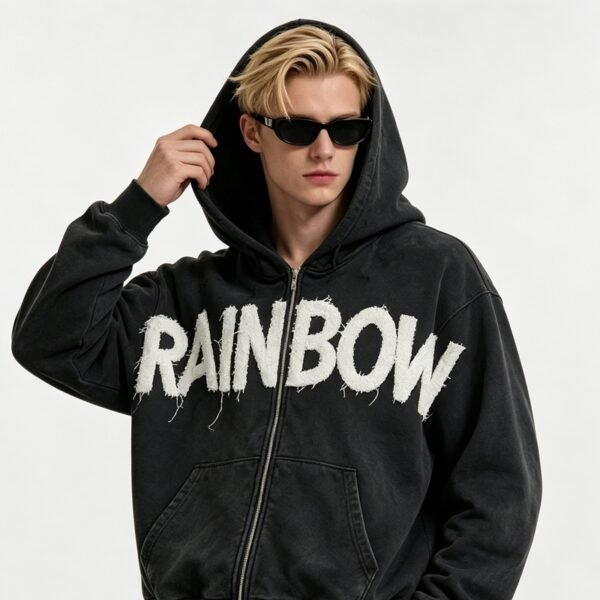
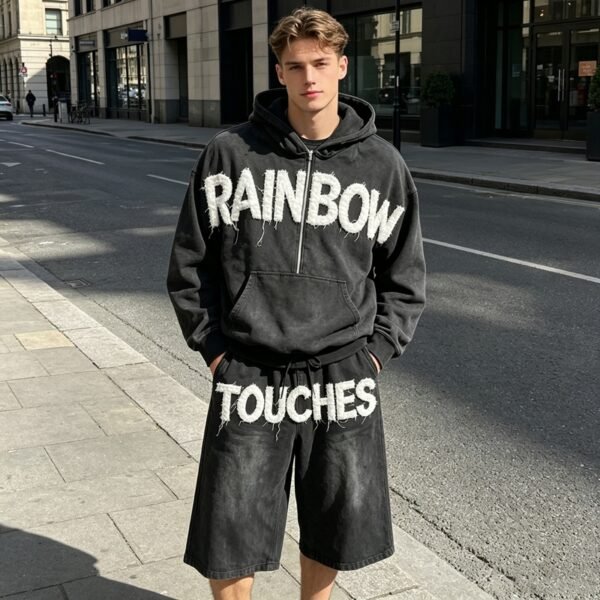
The hoodie image shows large lettering spanning the chest above a full center zipper and a front pouch pocket. Those interruptions can distort a continuous print or make placement appear off-center, so the technical pack should reserve clear zones before the decoration method is finalized.
A practical approval uses the graded front pattern, zipper tape width, pocket opening, and hood overlap together. The buyer should review artwork on the actual pattern rather than a flat rectangle, because proportional movement between sizes can change perceived registration.
Shorts Introduce a Separate Waistband Datum
The shorts present lettering near the waistband, where elastic, drawcord channels, and body ease can shift the visual baseline. Even without a confirmed print repeat, this area demonstrates why the set requires a second registration datum instead of copying the hoodie placement.
The development choice is between a stable waistband graphic and a more continuous treatment extending onto the front panels. A stable graphic simplifies cutting and grading; broader coverage offers stronger visual continuity but demands tighter control around openings and stretch.
Wash Effects Can Alter Alignment Perception
The supplied image shows a washed black appearance across both garments, with lighter variation visible through the surface. Wash variation can change contrast around artwork and make technically aligned panels appear visually uneven, particularly where the hoodie and shorts receive different tension.
VeeWen's workflow should therefore separate artwork approval from wash approval, then reunite them in a decorated, washed sample. The buyer can compare panel registration under the intended finish and decide whether tonal variation supports or weakens the collection's graphic structure.
Decoration Depth Changes Production Handling
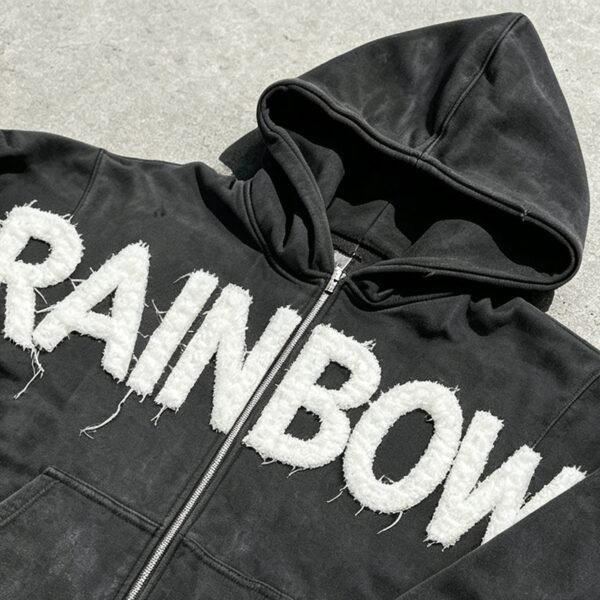
The lettering appears raised and towel-like, giving the set tactile dimension rather than a flat printed look. That depth can improve shelf impact, but it may also require additional handling around zipper teeth, pocket edges, waistband seams, and folding points during assembly.
Before bulk approval, the buyer should identify whether the raised treatment is embroidery, applique, chenille, or another construction. Each option changes edge behavior, registration tolerance, production sequencing, and care communication, so the visual reference alone cannot establish the final method.
VeeWen Development Checkpoint
VeeWen should translate the supplied front view into a style-specific panel map covering hoodie front, sleeve, pocket, shorts front, waistband, and hems. The working sample should show artwork, wash, seam relationships, and size grading together, creating one approval document for the coordinated set.
The buyer's checkpoint is a side-by-side review of the decorated washed sample against the approved panel map. Confirm repeat or placement tolerance, graphic baseline, zipper clearance, waistband behavior, and cross-size consistency before authorizing the MOQ: 100 pieces per style production route.
Buyer Questions
Is an all-over print confirmed on this set?
No. The supplied image confirms washed styling and raised lettering, while any all-over print repeat, artwork registration, and panel alignment remain To Confirm.
Why separate the hoodie and shorts artwork files?
Their seams, proportions, openings, and grading differ, so separate panel files help control placement and preserve a consistent visual relationship across the matching set.
What should the first sample demonstrate?
The first sample should combine the approved artwork map, decoration method, wash appearance, zipper clearance, waistband behavior, and key cross-panel relationships for buyer review.
What is the minimum commercial quantity?
The exact commercial minimum is MOQ: 100 pieces per style, with final material, artwork, measurements, decoration, and finishing details confirmed during development.
Approve the Panel Map Before Sampling
Send the intended artwork, size range, and wash direction to VeeWen for a panel-specific review covering registration boundaries, decoration choices, and the MOQ: 100 pieces per style checkpoint.


Reviews
There are no reviews yet.