


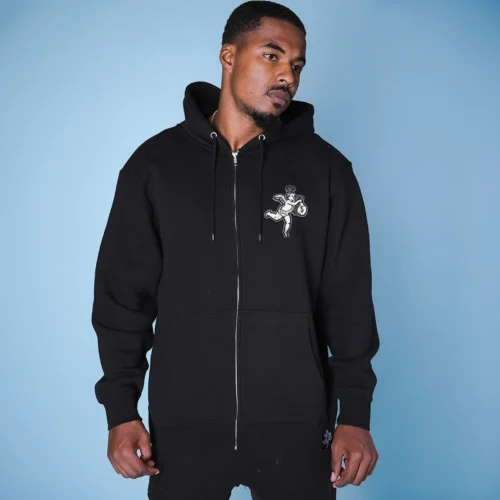
This oversized zip hoodie should be developed as a controlled color system, not an isolated black garment. The supplied image shows acid-wash variation across the body, sleeves, hood, and rib areas, making lighting consistency central to approvals, panel matching, and repeatable production decisions.
Color Variation Is the Primary Development Risk
Acid-wash treatment creates intentional light and dark movement, but the buyer still needs a controlled visual boundary. In the image, the charcoal surface changes subtly across the chest, sleeves, hood, and lower pocket zones, so color approval must define acceptable variation clearly.
The washed appearance should be judged under one agreed lighting setup, with the same viewing distance and garment presentation. Otherwise, a sample may appear balanced in one room and overly pale, overly flat, or uneven beside later production pieces.
Use the Zipper as a Comparison Reference
The center zipper divides the front into two adjacent fields, creating a useful reference for evaluating left-to-right shade balance. Its straight vertical placement also exposes whether wash intensity, seam handling, or garment positioning has created visible asymmetry during review.
This does not require perfectly identical panels, because the product depends on a vintage surface effect. It does require deliberate limits for distracting contrast around the zipper, pocket openings, shoulder seams, hood edge, and ribbed hem.
Review High-Visibility Construction Zones
The hood opening, drawcord channels, cuffs, hem, and angled zip pockets sit at important viewing points. The image shows these details against the dark washed ground, meaning small shade differences can alter how cleanly the garment reads as a coordinated product.
Development review should therefore inspect the garment frontally and in natural hanging form, then compare close views of trims and seam intersections. A wash standard that works on the body may still need adjustment where ribbing or hardware changes light reflection.
Balance Oversized Volume With Shade Readability
The broad body and relaxed sleeves distribute the acid-wash effect over a large visual area. That volume can make tonal inconsistency more noticeable, especially when the garment is displayed flat, worn, or folded for wholesale presentation and buyer review.
A color standard should account for the fit block as well as the fabric surface. The approval sample needs to show how the wash reads across dropped shoulders, sleeve folds, pocket angles, and the lower body before bulk quantities are released.
Translate the Standard Into VeeWen Workflow
At VeeWen, this product should enter development through a color-reference checkpoint tied to the chosen fabric, wash route, and approved fit sample. The working record should identify the lighting condition, viewing format, and specific garment zones used for shade evaluation.
Once the reference is approved, VeeWen's pattern, sampling, and production teams can carry the same decision through panel preparation and garment review. The key workflow output is a signed visual standard that resolves acceptable wash movement before the 100-piece minimum order proceeds.
Approve Before Commercial Commitment
The buyer should request a complete sample in the intended dark acid-wash direction, presented under the agreed lighting standard. Review should include the front, back, sleeves, hood, pocket panels, rib areas, zipper tape, and drawcords as one coordinated color decision.
Approval is ready when the buyer can distinguish intentional vintage variation from unacceptable panel mismatch. Record the accepted reference image, lighting setup, and tolerance notes, then confirm whether composition, fabric weight, wash durability, and final measurements remain To Confirm.
Buyer Questions
Why does consistent lighting matter for this hoodie?
Acid-wash surfaces reflect unevenly, so lighting changes perceived shade. One controlled setup makes panel matching, sample approval, and later production inspection more consistent for buyers.
Should every panel match exactly?
Not necessarily. The vintage effect can include controlled movement, but the buyer should define limits that prevent distracting contrast across the zipper, sleeves, hood, pockets, and ribbing.
What should the approval sample include?
It should show the intended fit, complete wash appearance, zipper, drawcords, pockets, cuffs, hem, and all visible panels under the agreed lighting standard for review.
What information remains unverified?
The supplied evidence does not verify composition percentages, GSM, measurements, wash durability, certifications, production timing, or pricing. These points should be confirmed during technical development and quotation.
Set the Color Standard Before Sampling Approval
Send VeeWen your target shade, reference images, and lighting requirements so the team can align the wash direction, fit sample, and inspection checkpoints before commercial production.


Reviews
There are no reviews yet.