

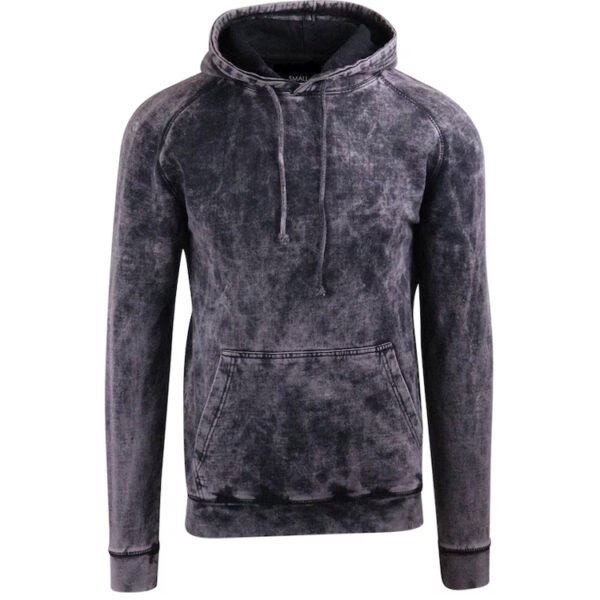
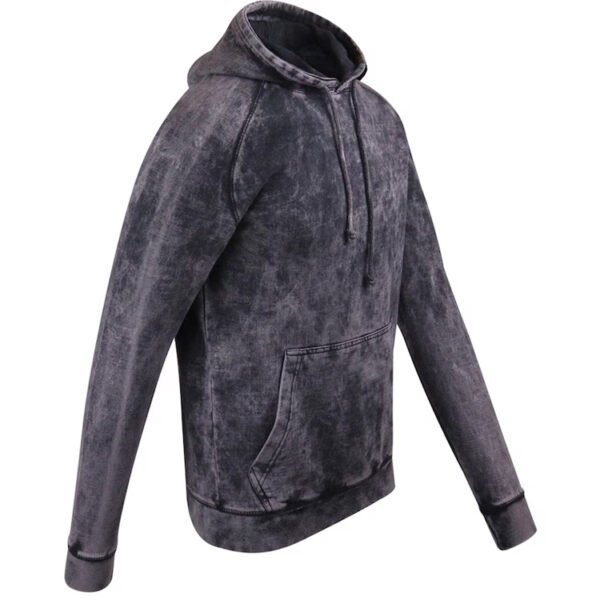


This pullover hoodie is developed around the geometry of its front storage pocket. The supplied image shows a slim washed body, close hood, long drawcords, and ribbed cuffs; that proportion makes pocket depth and opening control decisive for comfort, appearance, and repeatable sampling.
Pocket Geometry Defines Daily Usability
A kangaroo pocket must provide enough internal depth for comfortable hand placement while keeping its upper opening stable during movement. On a slimmer hoodie, excessive depth can pull the front downward, while a shallow bag may feel decorative rather than genuinely useful.
The source wording identifies a hooded sweatshirt, and the main image shows a close pullover proportion. That combination suggests the pocket should be evaluated as part of the whole front body, not as an isolated component with dimensions approved independently.
Opening Angle Controls Hand Access
The opening geometry determines wrist entry, hand clearance, and how naturally the pocket supports relaxed posture. A flatter opening can preserve a clean front line, while a more angled opening may improve access but introduce extra seam length and greater opportunity for distortion.
During sampling, VeeWen should review the opening against the wearer's likely hand position, hood drawcord path, and front-body tension. The approval record should capture opening length, angle, edge finish, and the relationship between both pocket corners.
Depth Changes Front-Body Drape
Pocket-bag depth creates a three-dimensional layer beneath the sweatshirt front. If the bag is too deep for the selected textile, it can sag below the hem line or form a visible ridge; if too shallow, hands and small carried items may push against the body panel.
The supplied image emphasizes a washed charcoal surface whose tonal variation makes seam shadows noticeable. Pocket volume should therefore be checked under relaxed wear and light loading, because uneven bag tension may become more apparent across the treated surface.
Wash Treatment Adds a Dimensional Variable
Washed coloration is visible across the hoodie, but the exact treatment and fabric behavior are not verified. Any finishing route may change pocket opening length, bag depth, edge appearance, and body dimensions, so the pocket must be assessed after the intended treatment rather than before it only.
A pre-finish sample can establish construction intent, but it cannot replace post-finish measurement review. Buyers should compare pocket access, opening symmetry, and front-body smoothness after the approved wash route, while separating color variation from actual dimensional movement.
VeeWen Development Workflow
VeeWen can make the pocket axis a dedicated sample gate by documenting the opening geometry, pocket-bag pattern, attachment sequence, and expected finished measurements. The hood, drawcord, rib cuff, and pocket should be reviewed together because each affects the garment's front balance.
At fit review, the team should inspect empty and lightly loaded wear positions, then record whether pulling comes from bag depth, opening angle, seam allowance, or body tension. That diagnosis supports targeted revisions instead of changing the entire hoodie block without evidence.
Buyer Approval Checkpoint
The buyer should approve the pocket only after checking hand entry, usable depth, corner stability, hem clearance, and the front silhouette in the intended size range. A slim profile requires particular attention to whether the pocket remains comfortable without visibly widening the torso.
Final sign-off should include the measured pocket pattern, opening specification, treatment route, and confirmed material data. If the wash changes dimensions or surface contrast materially, the buyer should require a revised sample before releasing production documentation.
Buyer Questions
Why is pocket-bag depth important on a slim hoodie?
Depth affects hand comfort, item retention, front-body drape, hem clearance, and whether the pocket creates unwanted bulk across a closer silhouette.
Should pocket geometry be reviewed before or after washing?
Review both stages, but final approval must use the intended treatment route because washing can change dimensions, edge appearance, and pocket balance.
Can VeeWen develop a different pocket opening?
Yes, the opening can be revised, provided the new angle and length are tested for access, symmetry, seam stability, and front-body appearance.
What is the commercial minimum for this hoodie?
The commercial minimum is MOQ: 100 pieces per style, with final requirements governed by approved materials, specifications, and production documentation.
Approve the Hoodie Pocket Geometry
Share the target textile, wash direction, size chart, and storage expectations so VeeWen can develop a measured pocket sample for buyer approval.


Reviews
There are no reviews yet.