


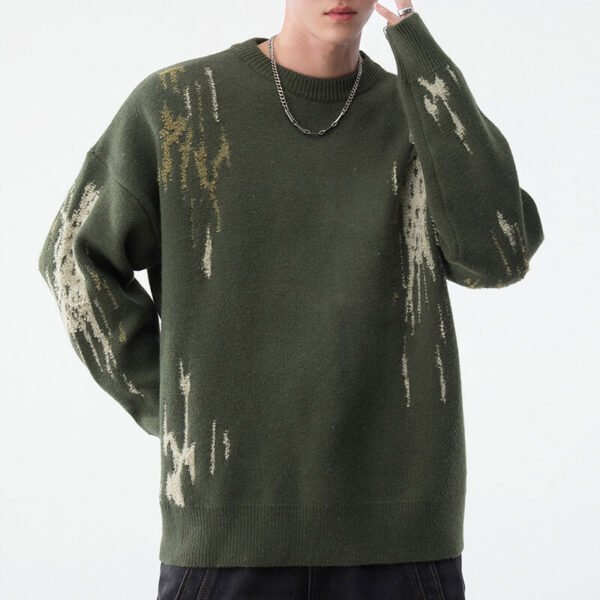


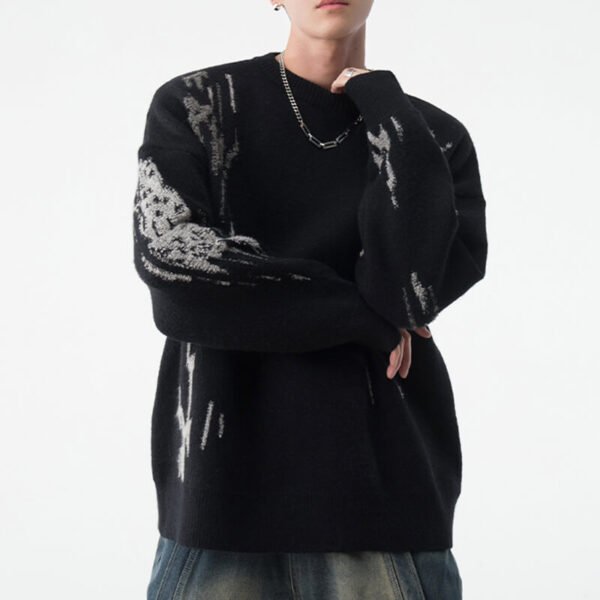





This custom crew neck sweater is developed around controlled collar roll and stand height, balancing a clean neckline with the relaxed visual volume shown in the supplied product imagery for contemporary menswear programs where neckline proportion influences layering, comfort, and perceived pattern precision across a commercial size run.
Collar Roll as the Primary Control Point
The image shows a close crew opening sitting neatly at the base of the neck, with a compact rib edge rather than a broad fashion collar. That proportion gives the sweater a defined entry point, helping an intentionally irregular surface pattern read as designed.
For production, collar roll is the visible result of rib width, stitch tension, recovery, and attachment handling working together. Excess roll can crowd the neck, while insufficient roll appears flat and unfinished; either condition changes the garment's perceived scale before buyers assess the knit pattern.
Stand Height and Layering Comfort
Stand height should support the neckline without turning the crew neck into a restrictive band. The supplied image suggests a low-to-moderate profile, leaving the upper chest open and allowing a chain or undershirt to sit naturally without competing with the contrast marks.
A higher stand may add warmth and a sharper winter profile, but it can emphasize neck pressure and reduce visual openness. A lower stand improves casual layering, yet may lose authority if the rib relaxes; the approved measurement must reflect the target customer's styling habits.
Pattern Placement Around the Neckline
The light markings climb from the shoulder and sleeve toward the upper torso, while the central chest remains comparatively quiet. This distribution makes collar proportion important: an oversized or tilted neckline could interrupt the deliberate negative space and weaken the garment's graphic balance.
During development, the collar should be evaluated against the mapped artwork or knit effect, not in isolation. Confirming neckline width, center alignment, and stand height together reduces the risk that a technically neat collar visually competes with the strongest contrast areas.
Rib Recovery Across the Size Range
A sweater collar can look correct on one sample yet fail after repeated wear if recovery is not controlled. Because the pictured neckline is visually compact, even modest growth may make the opening appear loose, shifting the garment from structured streetwear toward casual loungewear.
Size-set review should compare collar opening, rib return, and shoulder relationship from the smallest approved size through the largest. The goal is proportional consistency, since a neckline that expands faster than the body can make larger sizes look visually unbalanced despite accurate grading elsewhere.
VeeWen Development Workflow for This Neckline
VeeWen's development workflow should begin with a neckline specification sheet recording collar width, rib depth, stand height, seam allowance, and intended recovery. These checkpoints translate the visual reference into measurable approvals while keeping the product's defining decision concentrated on the collar rather than generic decoration.
At sample review, assess the neckline on-body and flat, then inspect how the contrast markings approach the collar edge. Approve the block when roll, stand, and alignment remain intentional under movement; otherwise revise the rib or opening before confirming the wider sweater package.
Commercial Trade-Offs and Approval Gate
This neckline direction favors a clean, controlled frame for an expressive black-and-light surface, which supports merchandising clarity. The trade-off is tighter tolerance around rib behavior and attachment accuracy; small deviations remain visible because the upper garment has limited competing detail.
Before production release, the buyer should approve the physical neckline sample, graded measurements, and placement relationship together. Confirm the desired balance between relaxed styling and collar authority, then release the style at MOQ: 100 pieces per style.
Buyer Questions
What material is specified for this sweater?
The supplied evidence does not verify fiber composition. VeeWen should confirm blend, yarn character, handfeel, and care requirements during material selection before costing or sampling for the intended market and final labeling.
How should buyers approve collar roll?
Review the collar flat and worn, checking opening width, roll consistency, stand height, and recovery after movement. Compare these observations against the approved measurement sheet across the graded size set.
Is the relaxed fit measurement verified?
The image supports a relaxed silhouette, but exact ease is unverified. Confirm chest, shoulder, sleeve, and hem measurements through a size-set sample before finalizing the fit block for production approval.
What is the minimum order quantity?
The commercial minimum is MOQ: 100 pieces per style. Buyers should align color, size curve, neckline approvals, and packaging requirements before placing the style into the manufacturing schedule for production release.
Approve the Neckline Before Production Release
Send the target measurement sheet, contrast placement reference, and desired yarn direction to VeeWen for neckline-focused development. Request a sample review centered on collar roll, stand height, recovery, and proportion before confirming MOQ: 100 pieces per style.


Reviews
There are no reviews yet.