

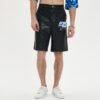
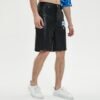
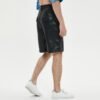


These shorts are a marker-engineering product disguised as a simple silhouette. The black leather-look surface reflects light differently when panels rotate, while the large thigh patch concentrates attention on one side. VeeWen development should lock material direction and yield rules before approving the final decoration package.
Why Directional Cutting Matters on Reflective Surfaces
Leather-look materials reveal orientation through reflected light, even when the color is uniform. If front panels, waistband pieces, or pocket components are rotated inconsistently, the garment can show mismatched sheen. Marker direction is therefore a visual control, not merely a cutting preference.
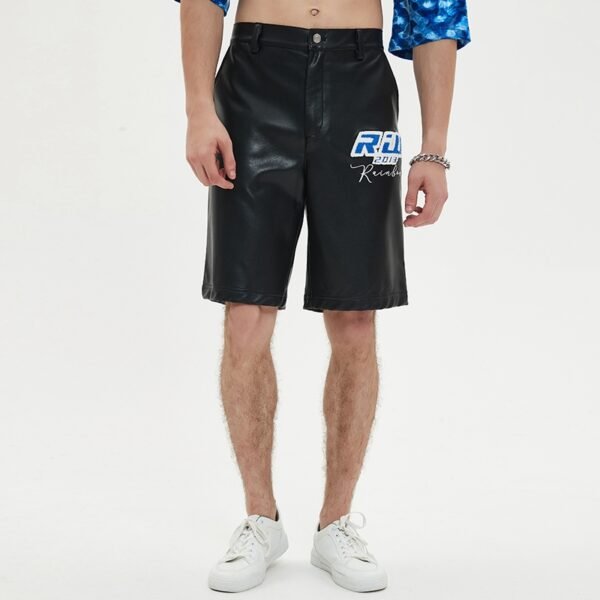
The supplied image shows a smooth black body with light traveling across both legs. That reflection makes the two front panels useful comparison surfaces, helping buyers assess whether grain, coating, or finish direction appears consistent before approving the production marker.
Panel Yield Versus Visual Consistency
A marker designed for maximum yield may rotate smaller components into otherwise unused spaces. That can reduce consumption, but rotation may create visible tonal differences on reflective material. The buyer should decide which components require one-way orientation and where controlled rotation is acceptable.
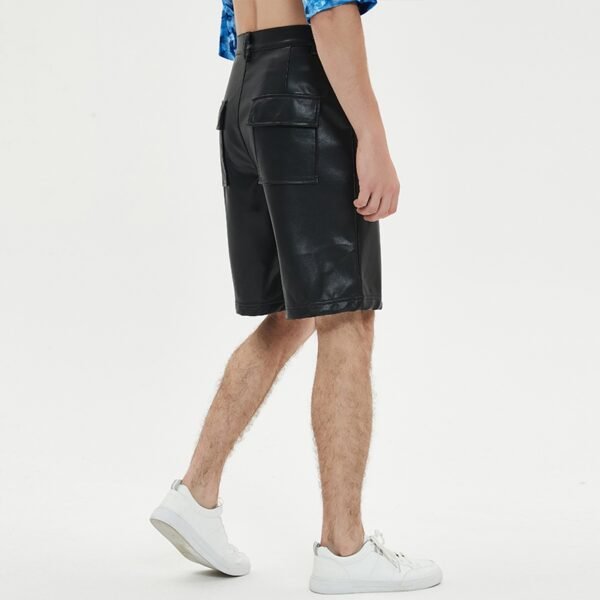
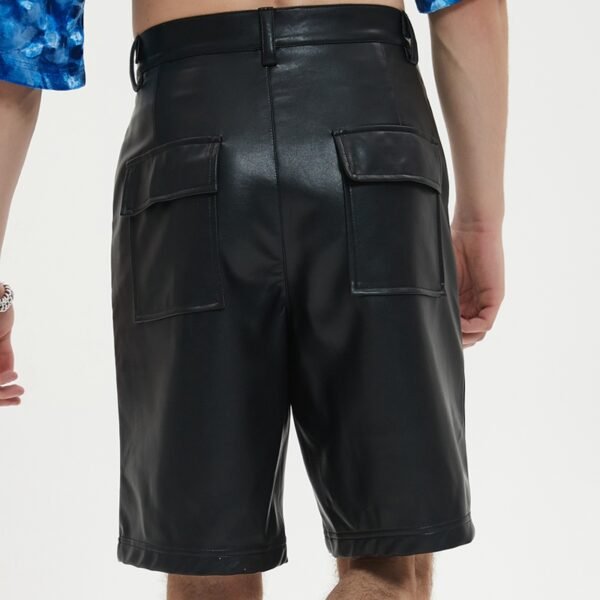
These shorts include a waistband, belt loops, fly area, front panels, and broad leg sections. Each piece competes for placement within the hide or roll, so VeeWen should record the orientation rule and compare projected yield against the appearance standard.
Patch Placement Changes the Cutting Plan
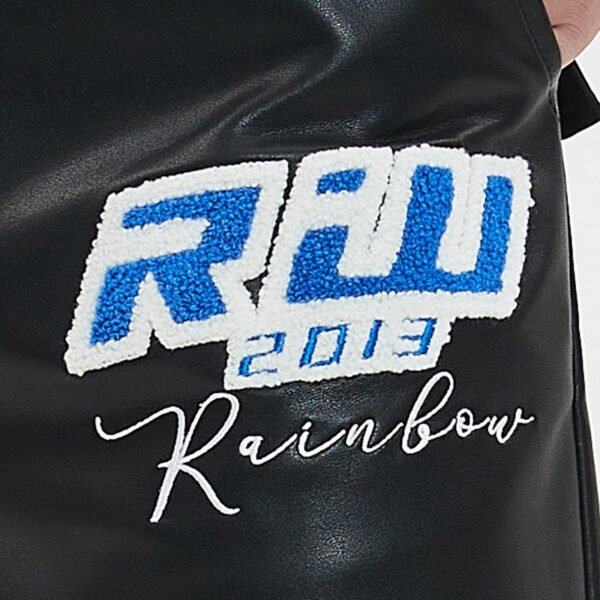
The thigh patch is a dominant asymmetrical feature, meaning its position must be considered alongside grain direction and seam balance. Patch placement should not force a panel rotation that makes the two legs appear different under showroom or daylight conditions.
In the image, contrasting white and blue artwork sits high on the right thigh and becomes the main focal point. The sample should confirm distance from the waistband, side seam, and hem, while checking that the patch remains stable on the chosen substrate.
Hardware and Stress Concentration
A waistband with belt loops, button closure, and fly construction adds localized stress to a material that may not behave like woven cloth. Reinforcement, seam allowance, and edge finishing should be reviewed together, because added support can alter thickness and affect marker assumptions.
Visible metal hardware and a centered front closure establish the shorts' utility structure. Buyers should inspect the waistband for clean alignment, secure loop attachment, and smooth fastening, while confirming that reinforcement does not create unwanted ridges beneath the leather-look surface.
VeeWen Development Workflow Checkpoint
VeeWen should first prepare a material-direction board showing approved face orientation, usable width, seam allowances, and restricted rotation zones. A marker review can then identify expected yield trade-offs before the first sample consumes the selected material reference.
The development sample should be photographed under consistent lighting from front, side, and seated positions. Approve the marker only after reviewing leg-to-leg sheen, patch location, waistband alignment, and hem behavior, then document any component-specific orientation exceptions.
Trade-Offs Before Bulk Approval
One-way cutting may protect a uniform appearance while increasing consumption, especially when the material has a narrow usable width or visible coating direction. That cost should be weighed against the buyer's tolerance for panel variation in the finished collection.
A large patch also uses decoration area and may require backing or stabilizing layers that change handfeel. Confirm the attachment method, patch dimensions, and interior support before bulk approval, ensuring the design remains wearable without compromising surface consistency or yield discipline.
Buyer Questions
What is the key approval issue for these shorts?
Approve material direction and marker rules first, because inconsistent orientation can produce visible sheen differences across the two broad front leg panels.
Is genuine leather confirmed?
No. The source wording says leather, but genuine leather, synthetic leather, backing, lining, and composition remain To Confirm before development.
Why does the patch affect material planning?
The large thigh patch creates an asymmetrical focal point and may require stabilizing layers, influencing placement, panel rotation, handfeel, and consumption.
What is the minimum commercial quantity?
The commercial minimum is MOQ: 100 pieces per style. Final documentation should confirm marker direction, patch specifications, measurements, hardware, and finishing.
Approve the Directional Marker Brief
Share the material reference, usable width, patch artwork, and orientation tolerance. VeeWen can prepare a marker checkpoint that balances consistent sheen, decoration placement, and responsible material consumption.


Reviews
There are no reviews yet.