

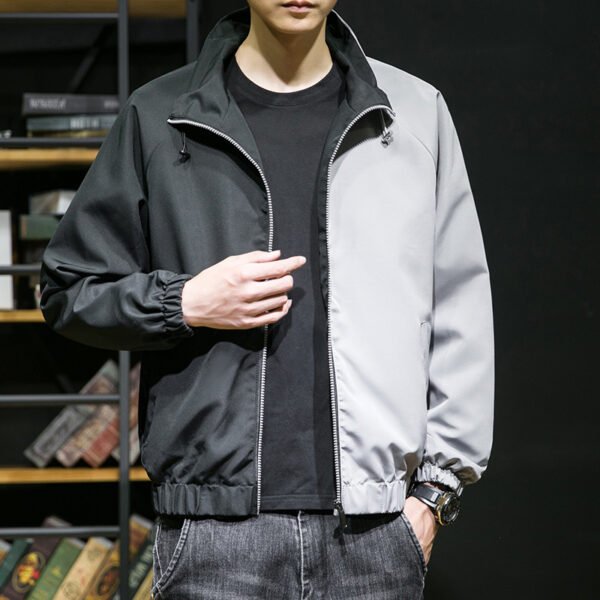
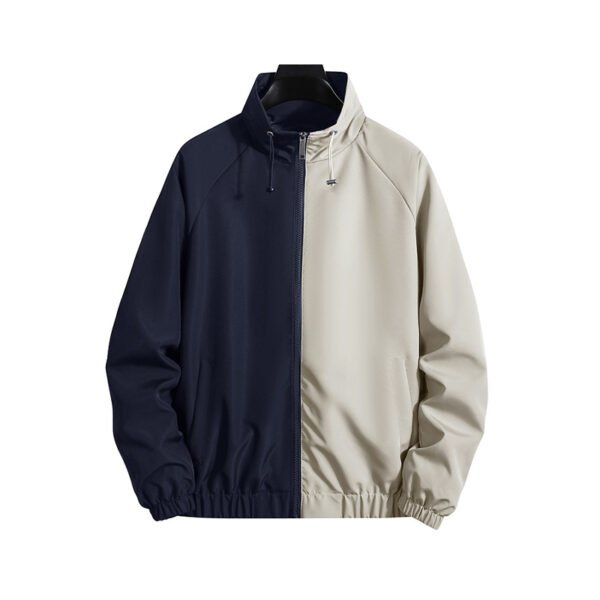
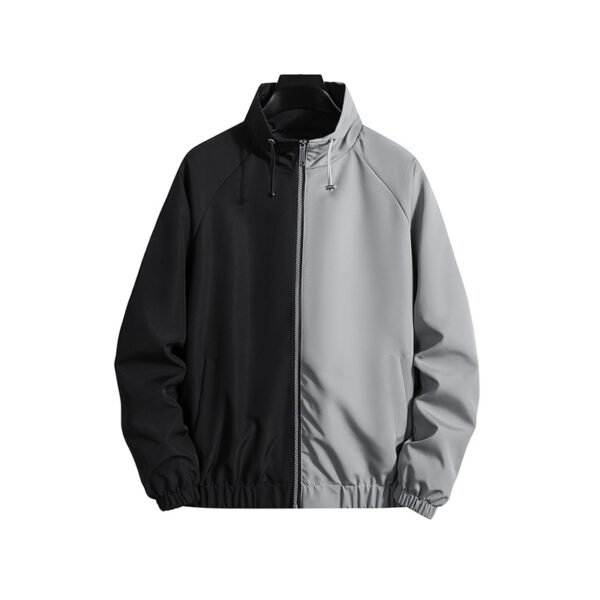

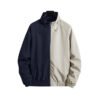

This custom color-block hooded zip jacket is developed around seam bulk at high-layer intersections. The supplied image shows a center zipper, hood, raglan transitions, elastic cuffs, and gathered hem, creating a precise construction challenge: retain a smooth loose profile where multiple components meet.
The Center Front Is a Bulk-Control Zone
The center zipper joins both color panels while carrying repeated opening force, so stacked seam allowances can create ridging, waviness, or a stiff front. The image makes this area visually dominant because the dark green and off-white halves meet directly at the zipper.
Development should define panel joining order, zipper tape position, and seam allowance direction before grading. A smooth center line supports the jacket's clean color-block read, while uncontrolled thickness can make the garment appear narrower and less relaxed than intended.
Hood and Neck Layers Need a Flat Transition
The raised hood shown in the image meets the neckline near the zipper top, concentrating several layers around a small turning point. Excess material there can push the hood away from the neck, interfere with zipper operation, or create an uncomfortable hard ridge.
The sample should assess hood fall with the zipper fully closed and partially open. VeeWen can refine seam direction, turn-of-cloth allowance, and zipper-top finishing so the hood retains shape without making the upper chest visibly heavy.
Raglan Lines Distribute Shape and Thickness
The sleeve-to-body transitions appear angled rather than set into a conventional shoulder seam. Raglan construction can support a relaxed fit, but intersections near the underarm and front chest still require careful sequencing when panels, seam allowances, and sleeve components overlap.
A construction review should compare seam smoothness while the arms hang naturally and while they lift forward. The buyer should prioritize freedom of movement without accepting a bulky ridge that interrupts the jacket's color boundary or changes the sleeve silhouette.
Elastic Edges Add Localized Pressure
Elasticized cuffs and hem visibly gather the garment at the wrists and lower edge. Those gathers can conceal small inconsistencies, yet they also compress multiple fabric layers and amplify thickness where the shell, seam, elastic, and finishing operation converge.
Approval should include relaxed and stretched views of both cuffs and hem. The goal is even recovery and a clean edge, with enough containment for the loose jacket shape without creating a hard band or uneven color-panel tension.
Color Blocking Exposes Construction Variation
A two-tone layout makes seam alignment and bulk easier to see because contrasting surfaces frame every junction. Small shifts in zipper centering, raglan matching, hood attachment, or hem gathering can therefore become immediately apparent to the wearer and buyer.
VeeWen should use the supplied green and off-white direction to inspect symmetry before expanding the palette. Dark and pale surfaces may also reveal different pressing marks, so finishing review should cover both sides of the color-block system.
VeeWen Workflow: Map, Sample, Approve
VeeWen can convert this axis into a seam map identifying every high-layer intersection, then assign a joining order and bulk-control note to each location. The first sample should be reviewed closed, open, worn, and laid flat before final pattern approval.
The buyer's checkpoint is approval of a physical sample with center-front flatness, hood comfort, raglan mobility, cuff recovery, and hem balance recorded. MOQ: 100 pieces per style applies once construction, fit, materials, and color standards are approved.
Buyer Questions
Is this jacket insulated for autumn?
That is not verified by the supplied evidence. The source suggests an autumn direction, but lining, insulation, thermal behavior, and shell composition require explicit development confirmation.
Why is seam bulk important on this jacket?
The hood, zipper, raglan transitions, cuffs, hem, and color panels meet across limited areas. Excess layers can affect comfort, zipper movement, silhouette, and visual cleanliness.
Can the color blocks be changed?
Yes. Color placement can be developed through the technical specification, but each new combination should be checked for seam alignment, contrast, pressing marks, and approval consistency.
What is the minimum order quantity?
The commercial minimum is MOQ: 100 pieces per style. Final quantities remain subject to approved materials, construction, fit, color standards, and production documentation.
Approve the Low-Bulk Seam Strategy
Share your preferred shell layers, zipper standard, hood measurements, and color references so VeeWen can prepare a focused seam-bulk sample for review.


Reviews
There are no reviews yet.