
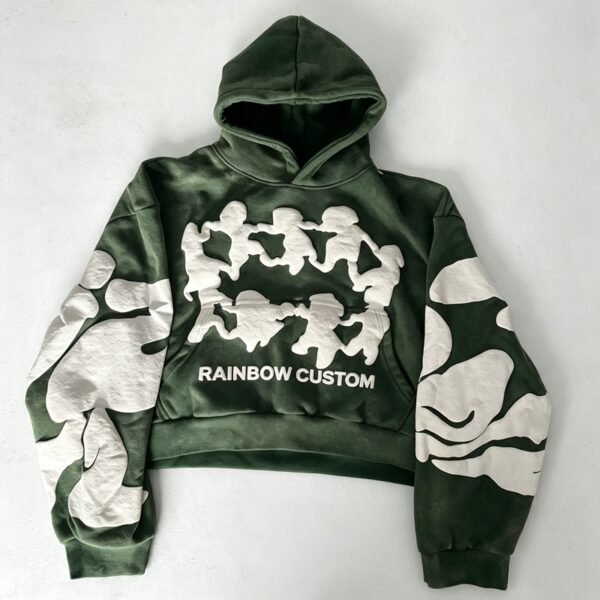
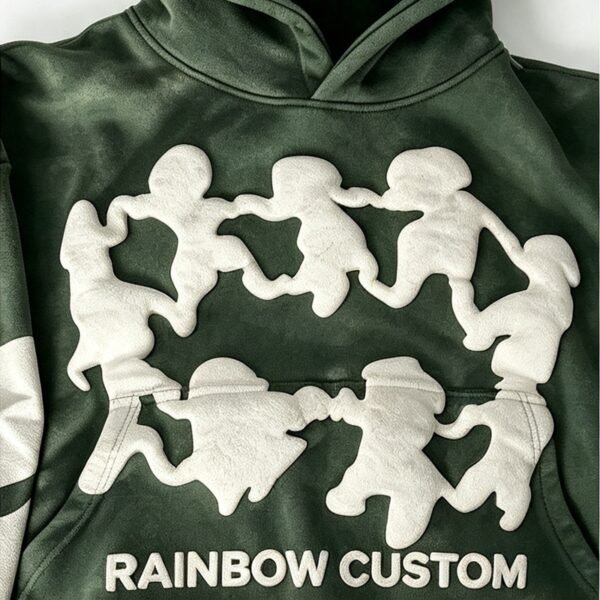

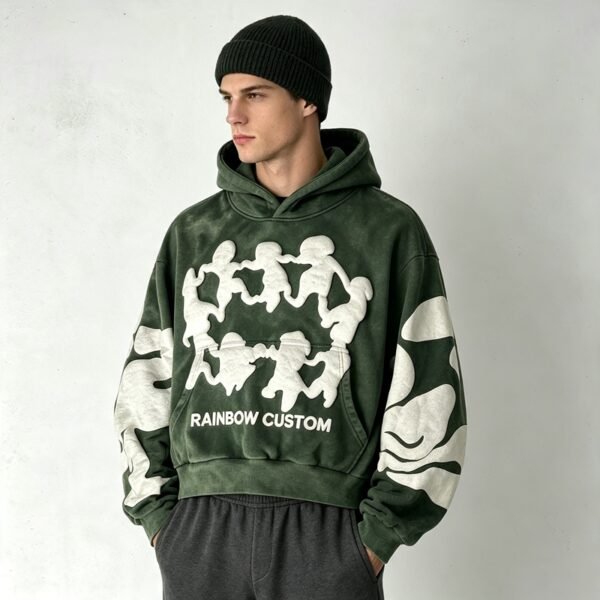

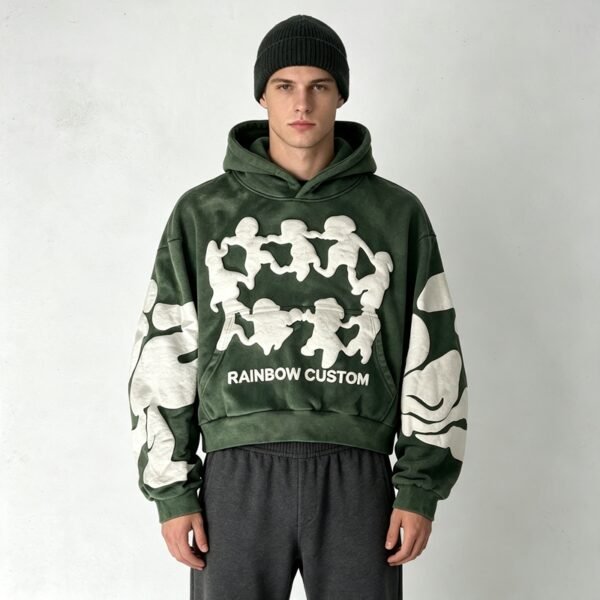
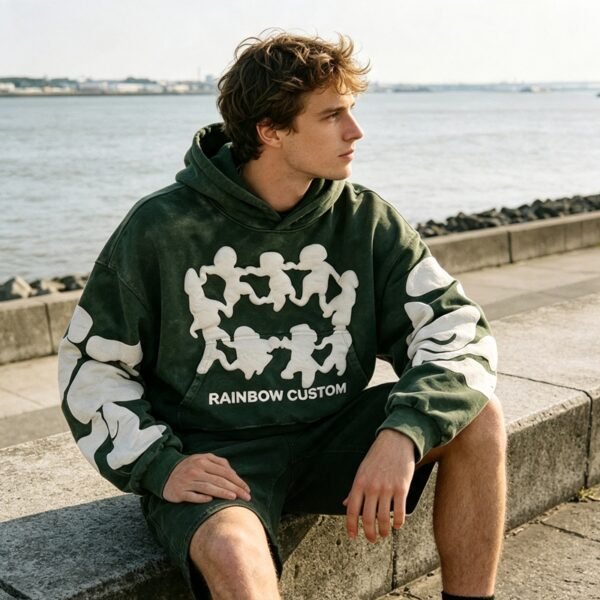
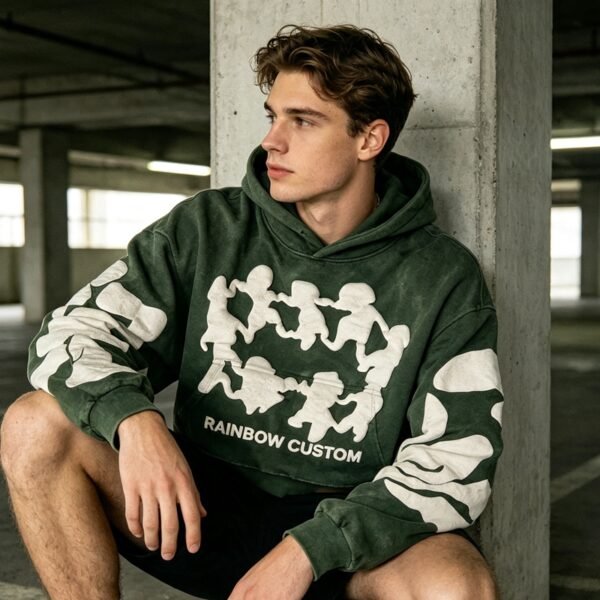

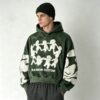
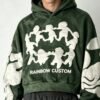
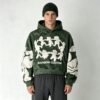

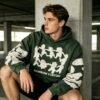
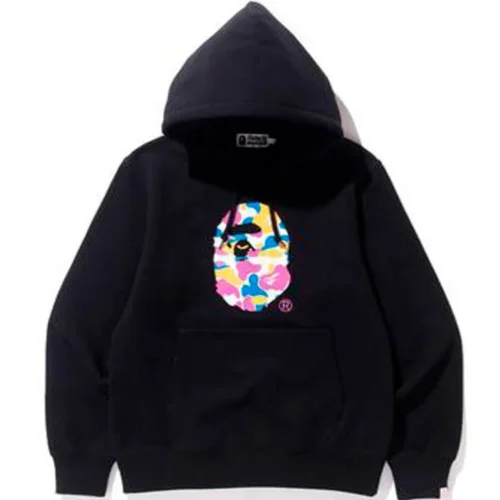
This hoodie development centers on interlining selection and edge stability. The supplied image shows a cropped boxy body, broad ribbed hem, structured hood opening, roomy sleeves, washed tonal variation, and large raised graphics, so support materials must preserve shape without making the garment feel rigid.
The Cropped Hem Needs a Defined Boundary
The cropped body ends at a broad ribbed band that visually anchors the shorter length. That boundary must resist rolling and uneven extension, because even small changes in rib tension can alter the apparent crop and make the boxy silhouette look unbalanced.
VeeWen should select hem support after checking shell thickness, rib recovery, and wash behavior together. A firmer solution may sharpen the outline but reduce softness; a lighter solution may improve comfort while allowing the hem to relax or curl.
Hood Interlining Controls the Opening
The hood opening is prominent in the supplied image, with a layered edge that holds a defined frame around the face. Interlining affects whether that frame stays open, collapses inward, or develops ripples where curved seams and seam allowances meet.
Pattern review should compare support at the front edge, neckline seam, and crown transition. VeeWen can then decide whether the same interlining belongs throughout, or whether localized support gives the hood sufficient definition without making the crown unnecessarily stiff.
Raised Graphics Add Localized Weight
Large pale graphic areas cover the chest and sleeves, creating concentrated surface weight that can influence drape and edge behavior. When graphic thickness changes across panels, unsupported fabric may pull around the artwork or distort at sleeve folds and rib transitions.
The sample should be inspected flat and on-body after graphic application, with special attention to the cropped hem and sleeve cuffs. VeeWen's development review can determine whether support should be adjusted beneath artwork zones or kept separate to protect hand feel.
Washed Surfaces Increase Variation Risk
The dark-green surface shows tonal variation across the hood, body, and sleeves, which is visually important to the reference. Washing can also change dimensions and edge tension, so interlining and rib choices must be assessed after the intended treatment sequence is defined.
VeeWen should document before-and-after measurements at the hood opening, hem, cuffs, and shoulder width. This creates a practical approval record for acceptable change, while avoiding unsupported claims about wash durability, colorfastness, or finished performance.
Sleeve Cuffs Complete the Boxy Proportion
The roomy sleeves finish with ribbed cuffs that visually contain their volume. If cuff recovery is too weak, the sleeves may appear longer and less deliberate; if too strong, the cuff may gather the fabric sharply and compete with the raised sleeve graphics.
A fit sample should compare cuff height, opening circumference, and sleeve fullness in both relaxed and worn positions. VeeWen can use that comparison to align cuff support with the hood and hem, keeping the silhouette coherent across all edges.
VeeWen Workflow Builds the Edge Approval
VeeWen's product-development workflow should map every visible edge before bulk specifications are finalized: hood opening, neckline, hem rib, cuffs, and graphic boundaries. Interlining trials can then be assessed alongside the washed shell, allowing support decisions to respond to actual panel behavior.
The buyer approval checkpoint is a post-treatment, on-body review of edge geometry and comfort. Approve the support package only after the hood remains framed, the crop stays intentional, and ribbed borders control volume without overpowering the graphic treatment.
Buyer Questions
Which edge should be tested first?
Test the hood opening and cropped hem together, because they define the garment's proportion most strongly. Confirm rib recovery, seam behavior, and support after the intended wash sequence.
Does the image verify the hoodie fabric composition?
No. The image supports a fleece-like hoodie fabric reference only. Fiber content, GSM, stretch, hand feel, and finishing details require confirmation through the buyer's selected material specification.
How should raised graphics affect sampling?
Sample graphics at representative chest and sleeve sizes, then inspect nearby folds and edges. Graphic thickness, coverage, and application method should be confirmed before finalizing interlining placement.
What is the commercial minimum?
The commercial minimum for this custom style is MOQ: 100 pieces per style. Final shell fabric, rib material, graphic artwork, wash treatment, and support construction require separate approval.
Approve the Edge System
Share your artwork, target crop, wash direction, and preferred hand feel with VeeWen. We will coordinate support trials around hood framing, rib recovery, graphic weight, and the post-treatment approval sample.


Reviews
There are no reviews yet.