
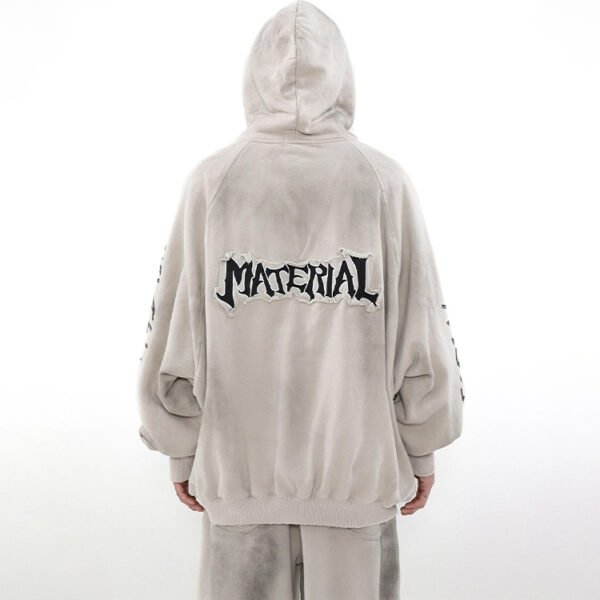
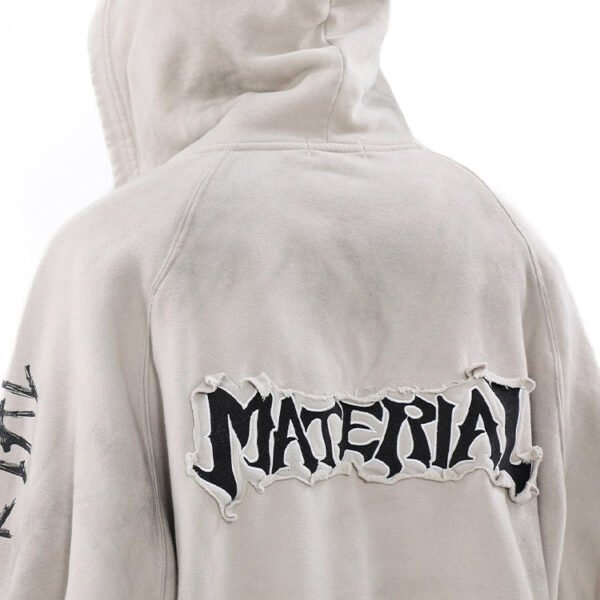
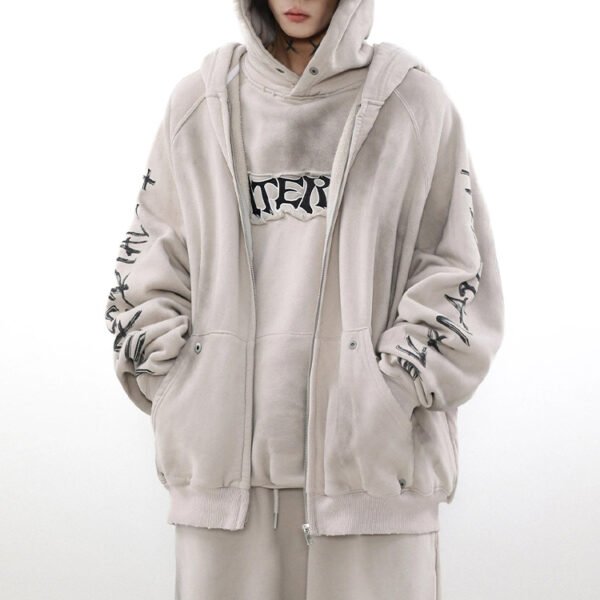
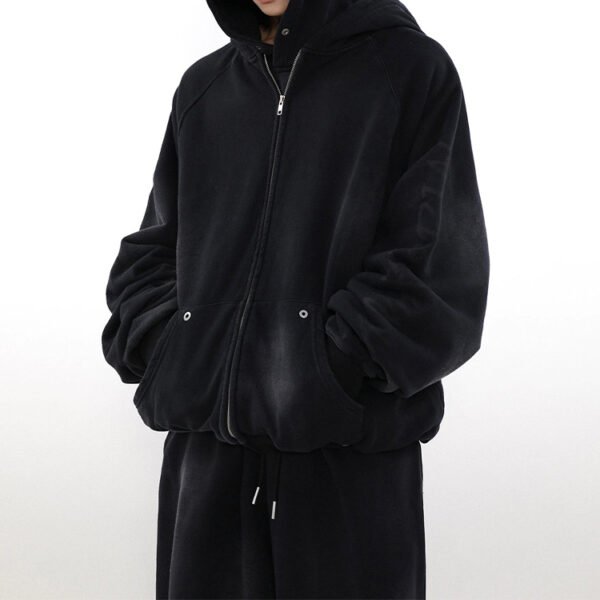
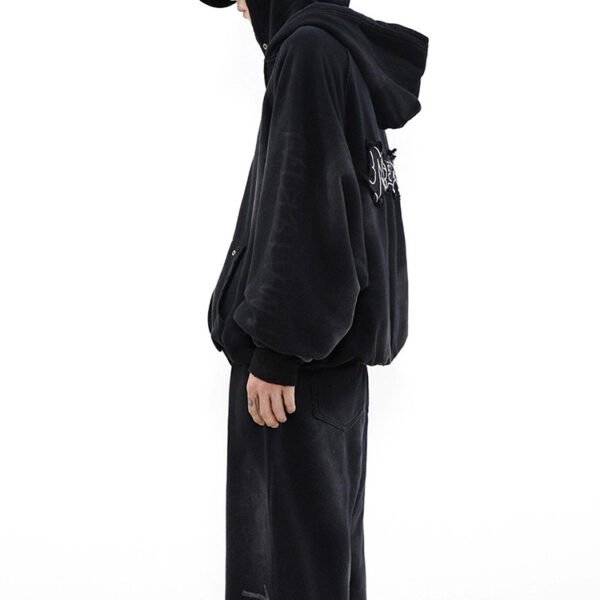
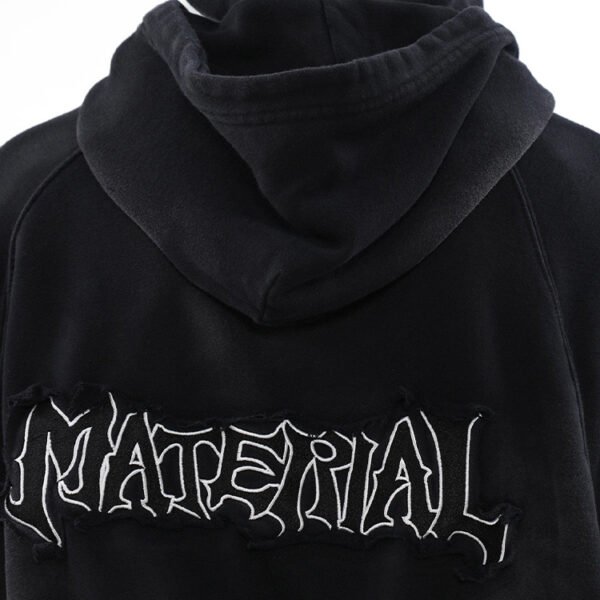


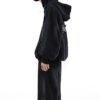
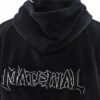
This jacket should be developed around the relationship between oversized proportions and dependable size labels. The supplied rear view shows a broad body, dropped shoulders, generous sleeves, hood, and ribbed hem, all of which can distort familiar size expectations unless measurements and grading are approved together.
Why Oversized Labels Need Measurements
A loose jacket can carry more width and sleeve volume than a standard graded block, while the ribbed hem gathers the lower edge. As a result, a familiar label may not communicate the actual garment experience without finished measurement controls.
The rear image makes this risk visible through a wide back, dropped shoulder line, and substantial sleeve shape. Buyers should treat the silhouette as its own block, then map labels to approved measurements rather than copying a conventional jacket size chart.
Define the Base Size First
Select one base size and document chest width, body length, shoulder span, sleeve length, hood dimensions, cuff opening, and hem circumference. Measure the garment flat using consistent points, because curved seams and rib recovery can change readings.
The back view offers clear landmarks for length and width decisions: hood seam, shoulder join, embroidery center, sleeve cuff, and hem rib. These points should appear on the technical sheet so every sample review uses the same measurement logic.
Grade the Proportion, Not Just Width
Increasing chest width alone can make a loose jacket look unbalanced, especially when dropped shoulders and generous sleeves are already part of the design. Grading should consider body length, shoulder extension, sleeve length, hood scale, cuffs, and hem proportion together.
The image shows a silhouette where the ribbed hem controls the bottom edge and the cuffs control the sleeve openings. Those components need coordinated increments, or larger sizes may become restrictive at the wrist or visually short at the body.
Keep Labels Aligned With the Garment
The neck label, hangtag, carton marking, and measurement chart should all use the same approved size mapping. If the commercial range uses oversized language, that fit direction should be stated clearly so buyers do not interpret the garment as a standard block.
VeeWen's workflow can connect the approved base-size measurement sheet to pattern grading, label artwork, and pre-production sample review. This exact linkage helps catch situations where the physical jacket is correct but the sewn label or packing information is not.
Place Details Against Stable Landmarks
Back embroidery and sleeve detailing should be positioned from stable construction references, such as the center back, shoulder seam, armhole, cuff, or hem. Grading artwork by guesswork can cause the design to drift toward seams or appear too low on larger sizes.
The supplied rear image shows a large back motif spanning the upper body and visible sleeve marks near the outer arms. Buyers should approve placement by measurement for each size group, including clear allowances from seams and rib edges.
Buyer Approval Checkpoint
Approve a complete size specification before confirming the production run: finished measurements, grading increments, label conversion, tolerance, hood dimensions, rib behavior, and artwork placement. A single attractive sample cannot validate how the full range will fit or label.
The decision checkpoint is a signed size-and-placement matrix attached to the 8105482 style file. VeeWen can then use that record for pattern development, sample comments, label checks, and final pre-production confirmation before MOQ: 100 pieces per style.
Buyer Questions
Why is a standard size chart risky for this jacket?
Oversized shoulders, generous sleeves, and a gathered rib hem change how the garment measures and wears. Standard labels may mislead unless they are mapped to approved finished measurements.
Which measurements should define the base size?
At minimum, define chest, body length, shoulder, sleeve, hood, cuff, and hem measurements. Use consistent flat-measure points and record tolerances for every review.
Should embroidery be graded with the garment?
Yes. Placement should be checked against center back, shoulder, armhole, and hem landmarks by size group, ensuring the motif remains balanced and clear of construction seams.
What is the commercial minimum for this style?
VeeWen's exact commercial minimum is MOQ: 100 pieces per style. Confirm the size breakdown and label mapping before quantities are released for production planning.
Approve the 8105482 Size Matrix
Share your target size range, base measurements, label conventions, and embroidery placement requirements with VeeWen. We can convert the loose silhouette into a controlled graded specification before MOQ: 100 pieces per style.


Reviews
There are no reviews yet.