


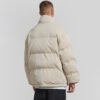
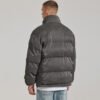
This padded coat is developed around relaxed volume that remains wearable through deliberate shoulder balance and sleeve pitch. The supplied rear image shows a high collar, broad upper body, horizontal padded channels, and sleeves falling close to the torso, creating a clear pattern-engineering checkpoint.
Shoulder Balance Sets the Volume
The rear view presents generous width through the upper body, but the shoulder line does not appear excessively extended. That distinction matters because a padded coat can quickly look unstable when insulation volume pushes the shoulder seam beyond the wearer's natural frame.
VeeWen's development review should map shoulder width against collar stand, armhole depth, and padding thickness together. The approval sample must confirm that the coat retains its loose character while the shoulder seam remains visually centered and the back hangs without diagonal drag.
Sleeve Pitch Controls Natural Movement
The sleeves in the supplied image fall close to the side body, offering useful evidence that the design is not relying solely on oversized width. Sleeve pitch therefore becomes central to movement, especially when the wearer layers a sweater beneath the padded shell.
During pattern development, VeeWen can assess the sleeve crown, underarm angle, and cuff position as one connected system. A small pitch correction may improve reach and resting posture, but excessive correction could disturb the coat's straight, substantial appearance.
Channel Placement Distributes Visual Weight
Horizontal padded channels divide the back into broad bands, making uneven shoulder balance immediately visible. If the upper channels compress differently from the lower channels, the back can appear twisted even when the measurements are nominally correct.
The sample checkpoint should review channel alignment beside the shoulder seam and sleeve head. VeeWen's team should also confirm whether the embossed surface remains legible across the channels, because texture scale and padding fullness jointly influence perceived balance.
High Collar Changes the Upper Pattern
The raised collar adds warmth around the neck and creates a strong visual anchor above the broad back. Its height and attachment angle can either stabilize the loose silhouette or make the upper body appear crowded when shoulder width is increased.
VeeWen should approve collar height together with back neck width and shoulder slope, rather than as an isolated trim detail. The buyer's fitting review should check neck comfort, collar roll, and the transition from collar stand into the sleeve line.
Production Workflow Turns Evidence into Checkpoints
VeeWen's workflow should translate the image evidence into a focused development brief: identify the shoulder seam, measure the sleeve pitch, mark channel relationships, and record collar proportions before the first fit sample is judged.
After fitting, the buyer should receive a clear approval decision on shoulder balance and sleeve pitch before grading proceeds. This sequence keeps the defining silhouette under control while allowing confirmed shell, filling, lining, and finish specifications to develop separately.
Approve the Silhouette Before Scaling
The main trade-off is straightforward: more relaxed width improves layering potential, while uncontrolled shoulder extension can make the coat appear bulky and reduce movement. Sleeve pitch can restore mobility, but changing it too aggressively may alter the intended casual stance.
Approve a representative size with the intended padding and collar construction in place. The buyer should evaluate front, side, and back balance, then confirm whether the loose proportion is commercially appropriate before approving the size range and final material package.
Buyer Questions
What is the key fit approval for this coat?
Approve shoulder width, armhole depth, sleeve pitch, and collar relationship together, because padding can change how each proportion appears during wear.
Is the shell definitely cotton?
Cotton appears in the source wording, but the exact fiber composition, blend, filling, and lining should remain To Confirm during development.
Can the embossed texture be customized?
The supplied image shows a subtle embossed texture; artwork, repeat scale, depth, and production method require separate technical confirmation before sampling.
What is the minimum order quantity?
The commercial minimum is MOQ: 100 pieces per style, with final specifications and approval checkpoints established before production release.
Approve the Shoulder and Sleeve Balance
Send the target measurements, padding direction, and preferred shell references to begin a focused sample review around shoulder balance and sleeve pitch. MOQ: 100 pieces per style.



Reviews
There are no reviews yet.