
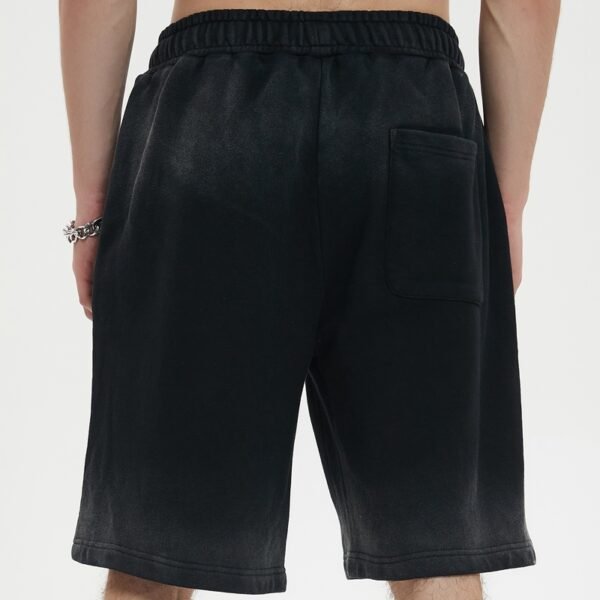


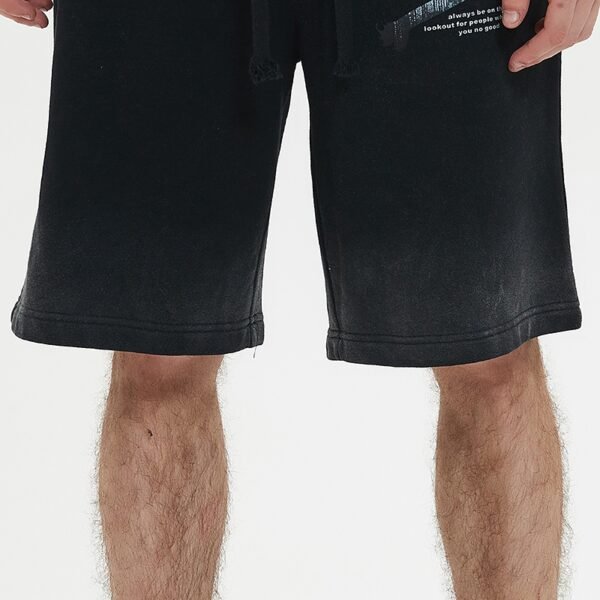

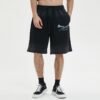
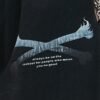

These custom shorts are developed around panel alignment across visible seams, using the supplied rear view as a practical control reference. The relaxed silhouette, rear pocket, waistband, and washed-black surface require coordinated pattern and finishing decisions so visual balance survives production variation at each boundary.
Panel Mapping Before Cutting
Begin development by mapping the center rear seam, side seams, pocket perimeter, waistband casing, and hem lines as connected reference points. The image shows a strong central division, so pattern pieces should preserve equal visual weight around that axis.
The rear pocket introduces a second geometric anchor that can exaggerate imbalance if shifted toward a seam or tilted during sewing. Confirm pocket coordinates from the approved sample, then record seam allowances and notch positions before cutting bulk panels.
Managing Washed Surface Continuity
A vintage wash does not distribute evenly by accident; panel size, seam compression, fabric exposure, and garment orientation can all influence tonal change. The visible shorts show lighter lower areas, making cross-panel consistency essential without forcing perfectly identical coloration.
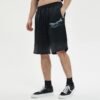
Set a wash tolerance that protects the intended contrast while accepting natural variation within each panel. Review front, back, and side views together, because an acceptable rear appearance can still reveal mismatched side transitions when the garment is worn.
Seam Boundaries And Hem Control
The centered rear seam and lower hems provide the clearest alignment checkpoints in the supplied image. Their straight, readable paths help the garment look deliberate, while wavering or unevenly balanced lines can make a relaxed short appear poorly controlled.
Use seam construction and pressing instructions that support stable edge behavior through washing and handling. Hem width, stitch distance, and turnback depth should be measured on the approved sample, especially where fading changes the perceived position of the boundary.
Pocket Placement As A Visual Anchor
The rear patch pocket is functional, but its rectangular shape also organizes the back panel. Its upper edge, side edges, and lower corners should relate consistently to the center seam and waistband, preserving a deliberate composition rather than a floating attachment.
Decide whether the pocket should follow the base panel's wash intensity or remain slightly clearer for definition. That choice affects cutting markers, wash testing, and inspection criteria, so approve the visual hierarchy before confirming the final trim and sewing route.
VeeWen Development Workflow
VeeWen should translate this argument into a panel map, graded pattern, wash sample, and construction checklist linked to one approval record. The first review should inspect the rear center seam, pocket coordinates, hems, and tonal transitions in the same garment.
After fit approval, compare a second washed sample against the first to identify repeatable alignment controls. The production file should preserve tolerances for seam position, pocket angle, hem width, and wash variation, giving the cutting and finishing teams measurable checkpoints.
Buyer Approval Checkpoint
Before release, the buyer should approve the complete visual system rather than judging fabric color alone. Lay the sample flat and inspect the rear view, then review worn or mannequin presentation to confirm that panel boundaries remain balanced in use.
Record accepted wash variation and rejectable alignment defects with annotated photographs and measurements. This checkpoint protects the commercial intent while acknowledging that washed garments naturally vary, creating a clear basis for later inspection and corrective discussion.
Buyer Questions
What material is confirmed for these shorts?
French terry appears in the supplied source wording, but fiber composition, fabric weight, stretch, and recovery require confirmation during development.
Why is panel alignment important for a washed short?
Seams, pockets, hems, and fading create visible reference lines; coordinating them prevents tonal shifts from making the garment look visually uneven.
What should the first sample prove?
The first sample should prove fit, pocket coordinates, seam continuity, hem stability, and acceptable wash variation across front, back, and side views.
What is the minimum order quantity?
The commercial minimum is MOQ: 100 pieces per style, with final requirements governed by approved specifications and production documentation.
Approve The Panel Map
Send your target measurements, wash direction, and pocket preferences to begin a panel-alignment review. VeeWen can develop the sample record around visible seam continuity before bulk approval.



Reviews
There are no reviews yet.