
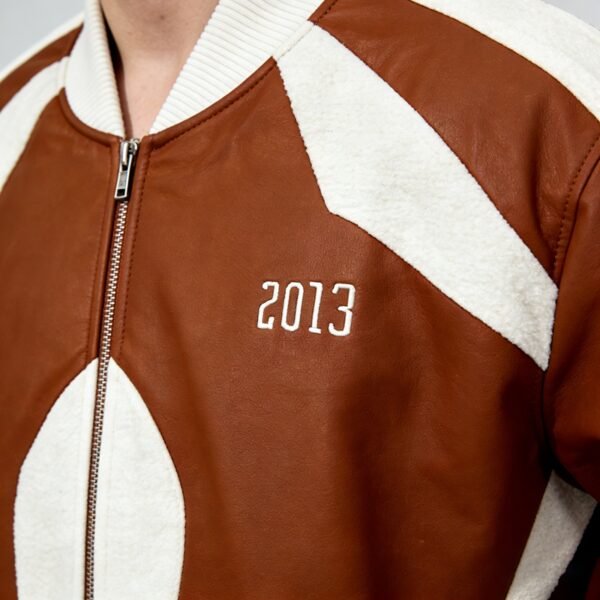
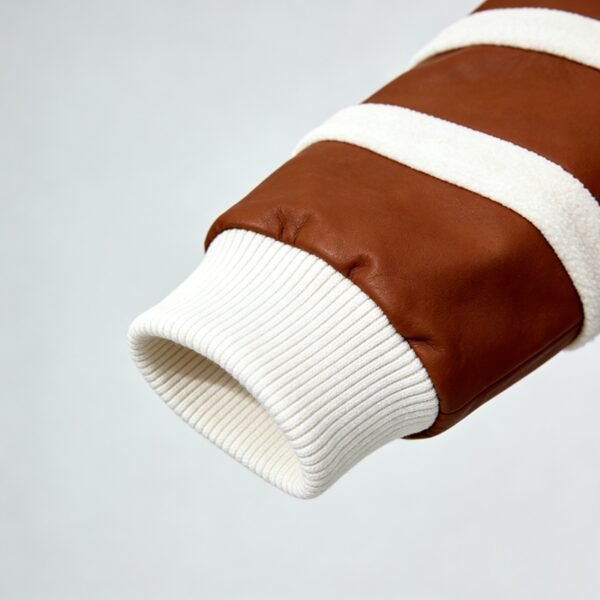
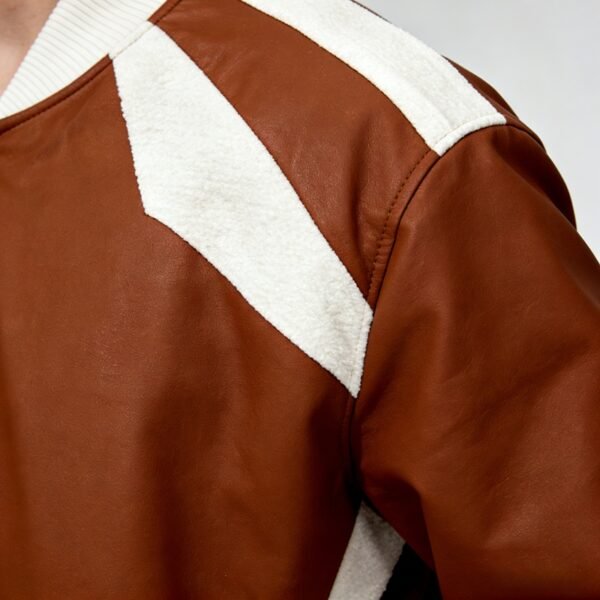



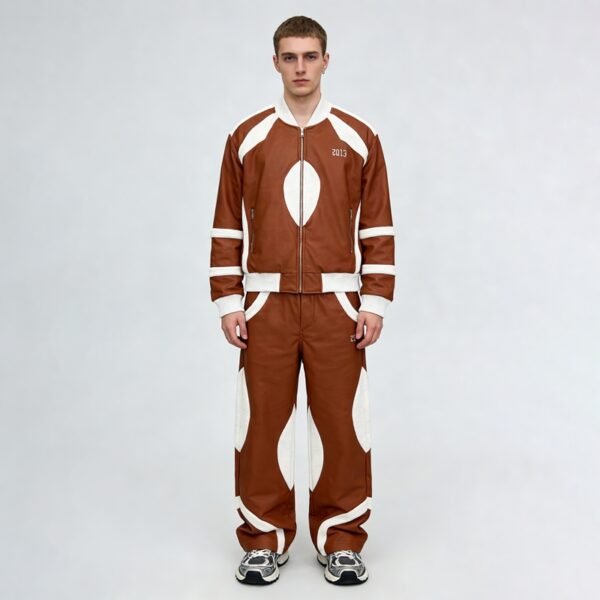
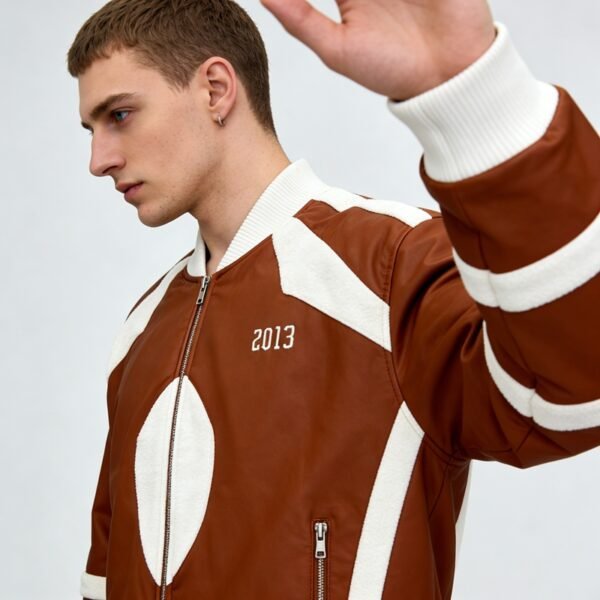
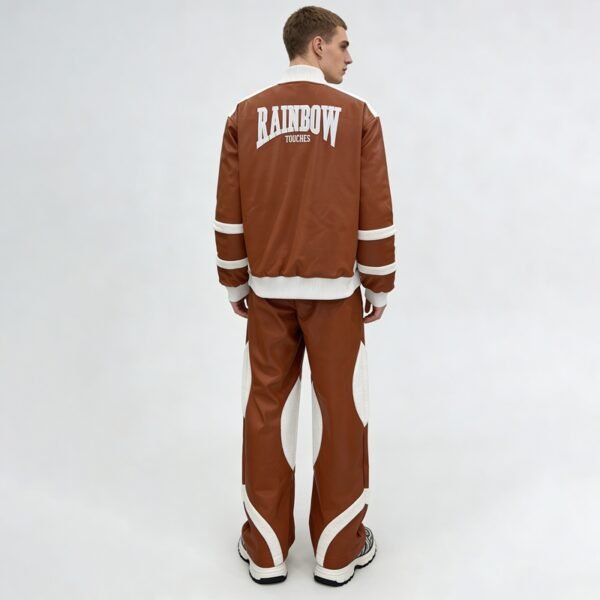





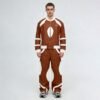
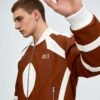
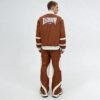
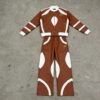
This custom paneled leather tracksuit is developed around coordinated rib recovery, not decoration alone. The visual contrast between smooth brown panels and ivory textured inserts makes stable cuffs, waistband, and hems essential to preserving proportion as the bomber and flared trousers move together.
Rib recovery controls the set's visual balance.
In a coordinated tracksuit, rib is a proportion-control component rather than a minor trim. If cuffs, waistband, or hems relax unevenly, the jacket can lose its bomber shape while the flared trousers appear disconnected from the upper silhouette.
The supplied image shows strong contrast between brown smooth panels and ivory textured sections, while the source identifies a bomber and flare-pant combination. That pairing makes consistent edge behavior important wherever rib frames or anchors the garments.
Material contrast increases recovery demands.
Smooth leather or leather-look surfaces resist movement differently from soft pile-textured inserts and rib knit. Their angled panel seams can transfer tension toward the edges, so recovery must be evaluated with the actual materials rather than an isolated trim swatch.
A rib that feels firm on a table may stretch differently when joined to heavier or less yielding panels. Development should therefore compare rib width, stitch density, and attachment tension at each edge, documenting how the trim returns after repeated extension.
The bomber cuff needs controlled return.
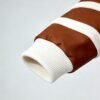
A bomber cuff establishes the sleeve endpoint and helps keep the jacket gathered at the wrist. Excessive relaxation can create a loose, collapsed finish, while excessive compression may bunch the paneled sleeve and interrupt the intended graphic geometry.
The fit sample should assess the cuff with the sleeve fully extended, bent, and layered over the hand. This reveals whether the rib returns evenly without twisting, whether the seam remains comfortable, and whether the panel transition stays visually clean.
Waistband and trouser hem must coordinate.
The waistband links the cropped or blouson jacket proportion to the flare trouser rise. If it loses recovery sooner than the cuffs, the set may look unstable through the torso; if the trouser hem changes width, the flare loses its designed line.
VeeWen should review the waistband and trouser finishing as one system, checking extension, release, and side-to-side consistency. The buyer's approval should cover how the two pieces align when worn together, not only how each garment looks separately.
VeeWen workflow isolates movement before decoration.
Within VeeWen's workflow, the rib-recovery axis belongs in the construction sample before embroidery and final surface detailing are locked. This allows the team to tune edge dimensions, joining tension, and seam behavior without confusing trim problems with artwork problems.
After the rib system is approved, the decorated set can be reviewed for balance around the collar, cuffs, waistband, and hems. The buyer should compare the complete outfit in static and moving positions, recording the approved recovery behavior by component.
Approve recovery by component and size.
Rib performance can change with circumference, grading, and attachment length, so one successful sample does not automatically validate every size. The approval record should identify cuff, waistband, and hem measurements alongside the intended stretch and return behavior.
The decision checkpoint is straightforward: confirm that every rib edge returns to its role after movement while the brown-and-ivory panel architecture remains aligned. If one component relaxes visibly, revise the construction before bulk production approval.
Buyer Questions
Why is rib recovery important for this tracksuit?
Recovery keeps the bomber gathered and the trousers visually controlled, helping contrasting materials maintain a coordinated silhouette after stretching, movement, and repeated wear.
Which rib areas require review?
Review jacket cuffs, waistband, and trouser hems together, because each edge influences proportion, movement comfort, and continuity between the matching garments.
Can the same rib specification serve every size?
Not automatically. Circumference and attachment length change by size, so graded samples should confirm consistent extension, return, and visual proportion across the range.
What is the production minimum?
The commercial minimum is MOQ: 100 pieces per style, with materials, rib construction, grading, embroidery, and matching-set specifications confirmed during development.
Approve the rib system before decoration lock.
Share the target size range, panel materials, embroidery direction, and desired silhouette with VeeWen for component-level rib testing and coordinated set approval.


Reviews
There are no reviews yet.