

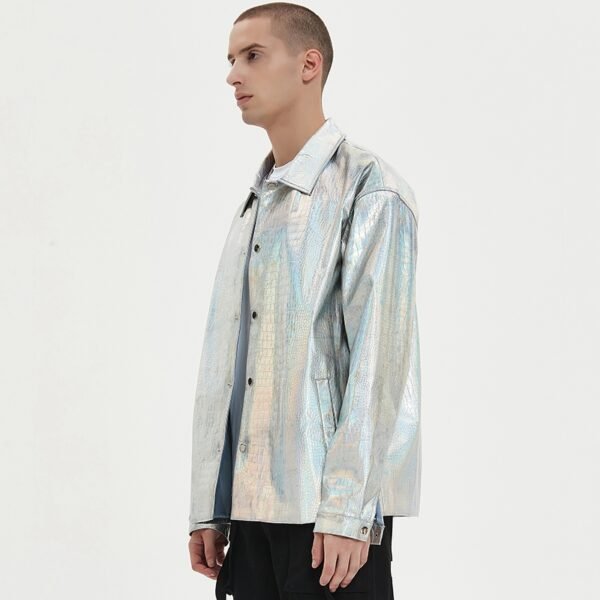
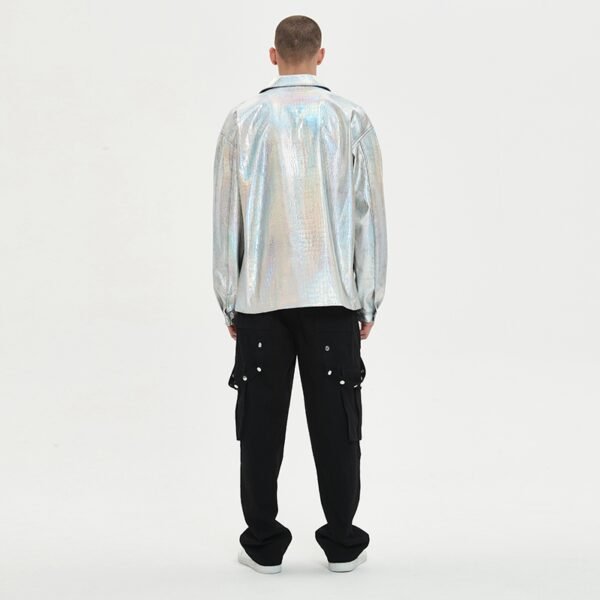
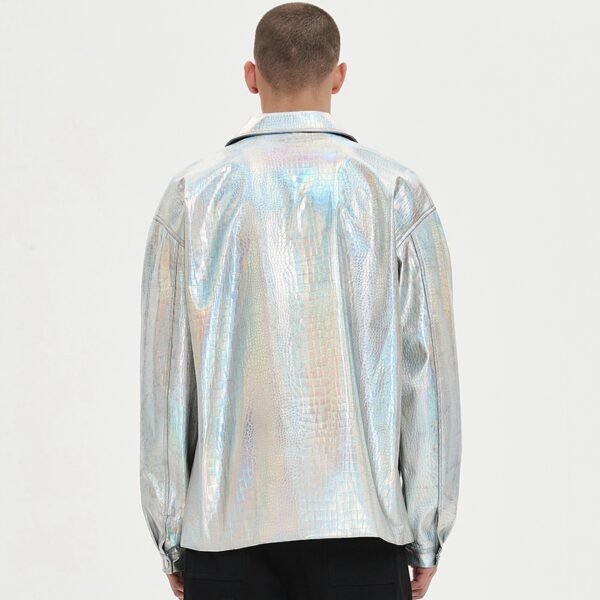
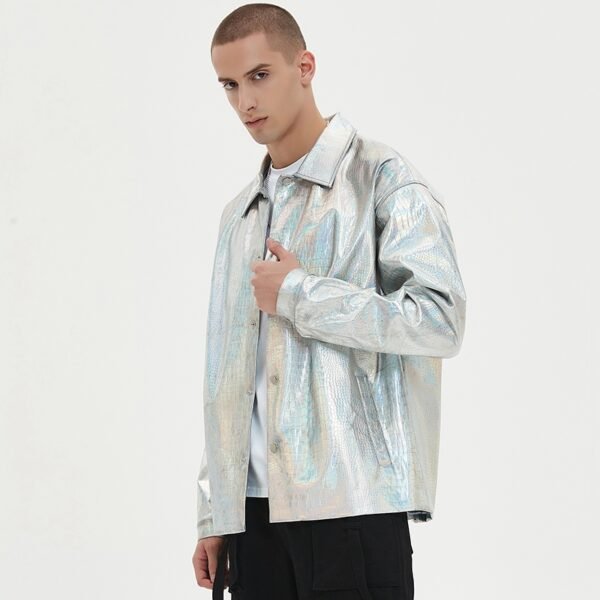

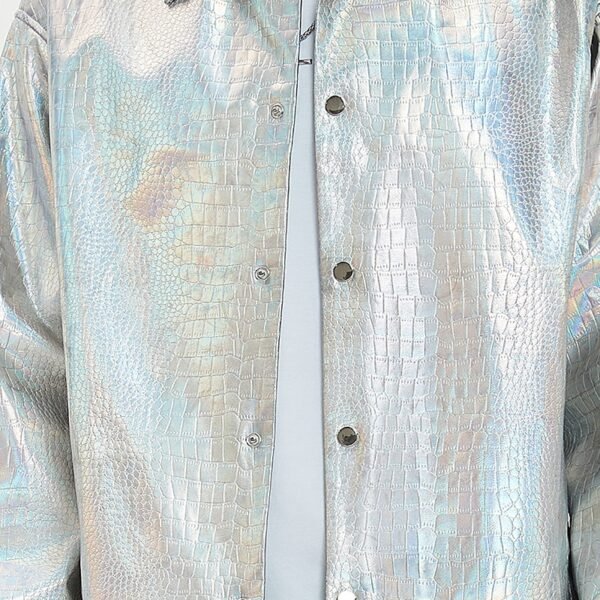







This jacket is defined by coordinated surface behavior rather than a plain metallic shell. The development challenge is keeping reflective color movement and alligator texture visually coherent when panels, seams, collar edges, and button openings interrupt the surface.
Why Registration Controls the Product
The supplied image shows a silver jacket whose surface changes from cool blue to pink and warm highlights as light moves across it. That effect makes panel alignment commercially important: mismatched direction or placement can create abrupt visual jumps instead of a controlled, continuous statement.
The embossed alligator-style texture adds a second alignment problem. Texture scale, grain direction, and reflective response should be reviewed at center front, side seams, sleeves, collar, and cuffs, because each cut panel can otherwise read as a separate surface.
Panel Mapping Before Sampling
Begin with a digital or paper panel map identifying the intended surface direction on every visible component. Mark center-front balance, shoulder transitions, sleeve orientation, collar placement, and hem relationship before approving cutting, coating, embossing, or printed-film application.
The map should distinguish intentional seam interruptions from registration errors. Buyers should decide whether the metallic effect must meet precisely at major seams or whether a controlled offset is acceptable, especially where curved armholes and sleeve joins make continuity technically more demanding.
Construction Trade-Offs
A compact cropped body reduces the visible distance across the front, which can simplify registration compared with a longer coat. However, the image shows broad sleeves and multiple outerwear edges, so alignment remains exposed around the shoulders, cuffs, placket, and collar points during assembly.
Tighter tolerances may improve the premium visual impression but can increase cutting sensitivity and material waste when reflective or embossed material has a directional behavior. Looser tolerances may support yield, yet they should never obscure the approved visual hierarchy across the front body.
Surface and Hardware Review
The center button placket divides the reflective front into two strong visual fields. Button spacing, placket width, and edge folding should be checked against the surface pattern so hardware does not accidentally hide a registration mismatch or create uneven highlight concentration around the closure.
The pointed collar and clean hem make edge finishing especially visible. Review whether the coating, embossed texture, and backing tolerate folding without cracking, whitening, distortion, or loss of reflectivity; these behaviors are source-dependent and must be confirmed through development samples.
VeeWen Development Checkpoint
VeeWen's product-development workflow should translate this jacket into a registered panel specification, annotated construction sheet, and approval sample focused on surface continuity. The first review should compare full-front photography, sleeve views, collar close-ups, and seam junctions against the approved map.
After the visual checkpoint, confirm material behavior, button attachment, edge finishing, and size grading together rather than separately. The buyer's approval should record acceptable registration deviation, approved color movement, and any intentional seam breaks before the style enters production planning.
Buyer Approval Decision
The right approval question is not simply whether the jacket looks metallic. It is whether the reflective color shifts, embossed texture, panel proportions, and hardware arrangement produce the same visual logic from front, three-quarter, and close-range views.
Approve the style when the registration map survives the actual construction sequence and the surface remains commercially consistent at the most visible joins. If those joins remain uncertain, hold bulk authorization until revised samples establish the agreed tolerance.
Buyer Questions
Is the jacket genuine leather?
No composition is verified by the supplied evidence. The source title identifies PU leather, while exact substrate, backing, coating, and material handfeel remain to confirm.
Can the reflective colors be changed?
Potentially, subject to the selected material or surface process. VeeWen should confirm available color behavior, registration limits, and approval requirements through a development sample.
What should the first sample prove?
It should prove panel registration, embossed texture direction, reflective color consistency, collar and placket alignment, button placement, and edge behavior across the visible jacket surfaces.
What is the minimum order?
The commercial minimum is MOQ: 100 pieces per style. Final feasibility remains subject to approved materials, construction details, colorways, grading, and production specifications.
Approve the Surface Registration Route
Send the intended color direction, panel map, size range, and hardware preference. VeeWen can then structure the development review around registration tolerance before you authorize the next sample checkpoint.


Reviews
There are no reviews yet.