
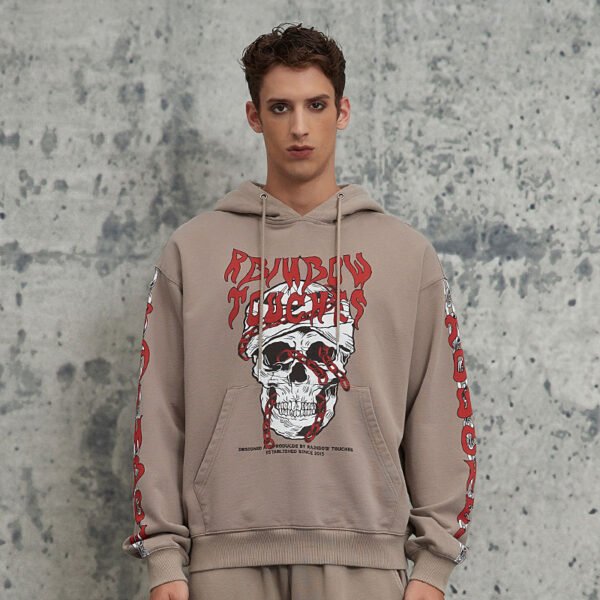

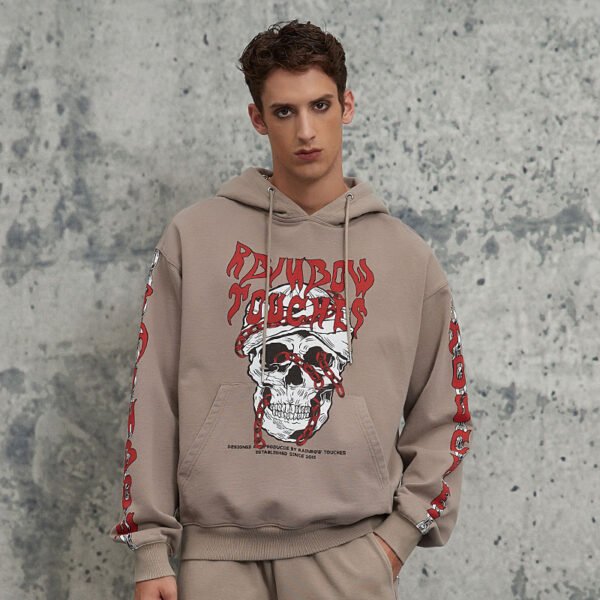










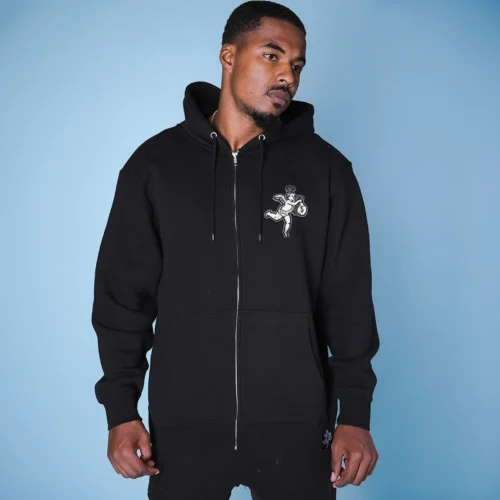
For a graphic pullover hoodie with raw-looking details, durability depends on where unfinished edges are allowed to move and where construction must restrain them. The supplied image pairs a large skull graphic and sleeve artwork with structured cuffs, hem, and hood, making containment the core development decision.
Why Raw-Edge Containment Defines This Hoodie
Raw-looking edges create visual energy, but hoodie openings experience repeated pulling, washing, and arm movement. The supplied image shows structured cuffs and hem beside graphic-heavy sleeves, so the product needs deliberate boundaries between controlled finish and intentional unfinished character.
Containment means limiting yarn release, stabilizing nearby seams, and directing stress toward reinforced areas. The buyer's objective is a stable visual effect that remains recognizable after wear, rather than a raw edge that expands unpredictably.
Mapping the Stress Zones
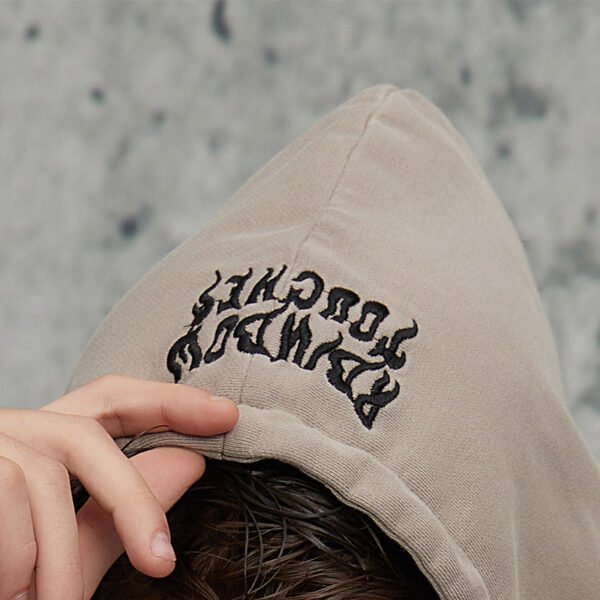
The highest-risk areas include cuff openings, hem corners, pocket edges, hood seams, and any distressed sleeve detail near the wrist. These locations repeatedly flex or catch, especially when a relaxed hoodie is layered or pulled over the head.
Development should map each raw-looking location against its neighboring seam and reinforcement. A clean containment plan may use folded edges, controlled abrasion, stitching density, or internal stabilization, depending on the approved appearance and hand-feel target.
Graphic Continuity Across the Body
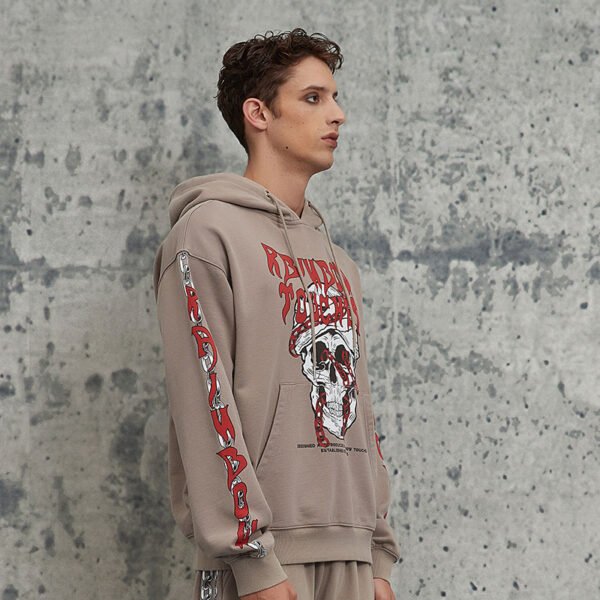
The image shows a large central skull graphic with additional artwork running down both sleeves. This creates a demanding placement relationship: torso scale, sleeve alignment, cuff position, and hood clearance must be reviewed as one coordinated graphic system.
If sleeve artwork drifts toward the cuff or is interrupted by containment details, the design can lose balance. Approve placement on a worn and articulated sample, checking front view, side view, bent elbows, and cuff coverage before grading.
Rib Finishing and Edge Restraint
Structured rib cuffs and hem provide visual and physical restraint around a softer hoodie body. Their recovery helps openings return after movement, while their seam joins must tolerate pulling without exposing or widening any adjacent raw treatment.
The trade-off is between a sharper, more durable boundary and a looser handmade impression. Buyers should define whether containment remains nearly invisible or becomes part of the design, then align stitch visibility, edge width, and abrasion intensity accordingly.
VeeWen Development Checkpoint
VeeWen can organize this product around a stress-zone sample: confirm the base hoodie block, mark every raw-edge location, apply the proposed containment method, and test the complete garment through laundering and repeated handling.
The key approval review should compare edge release, cuff recovery, seam stability, and graphic continuity together. This focused workflow prevents a visually successful sample from reaching bulk production with unresolved durability behavior at the openings.
Best Use and Buyer Approval
This hoodie suits graphic collections where controlled imperfection, sleeve storytelling, and a substantial pullover silhouette are central. It is less appropriate when the buyer needs minimal surface variation, delicate decoration, or a highly polished uniform finish.
Before bulk release, approve the production-intent sample for raw-edge boundaries, loose-thread limits, rib dimensions, hood balance, print registration, and laundering behavior. Confirm final fabric details separately, because the source reference does not establish every technical specification.
Buyer Questions
Why does this hoodie need raw-edge containment?
Because unfinished-looking edges can release yarn under pulling, abrasion, and laundering. Containment preserves the visual effect while directing stress toward stable seams and reinforced boundaries.
Where should containment be reviewed first?
Start with cuffs, hem corners, pocket edges, hood seams, and distressed sleeve areas. These zones experience frequent flexing, catching, stretching, or repeated handling during wear.
Will containment remove the intended streetwear character?
Not necessarily. The method can remain visually subtle or become decorative, depending on approved edge width, stitch visibility, abrasion intensity, and acceptable variation.
What is the minimum order for this hoodie?
The commercial minimum is MOQ: 100 pieces per style. Confirm color assortment, size breakdown, artwork files, and final construction details before production scheduling.
Approve the Containment Map
Share the artwork, hoodie measurements, raw-edge references, and laundering expectations. VeeWen will develop a stress-zone sample that aligns edge restraint, rib recovery, graphic continuity, and bulk approval at MOQ: 100 pieces per style.


Reviews
There are no reviews yet.