
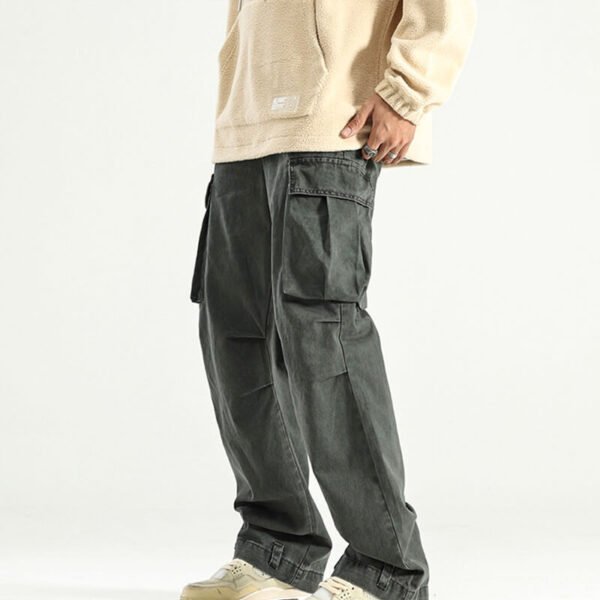
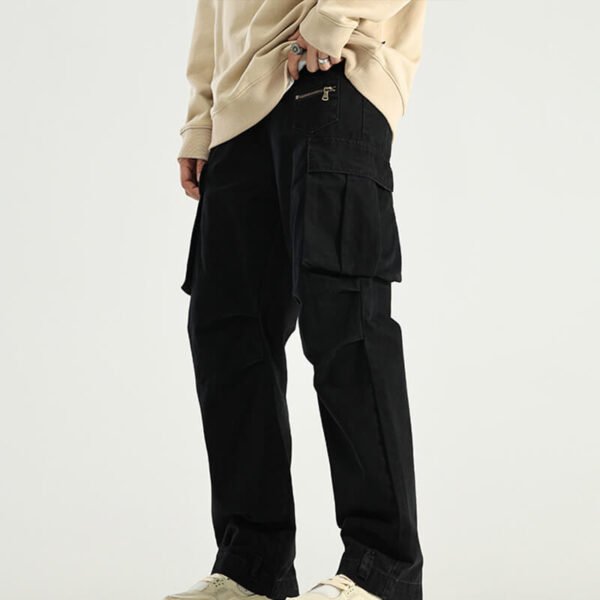

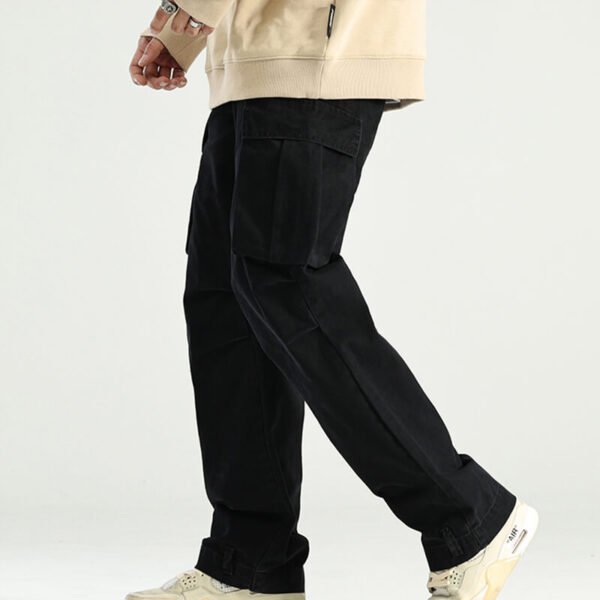
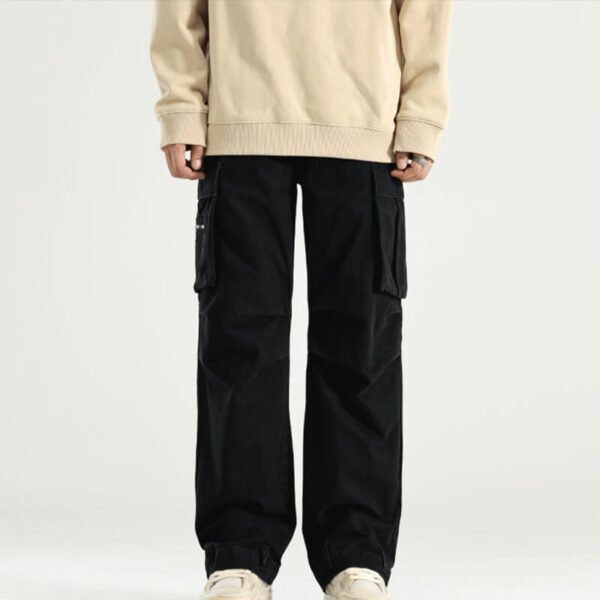


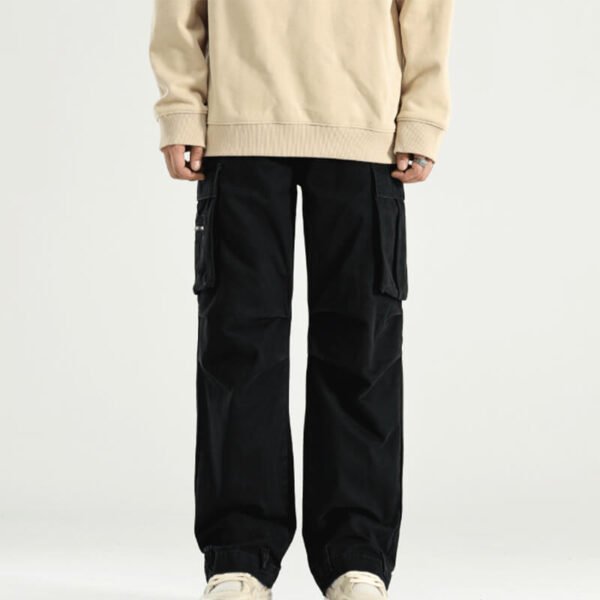
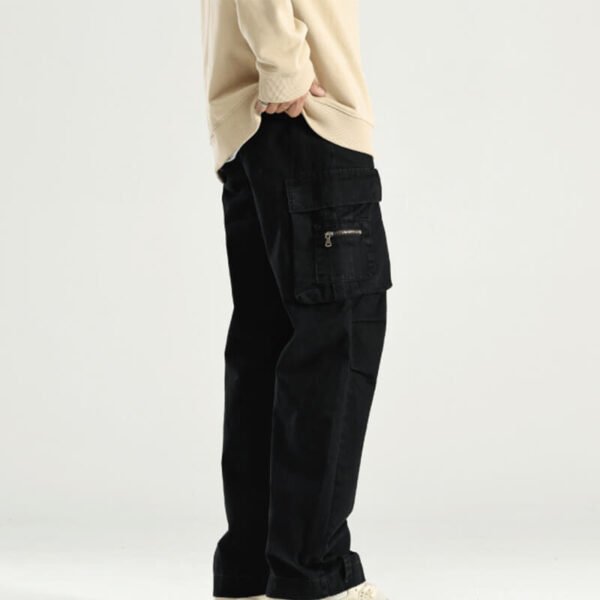
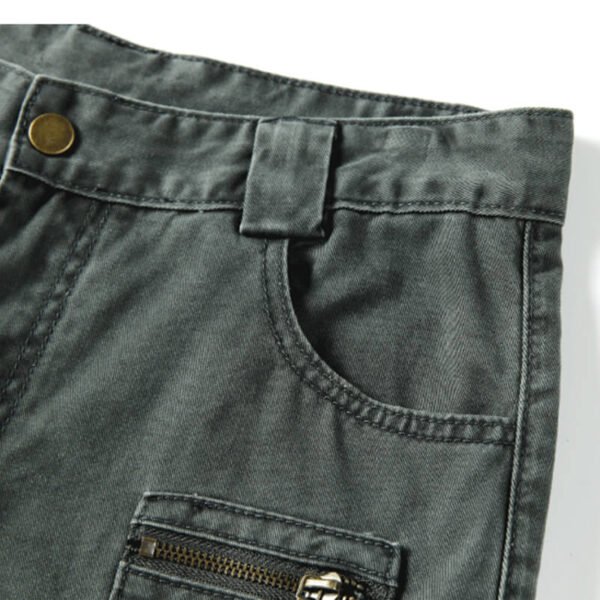
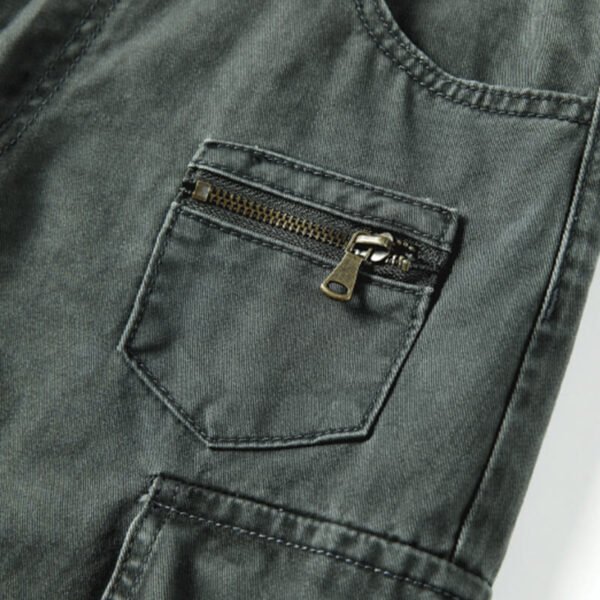


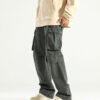



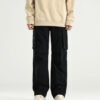

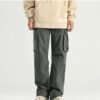


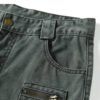


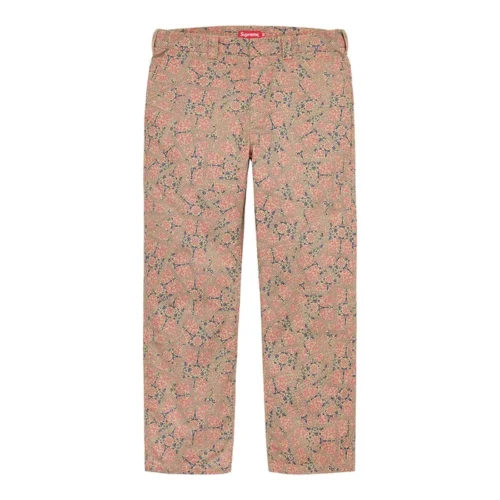
These custom cargo pants are built around a specific balance: a vintage-looking cotton wash should feel softened without erasing the structured utility volumes that define the silhouette. Layered pockets, a loose leg, charcoal tonal variation, and adjustable hems make finish control central to approval.
Why Softness Cannot Stand Alone
A vintage wash can improve hand feel and create tonal depth, but softness is not the complete product proposition here. The image depends on pockets standing away from the legs, giving the cargo profile recognizable utility volume rather than a flat trouser appearance.
If the wash relaxes the fabric too aggressively, pocket flaps may curl, gussets may lose definition, and the lower leg can look wider or less controlled. Development should therefore judge tactile softness beside the silhouette after washing, drying, pressing, and ordinary handling.
Pocket Volume as the Shape Test
The side pockets are stacked and visibly dimensional, with flap edges and layered panels creating shadows across the charcoal surface. Those shadows are useful evidence: they show where fabric needs enough body, seam control, and stable attachment to preserve the intended cargo architecture.
VeeWen should measure pocket projection and opening alignment before and after the selected wash route. A softer base fabric may need adjusted pocket interlinings, seam construction, or reinforcement placement, but any intervention must preserve comfort and avoid making the garment feel unnecessarily stiff.
Wash Depth and Surface Character
The supplied image presents a muted charcoal wash with irregular tonal variation rather than a uniform flat black. That effect should be translated into a controlled wash target, because excessive contrast can make pocket panels appear mismatched while insufficient variation can remove the vintage character buyers expect.
Wash approval should compare multiple panels, seam ridges, pocket flaps, and hem areas under consistent lighting. The buyer should define acceptable tonal spread and hand-feel range, recognizing that softened surfaces may reveal construction lines more strongly after finishing.
Lower-Hem Control Preserves Proportion
Adjustable lower hems give this loose cargo silhouette a second shape-setting tool. The visible tabs or buckles can narrow the opening over footwear, reduce pooling, and keep the wide leg from appearing uncontrolled after the wash has relaxed the cotton fabric.
That mechanism introduces a trade-off between flexibility and visual cleanliness. Hardware or webbing that is too prominent may compete with the pocket system, while a weak adjustment may fail to retain the intended opening. Final placement should be checked with several footwear profiles.
VeeWen Workflow Checkpoint
VeeWen's product-development workflow should connect fabric selection, wash trials, pocket engineering, and hem adjustment in one approval sequence. The same sample must demonstrate surface character and retained utility volume, because approving them separately can conceal wash-related distortion.
For the buyer review, record pre-wash and post-wash measurements at the waist, thigh, pocket projection, inseam, leg opening, and adjustment range. This technical record gives production teams a clear reference while keeping the chosen softness level tied to the approved silhouette.
Trade-Offs and Production Approval
A softer finish can improve comfort and strengthen the vintage impression, but it may reduce crisp pocket edges and increase visible settling during wear. A firmer finish protects structure more effectively, yet it may weaken the relaxed attitude suggested by the loose fit and washed surface.
Approve the style when the hand feel is comfortably softened, pocket volumes remain readable, and the lower hem can be adjusted without collapsing the leg shape. Confirm final cotton construction, wash recipe, hardware, and care instructions before production release.
Buyer Questions
Can the wash be developed in another color?
Yes, the wash direction can be adapted to an approved color target. Each color requires its own surface review because tonal variation, pocket contrast, and softness may develop differently.
How do we protect pocket volume after washing?
Review pocket projection before and after finishing, then adjust fabric body, interlining, seam control, or reinforcement only as needed to preserve volume without excessive stiffness.
Is the 100% cotton composition confirmed?
The supplied source title states 100% cotton, but final composition should be verified against the approved fabric documentation and production specification before release.
What is the minimum order for these cargo pants?
The commercial minimum is MOQ: 100 pieces per style. Wash color, size ratio, pocket details, hardware, and final measurements should be confirmed before production booking.
Approve the Wash and Shape Balance
Share your target hand feel, wash reference, pocket measurements, and hem preference for a development review that protects utility volume while meeting MOQ: 100 pieces per style.


Reviews
There are no reviews yet.