
Denim Apparel Styles and Specifications for 100-Piece OEM Orders
VeeWen develops denim apparel styles and specifications for menswear and streetwear labels through OEM, ODM, and private-label production.
Featured Products for denim apparel styles and specifications Development



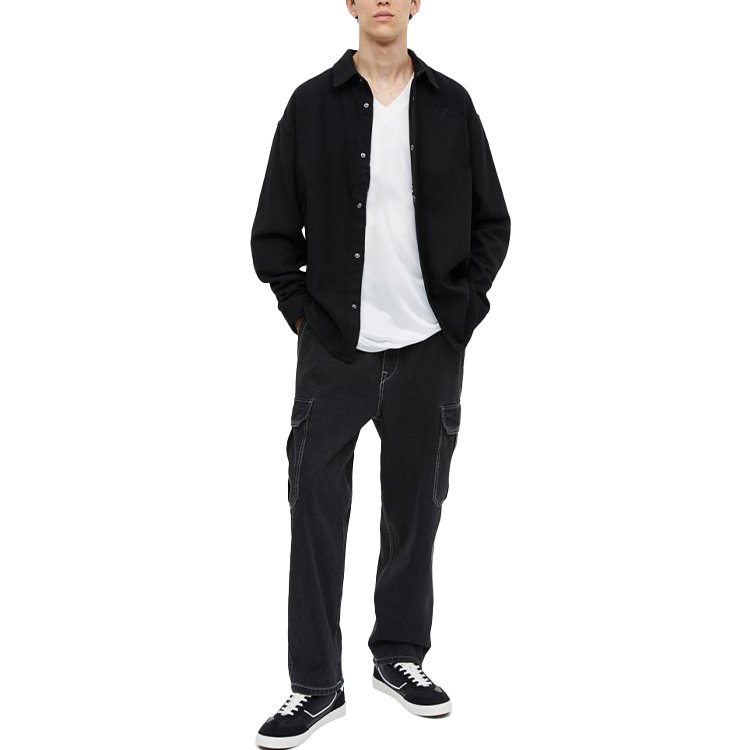


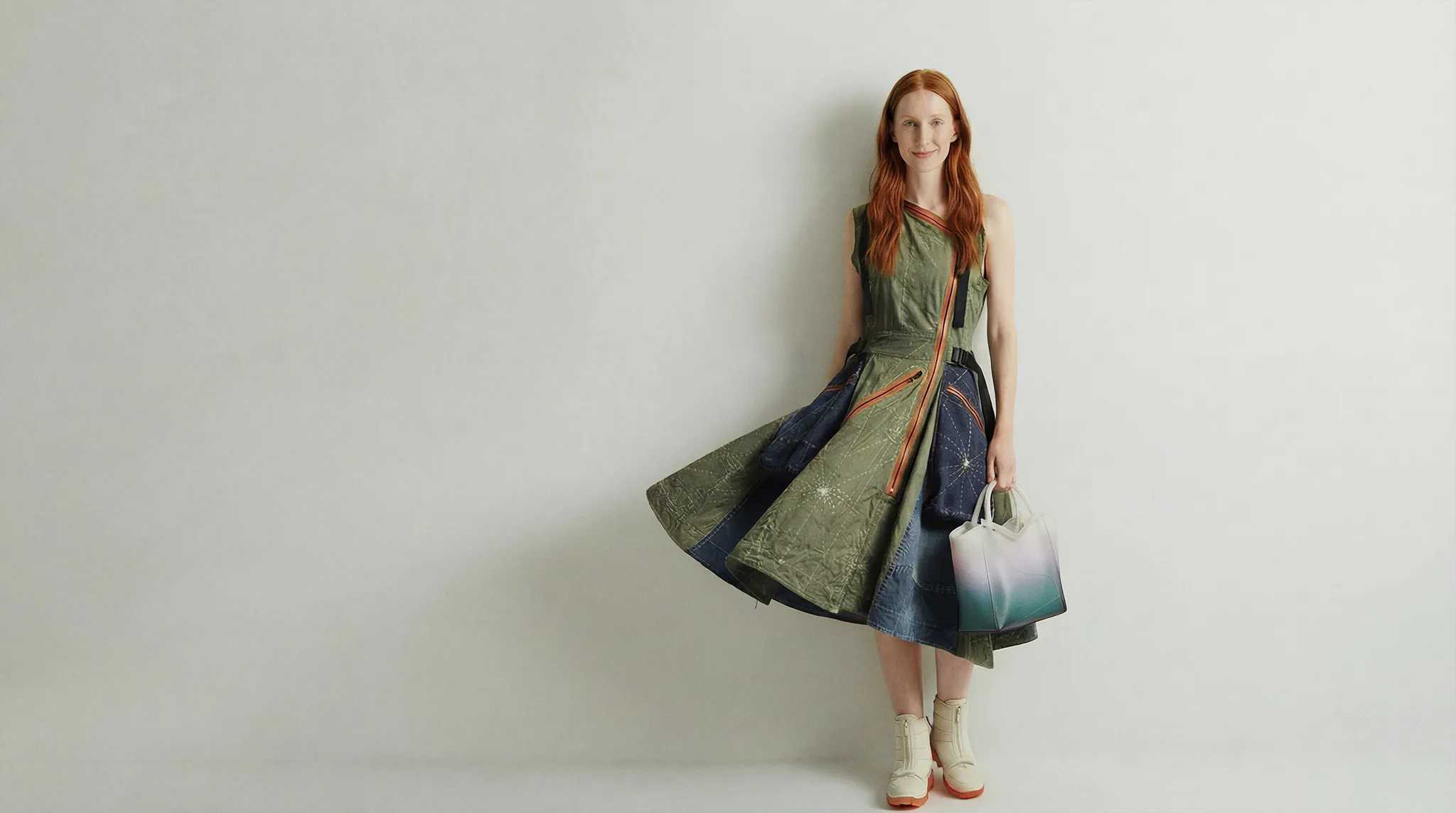


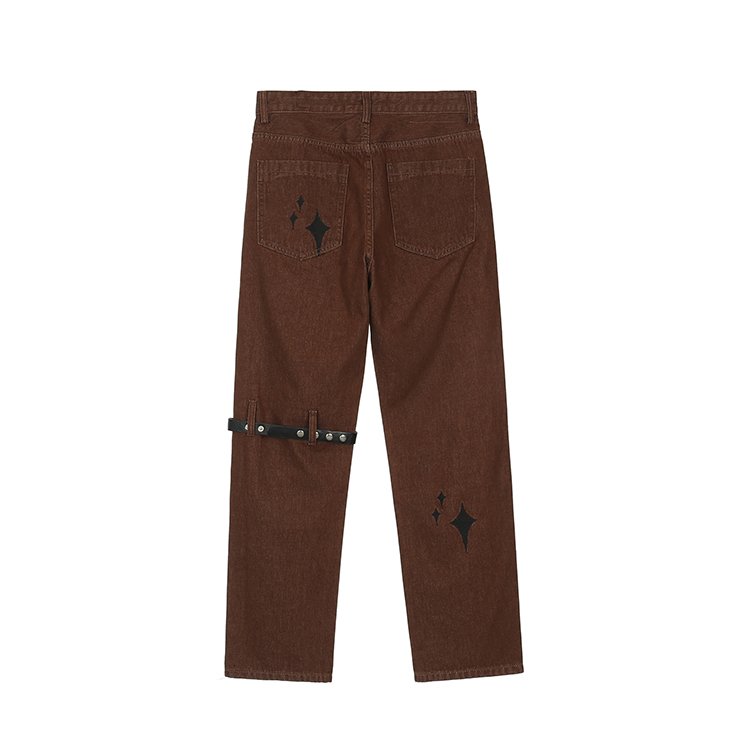
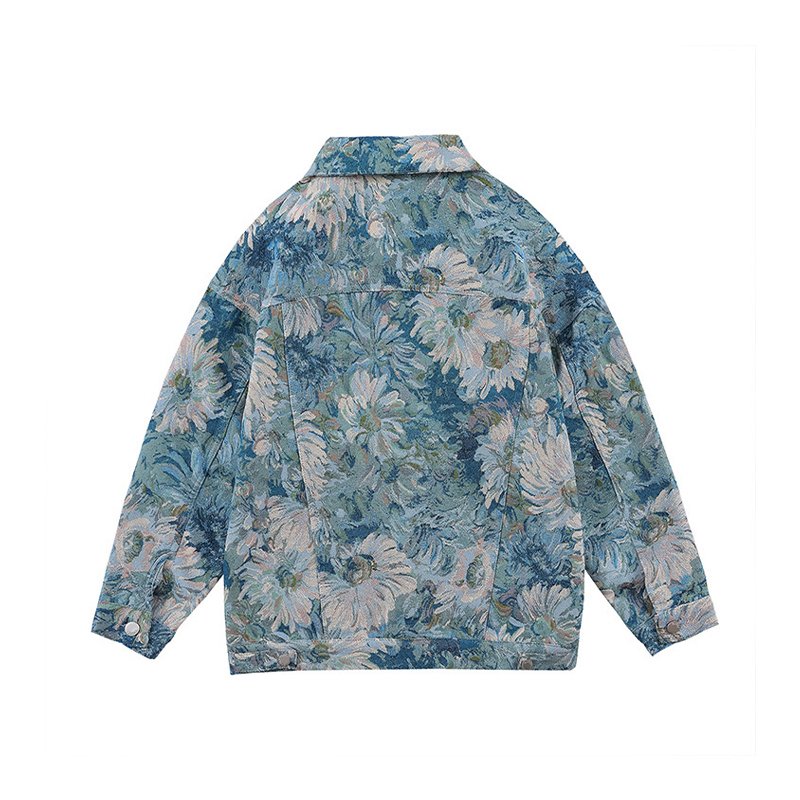


Denim Apparel Styles and Specifications: Catalogue & Quotation



Denim Apparel Styles and Specifications, Ready for Production
VeeWen turns your denim direction into documented, production-ready programs from 100 pieces per style.
100-Piece Style MOQ
Launch focused denim drops with a standard 100-piece-per-style MOQ while establishing repeatable specifications for future reorders.
Specification-Led Development
Define fit block, rise, inseam, leg shape, pocket placement, hardware and graded measurements before sampling begins.
Wash Planning Early
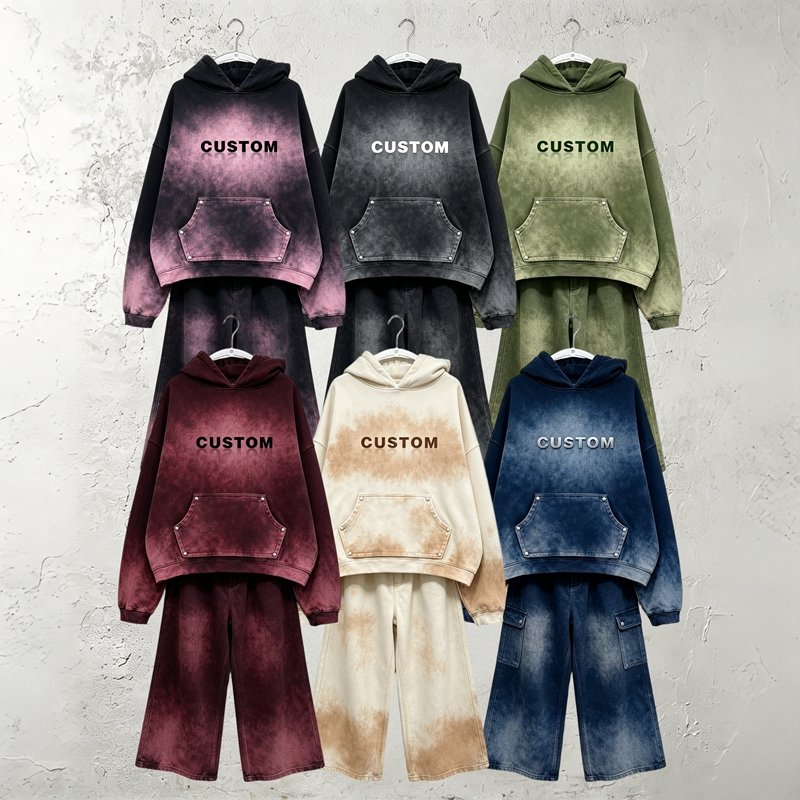
Plan enzyme, stone, acid or vintage washes early to manage shade variation, shrinkage, hand feel and final garment measurements.
Private-Label Trim Control
Coordinate branded buttons, rivets, zipper pulls, labels, patches, hangtags and packaging that support a complete denim identity.
Documented Quality Checkpoints
Approve samples and pre-production details, then follow in-line inspection and final quality checks before packed bulk goods ship.
Explore Denim Apparel Styles & Specifications
Continue to every direct child page in this Studio architecture section.

Jeans Manufacturers
Jeans manufacturers for OEM, ODM and private-label denim from 100 pieces per style, with sampling and wash development. Request a custom quote today.
Explore Category
Denim Manufacturers
Denim manufacturers for private-label jeans, jackets and streetwear, with a 100-piece-per-style MOQ and guided sampling. Send your tech pack to request a quote.
Explore Category
Jeans Manufacturing for Thailand Brands
Jeans manufacturing for Thailand brands starts at 100 pieces per style, with OEM development, washes, private labels, and documented QC. Request a quote today.
Explore CategoryDenim Apparel Styles and Specifications: Fabrics We Source


Heavyweight Cotton Twill
A durable woven option for utility pants, overshirts and denim-inspired sets. Commonly 8–12 oz, its clean diagonal texture supports crisp construction, dependable abrasion resistance and pigment-dye or garment-wash programs.

Denim Chambray
A lighter plain-weave cotton fabric for shirts, dresses and warm-weather layering pieces. Often 4–7 oz, chambray has a breathable, smooth hand feel with denim-like color depth and less bulk.
Cotton Pocketing Fabric
A stable cotton or cotton-poly lining used for pockets, waistbands and internal reinforcement. Its lighter weight reduces bulk, while a tightly woven construction supports repeated wear and reliable pocket shape.

Brushed Cotton Flannel
A soft woven lining for denim overshirts, jackets and cold-weather workwear. Usually medium weight, its brushed surface adds warmth and comfort without the excessive volume that can restrict layered garment construction.
Denim Apparel Styles and Specifications: Washes, Decoration & Finishing
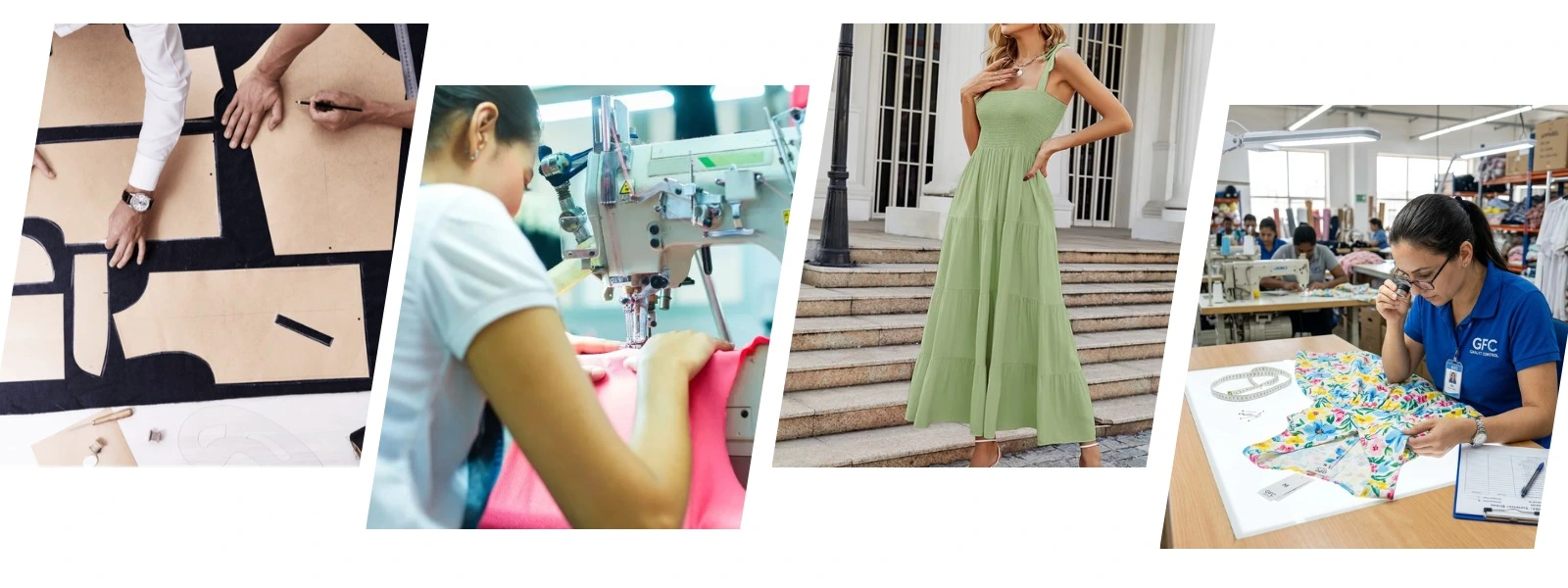
Enzyme Wash
Enzyme washing softens denim and reduces surface fuzz for a worn-in hand feel without aggressive abrasion. Test samples help confirm shade, shrinkage and garment measurements before approving a repeatable bulk wash recipe.
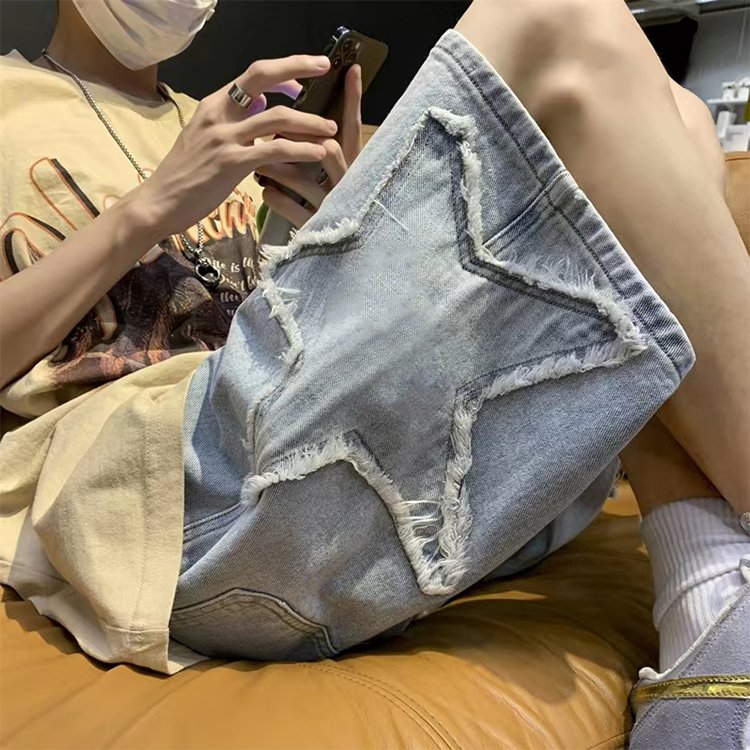
Stone Wash
Stone washing creates authentic abrasion, softened seams and tonal variation across denim garments. VeeWen reviews the desired contrast, fabric weight and trim protection during sampling so the final effect remains consistent across production.
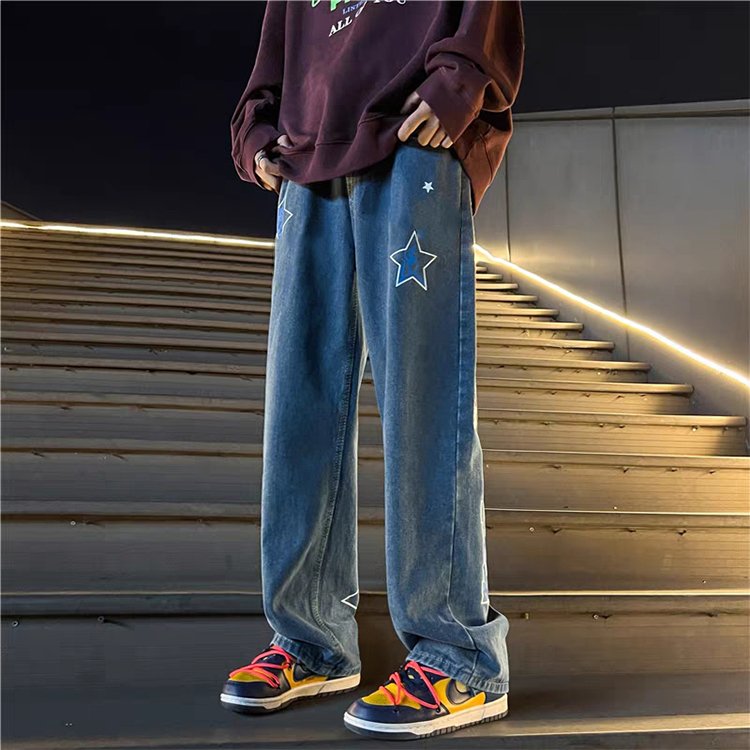
Acid Wash
Acid washing produces high-contrast, mottled fading for statement jeans, jackets and streetwear pieces. Sample testing defines the bleach pattern, base shade and wash intensity while checking that construction and branded trims remain production-ready.
Vintage Distressing
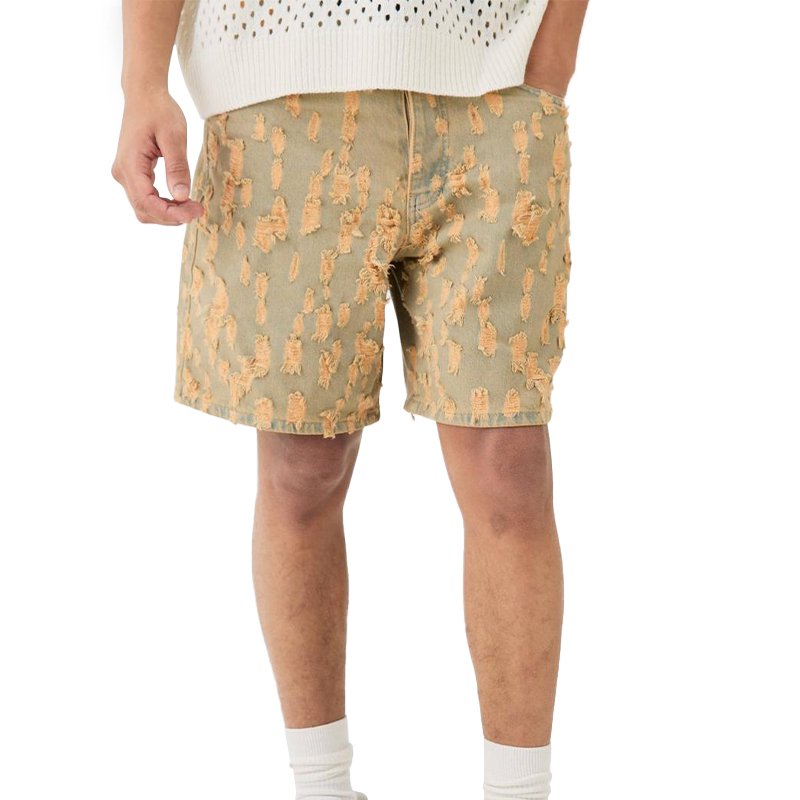
Vintage distressing adds controlled fading, whiskers, abrasions, rips and repaired details for an aged denim character. Placement maps and approval samples keep each treatment aligned with the fit block, fabric strength and intended retail look.
Print Embroidery
Screen print, transfers, patches and flat or 3D embroidery add identifiable graphics to denim apparel. VeeWen tests adhesion, stitch density and drape on the selected denim weight to balance visual impact with lasting wear.

Wash Test Sampling
Before bulk approval, wash test samples verify color, hand feel, shrinkage, distress placement and decoration performance. This documented checkpoint turns your denim apparel styles and specifications into clear production standards for repeatable reorders.
Denim Apparel Styles and Specifications: Trims That Carry Your Brand

Logo Shank Buttons
Custom metal shank buttons give denim jackets, jeans and overshirts a durable closure and a recognizable branded touchpoint. We confirm finish, logo artwork, attachment method and placement during sample approval.
Branded Rivet Sets
Rivets reinforce high-stress pocket corners and add authentic denim character. Select cap shape, plating, logo detail and placement to support your wash direction while keeping hardware consistent across the size run.
Custom Metal Zippers
Metal or nylon zippers can be specified for jean flies, jacket fronts and utility pockets. We match zipper gauge, finish, puller style and tape color to the garment’s function, wash and target price.
Woven Brand Labels
Woven main labels, size labels and care labels create a clear private-label system inside every garment. VeeWen coordinates artwork, fold style, placement and attachment so labeling remains repeatable across production.

Embossed Waist Patches
Leather-look, jacron or rubber waistband patches give jeans a signature back-waist finish. Material choice, emboss depth and stitching are reviewed against the wash process because fading and abrasion can change the final appearance.

Custom Hangtag Packaging
Hangtags, barcode stickers, polybags and carton marks prepare your denim for retail or e-commerce fulfillment. We align copy, artwork, folding method and packing instructions with approved product specifications before bulk shipment.
Denim Apparel Styles and Specifications, Made Practical
Founded in Dongguan in 2016 by ChangKeng Luo, VeeWen helps menswear and streetwear brands turn denim apparel styles and specifications into production-ready collections. We start with a tech pack, reference, sketch, or early concept and resolve it into clear, workable garment requirements.
Our team combines OEM manufacturing, ODM development, private-label execution, and cut-and-sew customization across denim and full-category apparel for men, women, and children. With a standard 100-piece-per-style MOQ, buyers can test focused drops without sacrificing repeatable specifications for future reorders.
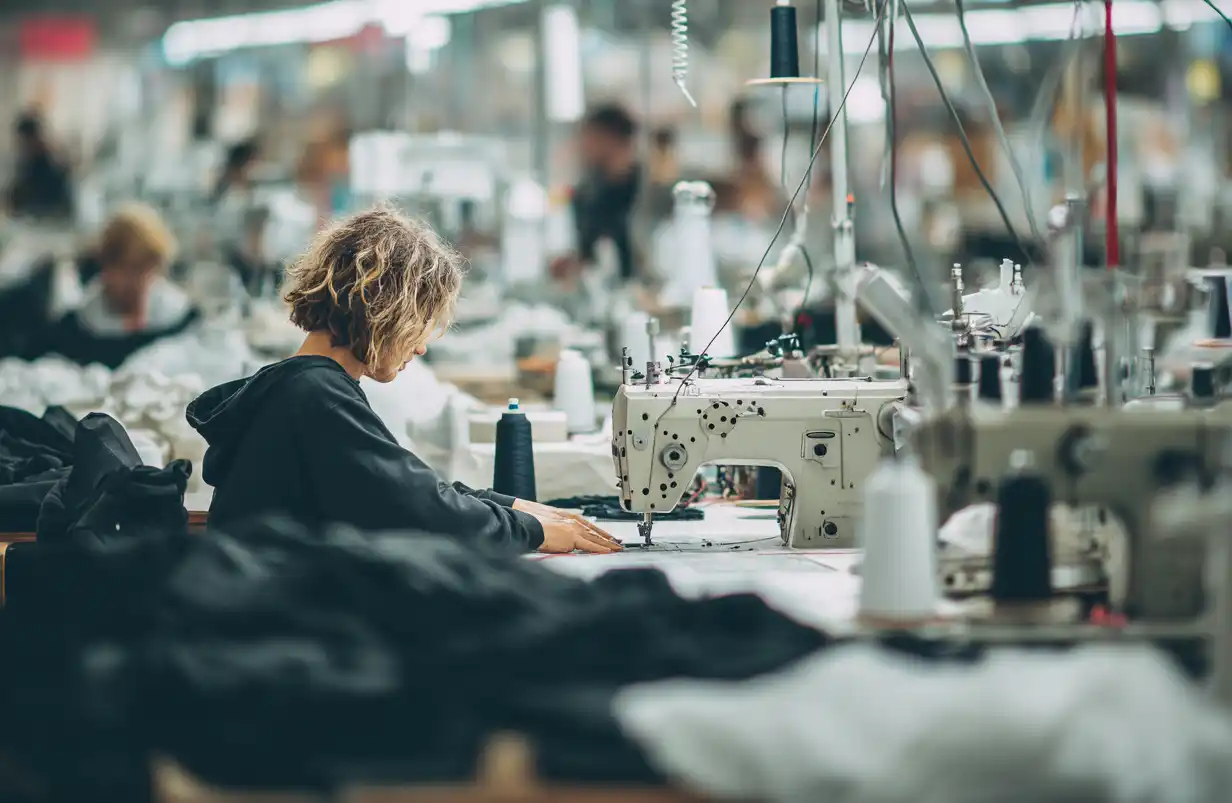
VeeWen works in a direct, production-minded way: fabric sourcing, pattern development, sampling, wash and trim testing, bulk manufacturing, quality checks, labeling, packing, and shipment coordination stay connected in one accountable workflow. We explain the trade-offs, document approvals, and build from the sample toward dependable packed bulk goods.
Denim Apparel Styles and Specifications, Developed in Detail
Fit Blocks That Grade Reliably
VeeWen converts your reference, sketch, or tech pack into a production-ready denim fit block. We define waist, rise, thigh, leg opening, inseam, and key construction points before grading measurements across the size range for consistent bulk fit.
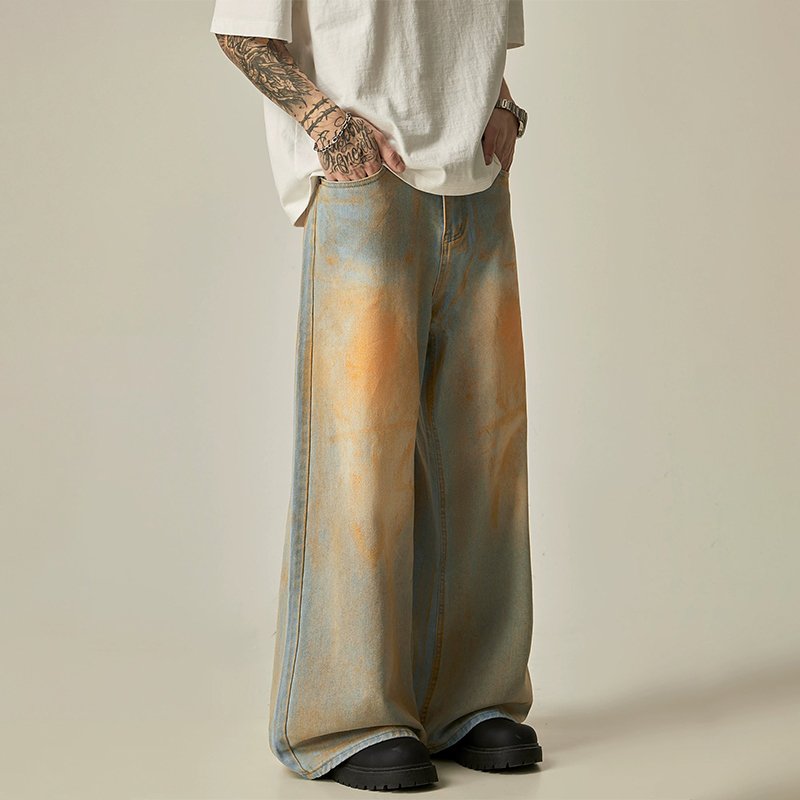
- Choose slim, straight, relaxed, baggy, carpenter, or custom silhouettes
- Confirm front and back rise, knee position, and leg shape
- Review graded measurement specifications during sampling
- Refine fit through approved wear and wash samples

Fabric and Wash Decisions
Denim weight, fiber blend, stretch recovery, and wash direction must work together. VeeWen recommends options against your target hand feel, structure, durability, price point, and intended silhouette, while identifying likely shrinkage, shade variation, and wash-related trade-offs early.
- Source rigid, stretch, comfort-stretch, and cotton-blend denim
- Match fabric weight to structured or relaxed garment shapes
- Plan enzyme, stone, acid, snow, and vintage wash effects
- Set wash tolerances before bulk production approval

Decoration Tested on Denim
Denim decoration needs testing on the actual fabric and wash route, not just a flat artwork file. VeeWen evaluates print adhesion, embroidery density, patch placement, and distressing effects so the finished garment maintains the intended look, drape, and durability.
- Test screen print, DTF, transfers, and specialty inks
- Check flat, 3D, chenille, and applique embroidery
- Coordinate woven labels, leather-look patches, and metal trims
- Assess decoration after washing and finishing

Controlled From Line to Final
Production checkpoints keep approved denim apparel styles and specifications aligned through cutting, sewing, washing, finishing, packing, and shipment. VeeWen uses in-line inspection and final quality checks to compare bulk goods against approved samples, measurements, workmanship requirements, and private-label packing details.
- Check cut panels and construction during sewing
- Monitor wash appearance, damage effects, and shade consistency
- Verify measurements, trims, labeling, and finishing
- Confirm polybags, hangtags, carton packing, and final presentation
Why Choose VeeWen for Denim OEM
Practical denim development support from specifications to packed bulk goods.
← Swipe left or right to view →
Denim Apparel Styles and Specifications: Production Workflow
A documented denim development path for 100-piece-per-style OEM, ODM and private-label programs.
Clarify Design Direction
Review tech packs, reference samples or concept images; confirm fit block, target measurements, construction details, intended price and production priorities.
Source Denim Materials
Match denim weight, fiber blend, stretch, color and hand feel to the garment style, wash direction, durability requirement and target market.
Develop Patterns and Samples
Create patterns, grade key measurements and produce development samples for fit review, construction adjustments and approval of the production-ready specification.
Approve Washes and Trims
Test wash effects, fading, distressing, prints, embroidery, hardware, labels and packaging details; document approved standards before bulk manufacturing begins.
Produce, Inspect and Pack
Coordinate bulk cutting and sewing with in-line inspection, final quality checks, private-label packing and shipment preparation for approved finished goods.
How to Start Denim Apparel Styles and Specifications
Move from a visual concept to approved bulk denim goods with one accountable OEM, ODM, and private-label workflow.
Share Your Product Direction
Send a tech pack, sketch, reference sample, inspiration image, or initial idea with target fit, wash, fabric weight, trims, quantities, and price expectations.
Confirm Specifications and Quote
Review denim apparel styles and specifications with VeeWen, then align fabric, construction, decoration, wash effects, private-label details, MOQ, timeline, and quotation.
Develop and Review Samples
Approve patterns, materials, wash direction, graded measurements, and decoration tests through samples before confirming fit, shade variation, shrinkage allowance, and production-ready details.
Approve Bulk Production
Confirm the pre-production sample, then VeeWen manages bulk cutting, sewing, washing, inspection, labeling, packing, and shipment coordination for orders from 100 pieces per style.
Documented Standards for Buyer Review

Applicable material certificates and scope documents can be reviewed against the selected fabric and production order.

GOTS-related material and chain documentation is matched to the selected program and verified for current scope before use.

Current social-compliance audit documentation can be supplied for buyer review and onboarding when applicable.
Responsible-sourcing and audit records can be reviewed with the VeeWen team for the relevant factory and order scope.

Order-specific material declarations and test documentation are reviewed for applicable REACH requirements; this neutral icon denotes documentation rather than an official REACH certification logo.
Denim Apparel Styles and Specifications: Buyer Results
VeeWen converted our oversized jean and trucker-jacket references into a clear spec pack and approval sample in two rounds. The graded measurements held across our 100-piece first run, so we placed a 300-piece reorder with confidence.
Our acid-wash denim program needed consistent shade direction across three fits. VeeWen documented the wash standard, corrected the first fit comments, and delivered all 240 units within the agreed shipment window. The bulk goods matched the approved sample closely.
The team made the trade-offs clear on denim weight, distressing, embroidery placement, and shrinkage before production. We approved our cargo jean sample after one revision and launched six weeks later with fewer returns than our previous supplier program.
Denim Apparel Styles and Specifications: OEM FAQ
Clear answers on MOQ, sampling, production controls, payments and shipping for private-label denim programs.
What is the minimum order quantity for denim apparel styles and specifications?
Can you develop denim apparel styles and specifications from a sketch or reference garment?
How much does a denim sample cost and what does the sample process include?
What lead time should I expect for a 100-piece denim order?
How do you control wash variation across denim apparel styles and specifications?
How are denim measurements, fit and size grading confirmed?
What payment terms do you offer for OEM denim production?
Can you ship internationally and keep our designs confidential?
Complete Guide to denim apparel styles and specifications
Use this decision framework to compare denim formats, fabrics, construction, customization, and supplier capabilities, so your label can set reliable specifications, evaluate Chinese OEM partners, and avoid costly sampling, quality, and minimum-order mistakes.
1. What Are Denim Apparel Styles and Specifications?
100-piece OEM programs need two inputs: a denim style and a specification. The style names the product and visual direction—such as straight-leg jeans, a trucker jacket, or an oversized denim overshirt—while the specification makes it reproducible.
12–14 oz denim, a defined fit block, graded measurements, wash recipe, thread and hardware, label placement, and acceptable shade variation belong in the tech pack. It should also state branding, distressing limits, shrinkage expectations, packing, and inspection requirements.
1 clear tech pack lets an OEM quote material, labor, sampling, and production risk accurately. Without both the silhouette and production details, two factories can price visibly different garments from the same reference image.
2. Evolution of Denim Apparel Styles
1873 popularized riveted denim as hard-wearing workwear, creating the five-pocket logic, bar tacks, contrast stitching and durable twill identity buyers still use for heritage programs. These details remain commercially useful when scaled to a modern fit block.
1950s moved jeans from utility into youth culture, and 1990s streetwear broadened demand for relaxed, oversized and gender-neutral silhouettes. Buyers can update straight legs, truckers and chore jackets with wider proportions, longer rises or coordinated sets without abandoning recognizable denim value.
2020s collections increasingly combine stretch or recycled-content blends with enzyme, stone and vintage-fade washes. Specify the intended recovery, shade tolerance and wash reference early: performance comfort and lower-impact material choices should support, not obscure, the product’s classic appeal.
3. Types of Denim Apparel Styles and Specifications
Eight families—jeans, jackets, shirts, overshirts, shorts, skirts, dresses, and sets—cover most denim assortments. A 100-piece OEM minimum lets brands test a fit block before expanding.
Jeans Fit Blocks

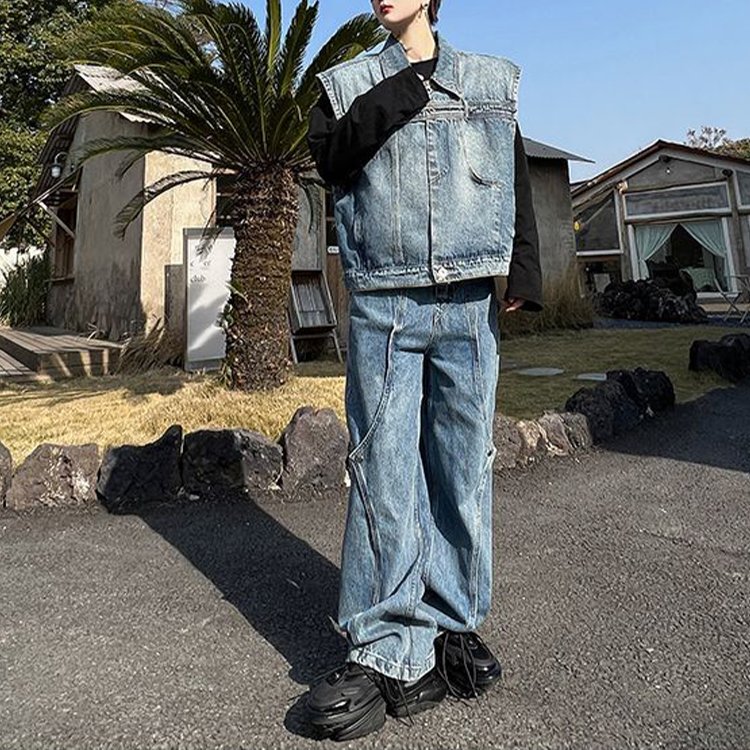
Five-pocket jeans include straight, relaxed, baggy, slim, and flare blocks for everyday, skate, and premium labels.
Three measurements—rise, thigh, and inseam—must be graded together; waistband, pocket placement, and leg opening define the silhouette.
Jackets And Overshirts
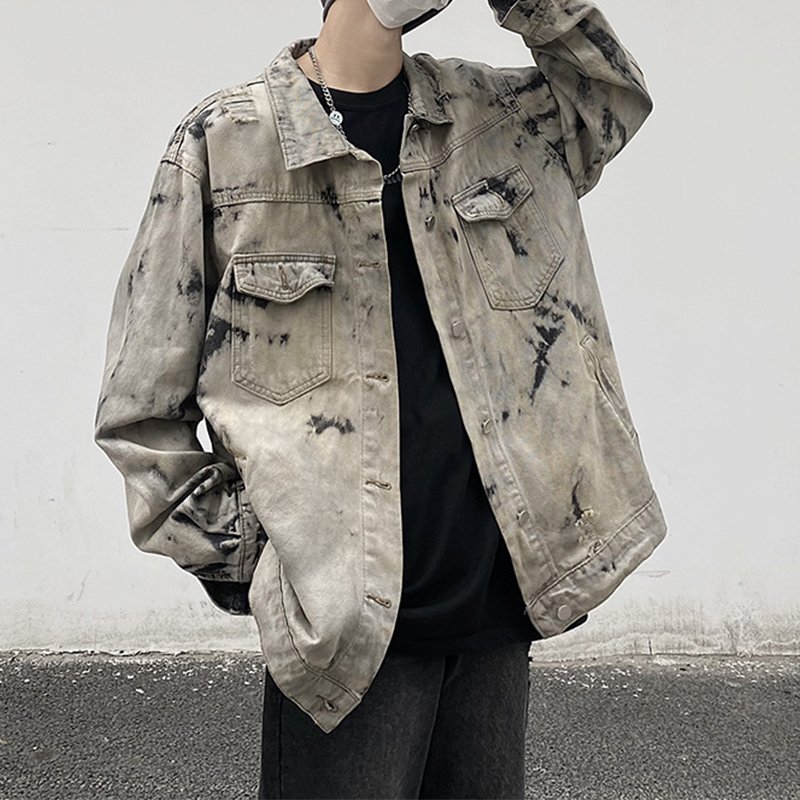
Two denim layers—trucker jackets and overshirts—suit transitional drops, uniforms, and workwear-inspired collections.
Four points—shoulder width, body length, sleeve pitch, and placket construction—separate boxy streetwear from tailored positioning.
Seasonal Separates And Sets

Four lighter families—shirts, shorts, skirts, and dresses—extend spring/summer assortments, while matching sets raise outfit value.
Two or more fit blocks multiply sampling: coordinate shirt length, short rise, skirt shape, or dress waist before adding colors.
4. Denim Apparel Styles and Specifications: Fabrics
10–14 oz denim gives jeans structure; lighter weaves improve drape, while stretch and finishing change recovery, shade consistency, cost, and intended use.
| Fabric | Typical Weight | Performance | Best Applications |
|---|---|---|---|
| Rigid cotton | 340–475 GSM | Durable, structured | Jeans, jackets |
| Stretch denim | 300–425 GSM | Comfort, recovery | Slim jeans, skirts |
| Selvedge | 400–500 GSM | Premium edge, character | Heritage jeans |
| Chambray | 150–250 GSM | Light, breathable | Shirts, dresses |
| Recycled blend | 280–425 GSM | Lower virgin-fiber use | Casual denim |
| Specialty coated | 300–450 GSM | Distinct surface | Fashion outerwear |
Specify Fabric Before Sampling

100-piece programs need fiber content, weight, weave, stretch percentage, color standard, and wash target documented before pattern approval.
5. Customization and Denim Decoration Options
At VeeWen’s 100-piece-per-style starting point, approved wash and trim samples are the control point. Build decoration into the target retail tier before bulk confirmation.
| Technique | Design Impact | Cost Control |
|---|---|---|
| Enzyme wash | Soft hand | Mid-tier |
| Laser fading | Repeatable contrast | Setup cost |
| Over-dye | Rich color | Shade risk |
Wash Direction

Enzyme and stone washes soften denim; laser creates repeatable fading. Bleach, tint, and over-dye add contrast but require shade-band approval.
Decoration Choices
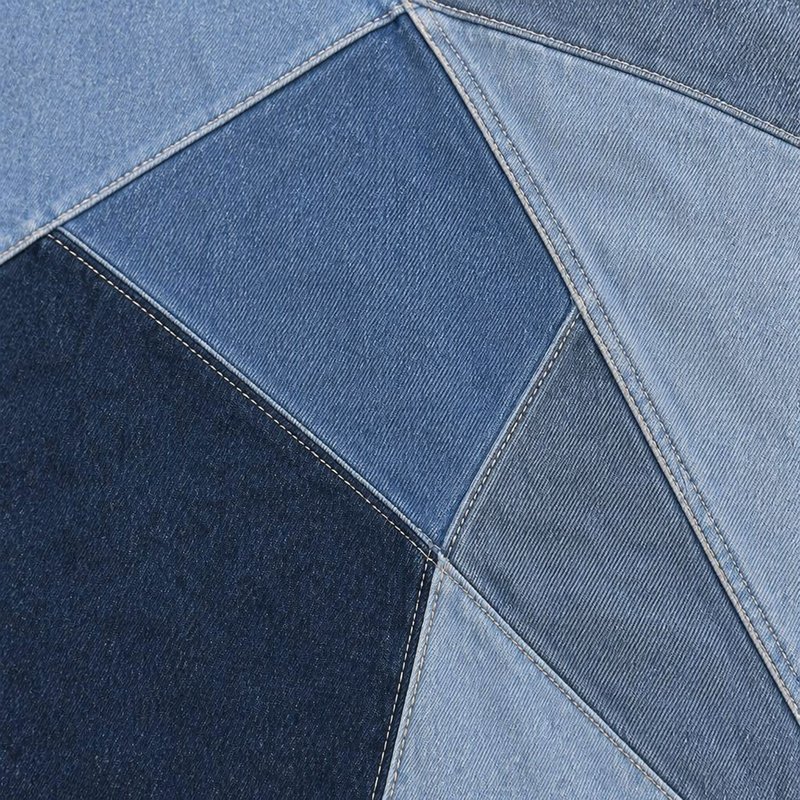
Embroidery, patches, screen prints, and distressing create distinct value signals. Dense embroidery can stiffen panels, while prints and abrasions need wash-durability testing.
Private-Label Finish

Labels, hardware, and custom packaging should be specified on the approved sample. Pantone references, wash test results, and restricted-substance requirements reduce reorder variation.
6. Construction and Quality Specifications
Dependable denim starts with measurable construction, not appearance alone. For denim apparel styles and specifications, approve a physical standard before bulk cutting and washing.
Seams And Hardware

8–10 SPI lockstitch seams with polyester-core thread improve abrasion resistance. Specify inseam, outseam, yoke, waistband, and fly seam types.
3–5 bar tacks secure pocket corners and fly stress points. Approve rivet, zipper, button, and waistband stability samples.
Tech Pack And Inspection
1 tech pack should list rise, inseam, graded measurements, pocket placement, stitch map, hardware, and tolerances. Use ±0.5 cm at critical measurement points where appropriate.
100-piece programs need fit, wash, shrinkage, and colorfastness approval before production. Inspect shade, puckering, pocket symmetry, attachments, and measurements during bulk checks.
7. Choosing a Denim OEM Manufacturer
Select a China-based partner using production evidence, not a polished catalog. For denim apparel styles and specifications, verify who controls fabric, wash approvals, sampling, inspection, and export handoff before a deposit.
Request Production Evidence
100-piece MOQs can suit a focused launch, but confirm the supplier can repeat the approved specification. Ask for relevant denim samples, a fabric swatch card, wash test panels, and a dated critical-path schedule.
- Who owns wash-house coordination?
- What approval gates precede bulk cutting?
- Can you provide inspection reports and export references?
8. Common Denim Sourcing Mistakes
Three approvals prevent most denim disruptions: physical wash standards, graded measurement tolerances, and locked trim specifications. For denim apparel styles and specifications, visual approval alone is not production control.
Approving Washes From Photos
One phone photo can hide cast, abrasion placement, and back-panel shade variation. Approve a sealed wash standard under agreed lighting before bulk.
Leaving Specifications Open
A ±1 cm tolerance omission turns normal sewing variation into fit disputes. Specify POMs, tolerance, shrinkage allowance, fabric weight, and wash recipe in the tech pack.
Ignoring Timing And Cost
Two-week trim delays and post-sample detail changes can push a bulk window and require rework. Book critical zippers, buttons, and labels after approval; compare quotes against the same construction, wash, and inspection scope.
9. Launching Denim Apparel Styles and Specifications
Week 0: define customer, retail price, fit block, size range, and two reference samples. Before development, lock target margin and the approved denim apparel styles and specifications.
Tech Pack And Materials
At 100 pieces per style, submit a measured tech pack, Pantone callouts, and trim list.
At fabric booking, approve ounce weight, composition, wash recipe, shrinkage allowance, and shade standard.
Sample And Fit Revisions
On sample one, check rise, inseam, waist, leg opening, and wash placement against graded measurements.
On revision two, freeze fit comments; changing hardware or wash afterward can reset timing and cost.
Bulk Release And Launch
Before bulk, sign the pre-production sample, packing method, inspection points, and shipping deadline.
Seven days before dispatch, prepare product-page measurements, wash-care copy, SKU data, and approved sample photography.
10. Denim OEM Pricing and Cost Factors
100-piece denim orders commonly cost more per unit because pattern, wash testing, and trim setup are spread across fewer garments. Indicative figures below are ex-factory USD for a basic 10–14 oz five-pocket jean; approved samples, specifications, and quantities determine the final quote.
10–14 oz fabric, stretch fiber, enzyme or stone washes, branded hardware, embroidery, and custom packaging all raise cost or production time. Higher volumes usually reduce unit cost, while complex fading or distressing requires shade and workmanship approvals before bulk production.
| Quantity tier | Indicative unit price | Sample or setup | Typical bulk lead time |
|---|---|---|---|
| 100–299 pcs | US$18–32 | Sample US$80–180 | 30–45 days |
| 300–999 pcs | US$15–27 | Wash and trim setup | 30–40 days |
| 1,000+ pcs | US$12–23 | Setup spread across volume | 35–50 days |
Build Your Denim Apparel Styles and Specifications
Send your tech pack or concept for a production-ready review and custom 100-piece OEM quote from VeeWen.